



Description
Collector's Note – Why This Issue Matters
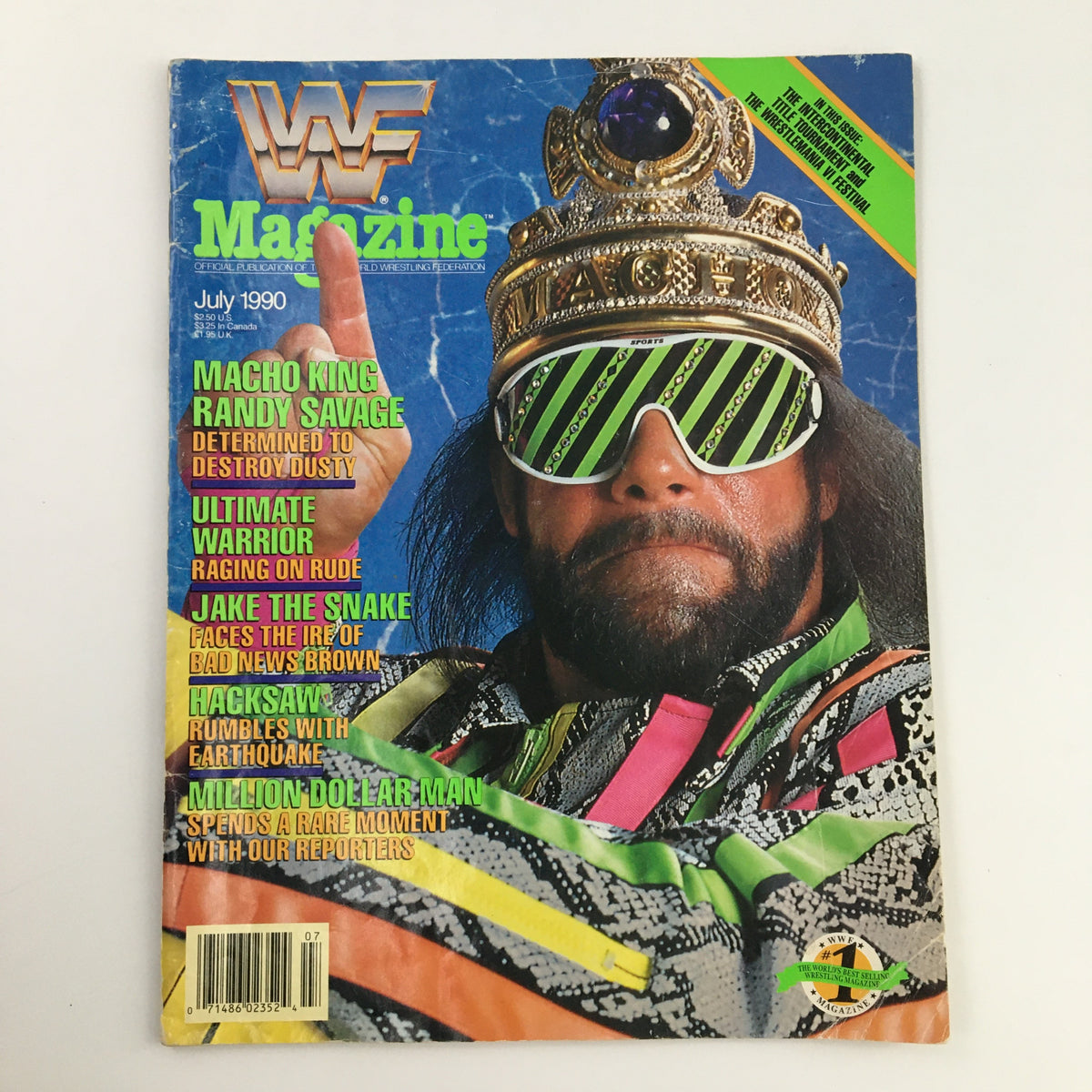
The July 1990 issue of WWF Magazine belongs to a pivotal stretch in World Wrestling Federation history, when the company was moving from the cartoon-bright momentum of the late 1980s into a more crowded and personality-driven early-1990s roster. A cover grouping built around Randy Savage, Jake “The Snake” Roberts, and Hacksaw immediately anchors the issue in that transition. By mid-1990, each man represented a different side of WWF storytelling: Savage as one of the promotion’s premier headline stars, Jake Roberts as a psychologically distinct and unusually cerebral character, and Hacksaw Jim Duggan as a patriotic fan favorite whose appeal was deeply tied to the era’s crowd-facing energy.
The date matters because July 1990 sits between WrestleMania VI and SummerSlam 1990, a period when WWF was actively redefining its star hierarchy and pushing multiple rivalries across television, live events, and magazine coverage. That gives the issue real collector significance within the broader world of 1990 magazines. It captures WWF at a moment when print was still central to how fans followed feuds, personalities, and promotion-wide momentum between televised events. A surviving issue from this month does more than preserve wrestling imagery. It preserves the way the company packaged its biggest personalities for readers before the later 1990s transformed wrestling media into something very different.
This issue also matters because WWF Magazine was not just a companion publication. It was part of the federation’s own ecosystem of mythmaking. Within the broader run of Randy Savage magazine appearances, a July 1990 issue has added value because it places him in a live competitive moment, still central to the company’s visual identity and still framed as one of its most important stars. The inclusion of Jake Roberts and Hacksaw broadens that appeal beyond a single-subject cover, making the issue useful to collectors interested in how WWF presented contrasting personas within the same promotional universe. That combination is part of what gives early-1990s WWF print material its lasting documentary value.
About the Publication
WWF Magazine was the World Wrestling Federation’s in-house fan magazine, created to extend storylines, profile wrestlers, promote events, and deepen reader investment in the company’s characters and rivalries. Its audience included younger fans, regular television viewers, and wrestling collectors who wanted a more continuous connection to the federation than weekly broadcasts alone could provide. Editorially, it blended interviews, photo-heavy features, event promotion, personality pieces, and storyline-driven coverage in a format designed to feel immediate and immersive. By 1990, that made the magazine an important part of WWF’s larger media strategy, functioning not just as merchandise or fan service but as a monthly record of how the promotion wanted its stars and feuds to be understood.
Key Highlights Inside
- Features Randy Savage, Jake “The Snake” Roberts, and Hacksaw, as stated directly in the listing.
- Dates from July 1990, placing it in the period between WrestleMania VI and SummerSlam 1990.
- Represents WWF’s early-1990s use of magazine publishing to reinforce character identity and fan engagement.
- The listing presents the issue as covering the stories, rivalries, and triumphs of its featured wrestlers.
- Its significance lies in pairing three recognizable WWF personalities whose styles and audience appeal were notably different.
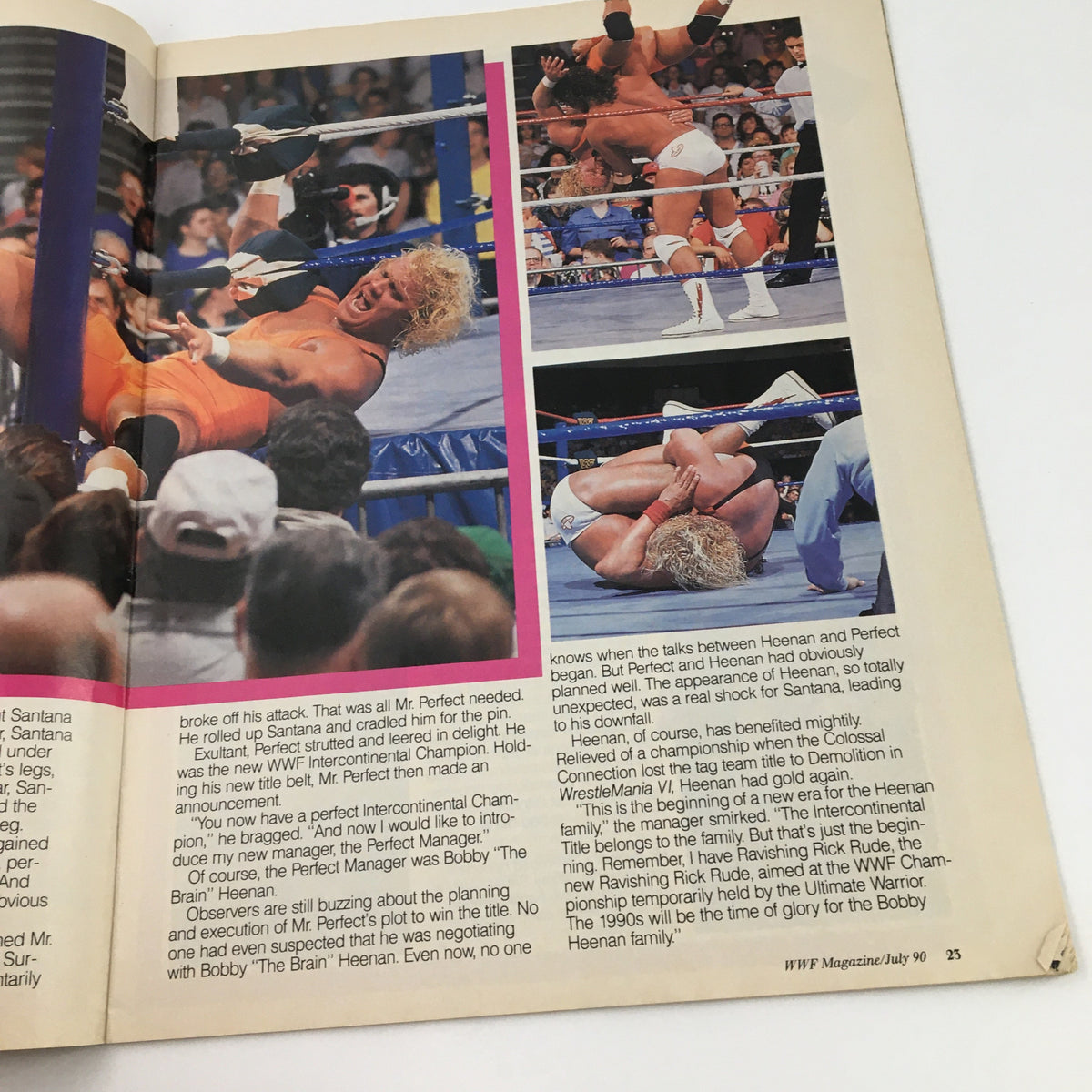
- No specific interior article titles are confirmed in the provided listing, so detailed contents should be treated as unverified unless documented from the issue itself.
Condition & Rarity
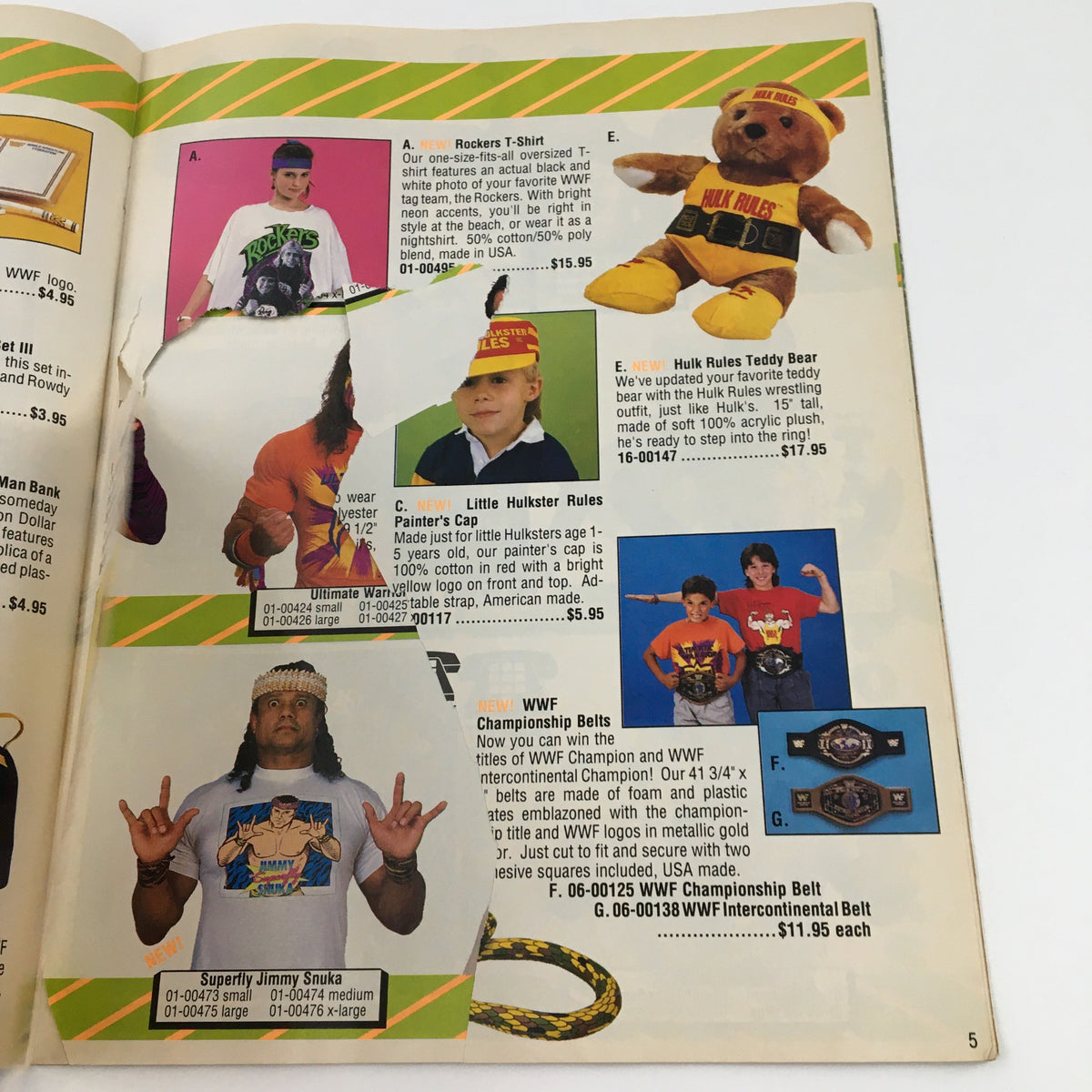
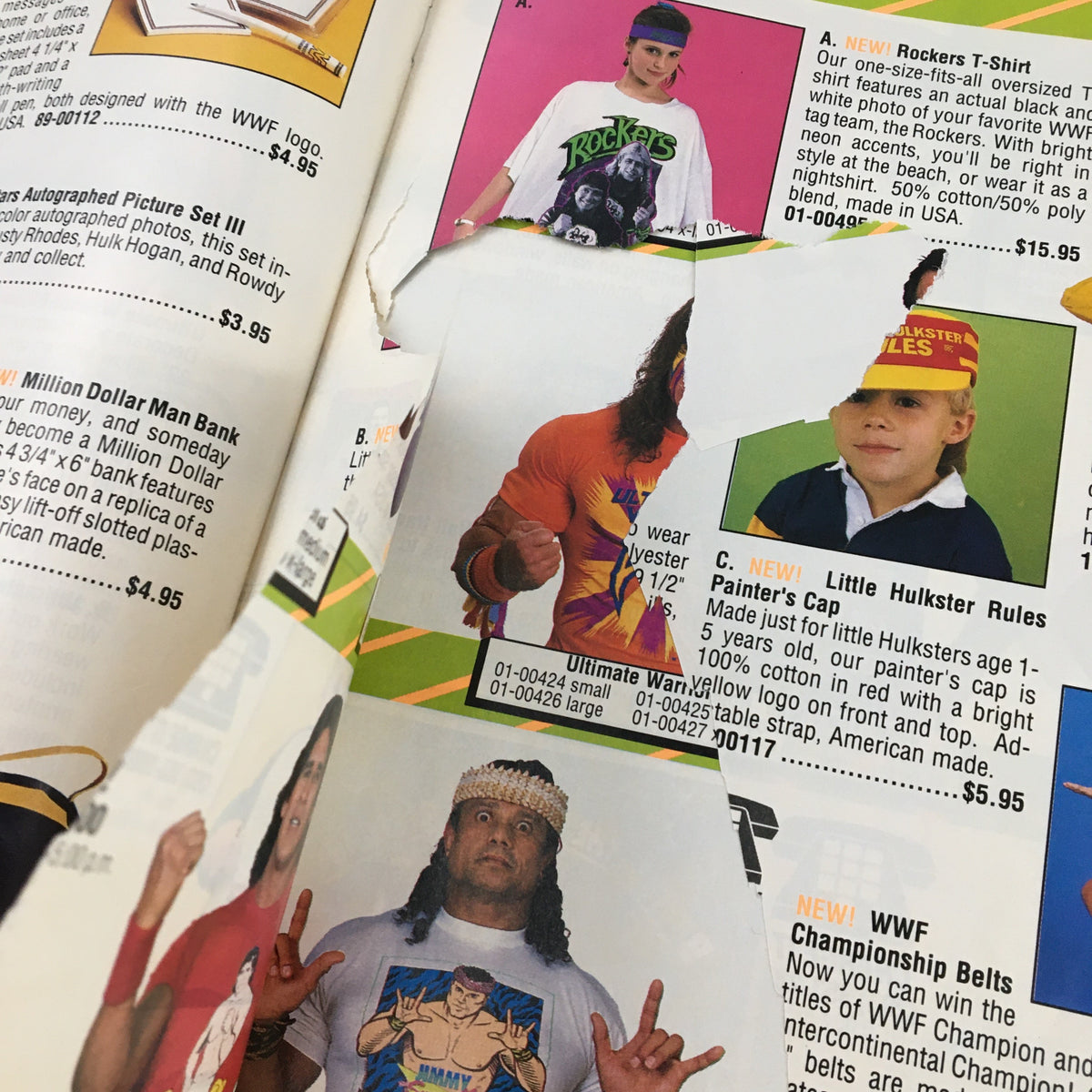
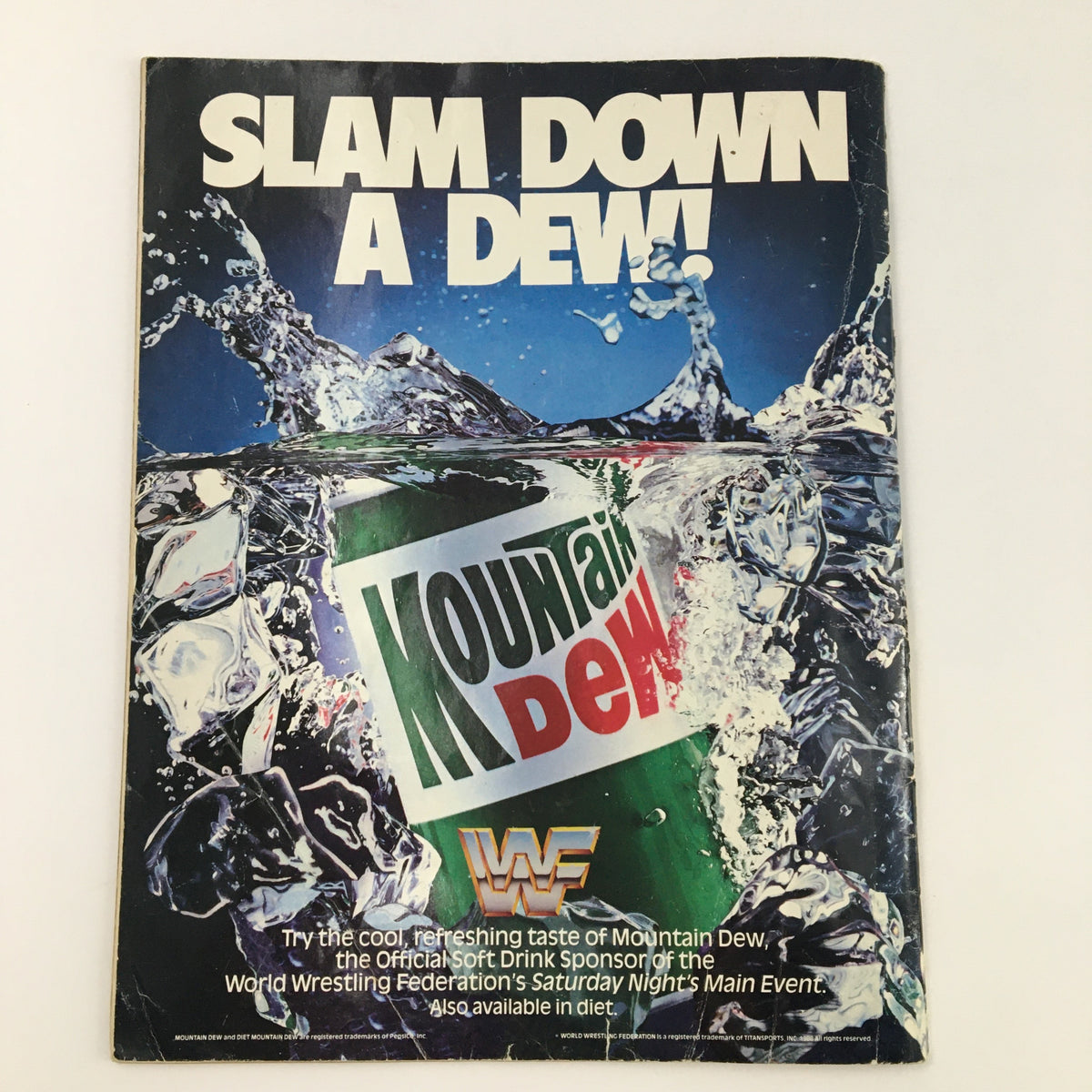
The listing describes an acceptable-condition surviving example with no label, visible wear, rips, creases, and protective plastic storage. In collector terms, the no-label or newsstand detail matters because uninterrupted covers are generally preferred, especially for wrestling magazines where the cover image is a large part of the issue’s appeal. Acceptable-grade wear is not unusual for a 1990 WWF issue, since these magazines were often actively read, traded, stacked, and stored without archival care. Collectors evaluating any surviving copy of this issue would typically look for spine stability, staple security, page completeness, cover gloss, edge wear, crease severity, and the absence of detached pages or major moisture damage. Protective plastic storage is a meaningful preservation note, particularly for wrestling magazines whose collector value depends heavily on how well the front cover still presents.
Looking for More Issues Like This?
Readers drawn to this issue are usually following more than one collecting path at once: Randy Savage as a cover subject, the broader look and feel of classic WWF magazines, and the larger pop-culture world of 1990 magazines. The Randy Savage collection is especially useful for tracing how one of wrestling’s defining personalities was presented across different publications and moments in his career.
Seen in that wider frame, this July 1990 issue becomes more than a single wrestling magazine. It becomes part of a larger archive of how WWF built character, drama, and fan loyalty through print during a formative period in modern wrestling history.