





Description
Collector's Note – Why This Issue Matters
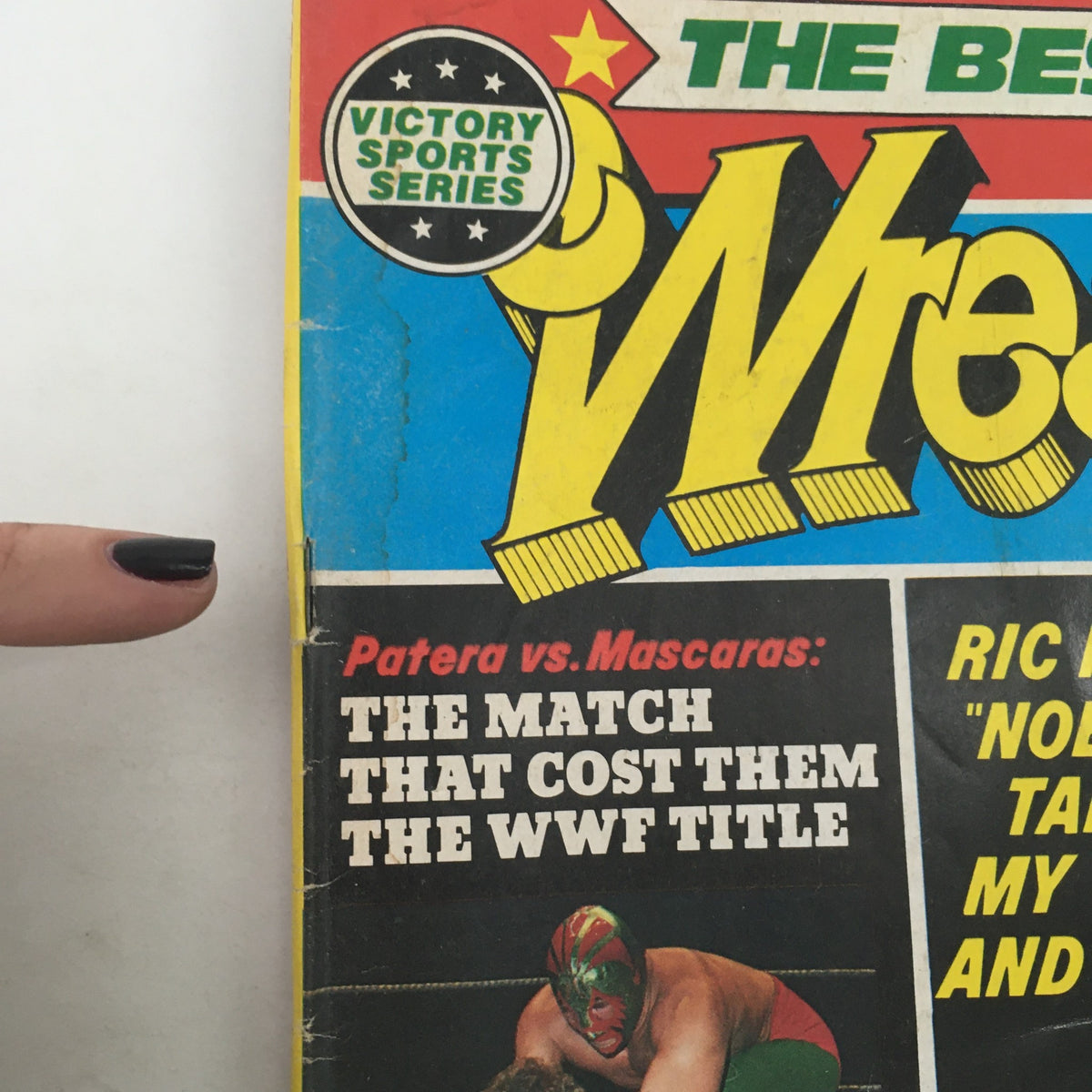
The Fall 1981 issue of WWF Wrestler is identified by a cover presentation featuring Andre the Giant against Ivan Putski, with Ric Flair also prominently named. That combination brings together three sharply different wrestling identities from the territorial era. Andre was already recognized internationally as a uniquely imposing attraction whose appearances carried significance beyond any single promotion. His unusual size, controlled physical presence, and ability to work across regional boundaries made him one of professional wrestling’s most recognizable figures well before the national expansion of the mid-1980s. Putski represented the powerful, crowd-oriented style familiar to northeastern wrestling audiences, while Flair was developing the charismatic persona and in-ring reputation that would define much of his later career. Their shared presence gives the issue a broad historical reach, connecting the World Wrestling Federation’s regional audience with the wider American wrestling landscape of 1981.
The Fall 1981 publication date places the magazine before the national expansion that transformed the WWF later in the decade. Professional wrestling was still organized largely around regional promotions, local television programs, arena circuits, and territory-specific rivalries. Fans often knew some performers through local broadcasts while learning about wrestlers from other regions through magazines, newspaper coverage, photographs, and word of mouth. Printed wrestling publications helped bridge those separate audiences by presenting performers from different territories within a single issue. They offered readers access to promotional portraits, personality-driven features, match narratives, and historical material that weekly television could not always preserve. This issue therefore documents the final years of the older territorial structure, when Andre the Giant could appear across numerous promotions and Ric Flair’s reputation was expanding beyond his principal regional base.
For collectors, the issue is especially useful as a period record of how major wrestlers were presented before cable television, nationwide syndication, merchandising expansion, and pay-per-view reshaped the industry. Its cover belongs to an era when wrestling magazines were essential parts of fan culture rather than secondary companions to a fully national television product. The combination of Andre, Putski, and Flair reflects how print publishers could place distinct territories, wrestling styles, and public personas together for a broader readership. It also preserves an early-1980s visual record of the bold typography, dramatic confrontation imagery, and personality-centered promotion used to attract wrestling audiences. Readers researching vintage Ric Flair magazine appearances or Andre the Giant wrestling covers can place this issue within the early print history of two performers whose careers would remain central to professional wrestling culture throughout the decade and beyond.
About the Publication
WWF Wrestler was a professional wrestling periodical associated with the World Wrestling Federation and intended for fans following the promotion’s wrestlers, rivalries, personalities, and arena-based storytelling. Its readership included television viewers, live-event attendees, autograph collectors, wrestling-history enthusiasts, and younger fans who used magazines to learn more about performers beyond what appeared on weekly broadcasts. Wrestling publications of this period generally relied on dramatic photography, bold cover language, wrestler profiles, match-oriented features, and promotional storytelling designed to preserve the larger-than-life presentation of the sport. The editorial format often treated photographs as central historical evidence, documenting costumes, facial expressions, physical confrontations, championship imagery, and the theatrical atmosphere surrounding professional wrestling. In 1981, magazines also served as important links between separate wrestling regions because television distribution was still largely local or syndicated. Readers could encounter personalities and promotional developments that were not regularly shown in their home markets. Issues within the larger archive of vintage WWF magazines now provide researchers with a printed chronology of how the company, its competitors, and its featured personalities were presented before the nationally televised wrestling boom of the mid-to-late 1980s.
Key Highlights Inside
- The magazine is identified as the Fall 1981 issue of WWF Wrestler, placing it within the World Wrestling Federation’s pre-national-expansion period. Its seasonal dating reflects a time when wrestling publications could remain in circulation longer than standard weekly or monthly magazines.
- Andre the Giant and Ivan Putski are presented in a featured cover confrontation, connecting the issue with two of the most recognizable power-based wrestling attractions associated with the era. Their pairing emphasizes physical scale, strength, and the dramatic contrast expected from a major wrestling encounter.
- Ric Flair is also prominently identified on the issue, extending its significance beyond the WWF’s immediate regional presentation and into the wider territorial wrestling world of 1981. His inclusion documents a point in his career before his later national television prominence became firmly established.
- The combination of Andre, Putski, and Flair reflects the variety of wrestling personas that defined the period. The cover brings together an internationally known giant, a celebrated powerhouse, and a charismatic performer whose public identity would become one of the most recognizable in professional wrestling.
- The newsstand format preserves the original cover artwork and printed presentation without a subscriber mailing label obscuring the wrestler photographs, masthead, or promotional wording. This unobstructed presentation is particularly relevant when the cover itself is the primary historical feature being studied.
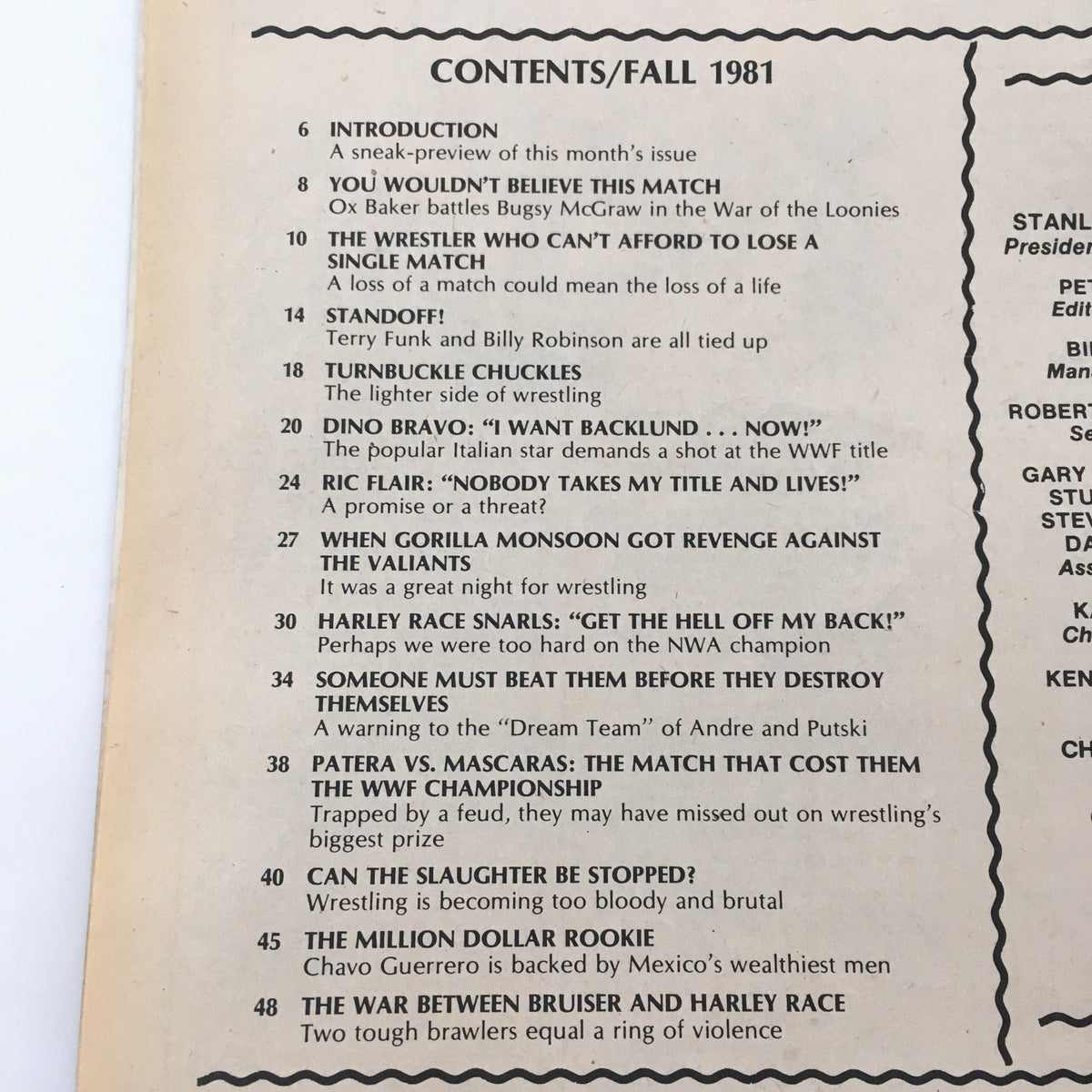
- Specific article titles, match results, interviews, writers, photographers, page counts, and additional wrestlers have not been confirmed from the supplied listing. No unverified interior features should be attributed to the issue without examining its contents page and complete page sequence.
Condition & Rarity
Surviving examples of the Fall 1981 issue should be evaluated with particular attention to completeness, structural stability, and the extent of moisture-related damage. The supplied description classifies the magazine in Acceptable condition and notes extensive overall wear, including visible rips, stains, water marks, and a cover that may be loose or fully detached. It also states that some pages may be missing, making page-count verification and a careful review of the contents sequence essential before the issue is regarded as complete. Water exposure can produce waviness, discoloration, weakened paper fibers, transferred staining, surface adhesion, mildew spotting, or a persistent musty odor. A loose or detached cover may indicate staple failure, spine splitting, paper loss around the staple holes, or prolonged handling over several decades. Tears should be assessed for length, location, and whether they affect wrestler photographs, printed text, or the attachment of individual pages.
In collector terminology, an example with these defects is better understood as a reference-grade or reading-grade survivor rather than a high-grade display example. Even so, a heavily worn magazine can retain research value when its cover imagery, identifying information, and surviving interior material remain legible. The newsstand format has no address label, leaving the original cover design unobstructed, although that characteristic does not offset major structural defects, staining, or possible incompleteness. The plastic protective covering is a later storage measure that may help prevent additional abrasion, dust exposure, and handling damage, but it does not reverse existing tears, water marks, staining, detached components, or page loss. Collectors should also inspect for clipped photographs, removed advertisements, writing, tape repairs, rusted staples, brittle edges, insect damage, and pages adhering to one another. Because no verified circulation or surviving-copy figures are provided, rarity should not be assumed; collector interest should instead be assessed through the featured wrestlers, cover presentation, documented appearances, completeness, and the comparative difficulty of finding structurally intact examples.
Looking for More Issues Like This?
The Fall 1981 Andre the Giant, Ivan Putski, and Ric Flair edition can take patience to locate with its cover, binding, and full page sequence intact. Related early appearances and career-spanning covers can be explored through the collections of Ric Flair magazines and Andre the Giant magazines.
The broader WWF magazine archive offers additional period issues documenting the promotion’s wrestlers, visual style, and development before and during its national expansion. Collectors studying the wider territorial era may also browse original magazines published in 1981 for further context surrounding the sports culture, promotional photography, entertainment coverage, and print design of the period.