
When Vogue Diagnosed the Death of Cinema
How the January 1, 1971 issue captured Hollywood's collapse and Europe's ascent in a single feature
The funeral began on glossy paper.
When Andrew Sarris opened his typewriter in late 1970 to write for Vogue's New Year issue, he wasn't reviewing movies—he was performing an autopsy. His essay, "The New Movie Crash," didn't critique films. It declared an ending. Cinema, he argued, had lost its soul. The grandeur of Chaplin, the innovation of Eisenstein, the innocence of Hollywood's golden machinery—all of it had collapsed under the weight of self-awareness and cultural exhaustion.
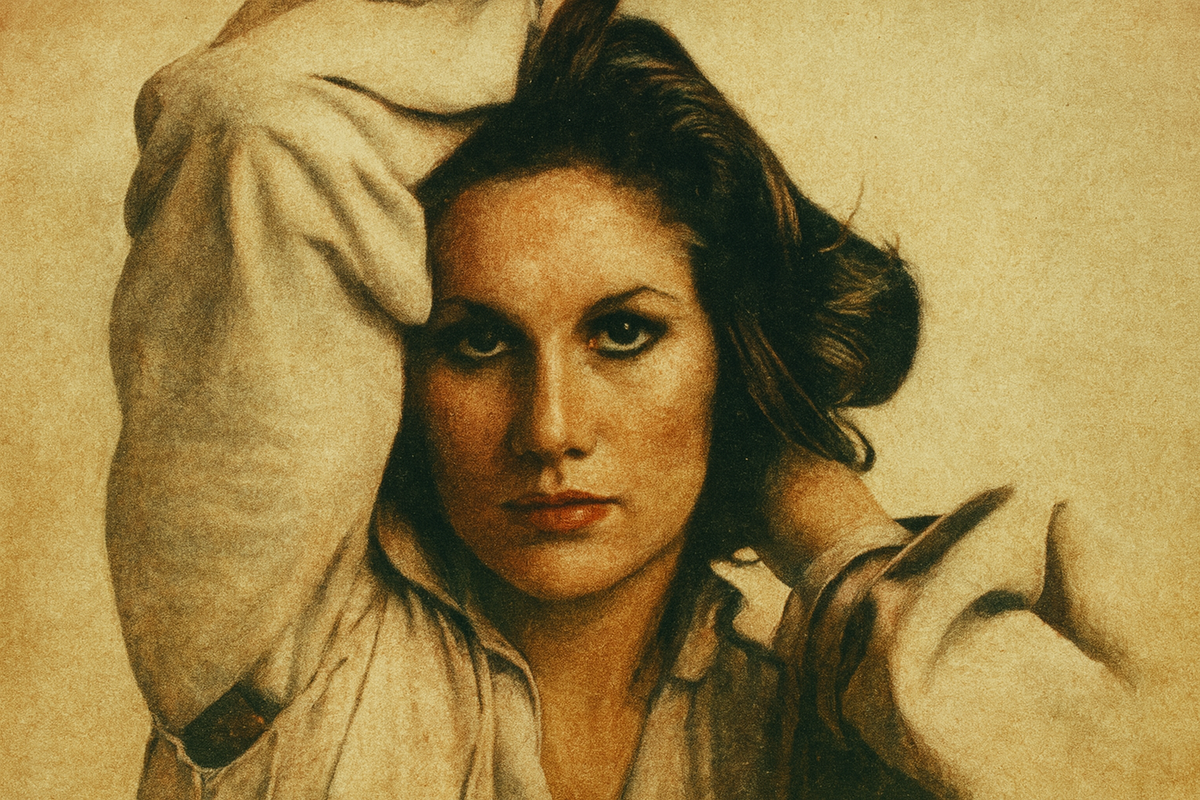
But Vogue, ever the cultural provocateur, didn't let Sarris mourn alone. On the same pages, they introduced readers to Dominique Sanda: 19 years old, French, "silky, sulky, unforgivably vulnerable." She wasn't a starlet. She was a counterargument. While Sarris mourned the death of old Hollywood, Vogue offered Europe's answer—a new kind of star for a fragmented, disillusioned world.
This wasn't fashion journalism. It was cultural prophecy.
Archive Details
Publication: Vogue Magazine
Issue Date: January 1, 1971
Featured Essay: "The New Movie Crash" by Andrew Sarris
Featured Star: Dominique Sanda
Editor-in-Chief: Diana Vreeland
The Collapse Hollywood Couldn't Hide
By 1971, American cinema was hemorrhaging. Attendance had cratered. The studio system—once an unstoppable factory of dreams—was buckling under financial losses and irrelevance. Television had stolen the masses. The counterculture had stolen the narrative.
What audiences wanted had shifted violently. Vietnam, feminism, and the fracturing of social consensus meant escapist fantasies no longer sold. People didn't want Fred Astaire gliding across ballrooms. They wanted Easy Rider, Bonnie and Clyde, raw honesty over manufactured glamour.
Sarris captured this in stark terms: cinema had grown weary. It could no longer project innocence because audiences knew too much. The tricks were visible. The grandeur was gone. What remained was a medium caught between death and reinvention, producing films that reflected fragmentation rather than unity.
Hollywood was dying. Europe was ascending. And Vogue—perched at the intersection of fashion, intellect, and cultural authority—was documenting the transition in real time.
Dominique Sanda: The Anti-Star
Vogue didn't just profile Sanda. They positioned her as cinema's future.
She embodied everything Hollywood wasn't: unpolished, enigmatic, intellectually sensual. Where American stars projected confidence and control, Sanda radiated vulnerability and ambiguity. She had just appeared in First Love and was about to star in Vittorio De Sica's The Garden of the Finzi-Continis, a haunting meditation on memory and loss set against the rise of fascism.
The black-and-white photograph Vogue ran was deliberate. No color, no gloss, no artifice. Just Sanda's face—direct, exposed, modern. She wasn't selling fantasy. She was selling truth, or at least a European version of it: cinema as introspection rather than spectacle.
Vogue called her "the new movie crush," a sly wordplay against Sarris's "crash." While one critic declared the end, the magazine offered a beginning. Sanda wasn't a replacement for Hollywood. She was proof that cinema could survive by becoming something else entirely.
What Vogue Understood That Others Didn't
Most fashion magazines treated cinema as adjacent content—celebrity gossip, red carpet coverage, surface-level reviews. Vogue treated it as ideology.
By pairing Sarris's diagnosis with Sanda's introduction, the magazine made an argument: cinema's crisis was also fashion's crisis, culture's crisis, femininity's crisis. The decline of Hollywood spectacle mirrored the decline of rigid beauty standards. The rise of European art cinema paralleled the rise of intellectual, androgynous, psychologically complex ideals of womanhood.
Vogue wasn't just reporting trends. It was shaping how its readers understood themselves in relation to a changing world. Fashion and film weren't separate domains—they were parallel languages for expressing the same anxieties about identity, power, and meaning.
This is why serious collectors pursue issues like this one. They aren't buying magazines. They're acquiring moments when culture was actively rewriting its own rules.
Key Themes from the 1971 Feature
Why This Issue Matters to Collectors
Published at the exact inflection point between Hollywood's collapse and New Hollywood's rise, it documents the moment cinema stopped being a unified cultural force and splintered into specialized audiences.
Under Vreeland, Vogue transcended fashion. It became a platform for intellectual risk-taking, pairing film criticism with haute couture. Issues from her tenure (1963-1971) are among the most collectible in the magazine's 130-year history.
This issue matters to film historians studying the European New Wave, fashion scholars tracking the shift from 1960s mod to 1970s naturalism, and cultural critics analyzing how media responded to social upheaval.
The Sanda portrait exemplifies Vogue's ability to elevate cultural figures into icons through visual storytelling—glamorous yet intimate, styled yet raw.
More than any single element, this issue captures how it felt to live through 1971's uncertainty. It's a primary source for understanding what educated, culturally engaged readers were thinking about as the 1960s died and the 1970s began.
The Artifacts That Endure
When you hold an original copy of the January 1, 1971 Vogue, you're holding a contradiction: a luxury object that predicted the end of luxury's old order. You're holding Andrew Sarris's pessimism and Dominique Sanda's possibility, bound together in the same artifact.
You're holding proof that magazines once operated as cultural authorities, not content aggregators. That fashion journalism could be intellectually rigorous. That a single issue could contain both a funeral and a birth.
The collectors who seek out these issues understand something essential: the past isn't dead. It's archived, waiting to be rediscovered by anyone willing to look beyond the clothes and see the ideas underneath.
Explore the Archive
If this convergence of fashion, film, and cultural reckoning resonates with you, our collection holds decades of similar moments—each issue a window into how previous generations saw themselves and imagined their futures.
Browse Vogue Magazine CollectionFrom the Jazz Age to the minimalist 1990s, these aren't reproductions or digital scans. They're original artifacts—ink on paper, preserved across time, ready to be held, studied, and cherished.
Because some things deserve to survive beyond the crash.