
Alabama's Racial Paradox: When Segregation Had No Name for You
Inside Jet Magazine's 1962 exposé on the families Jim Crow couldn't classify—and the fight for identity that mainstream history forgot
On May 24, 1962, readers opening their copies of Jet Magazine expected the familiar terrain of Jim Crow America—the stark binaries of Black and white, the courtroom battles, the lunch counter sit-ins. What they found instead was something far stranger: families who existed in neither category, communities the segregated South had no language to describe.
The headline read: "Plight of Alabama's Raceless People."
Not Black. Not white. Just invisible.
The Families the System Couldn't Classify
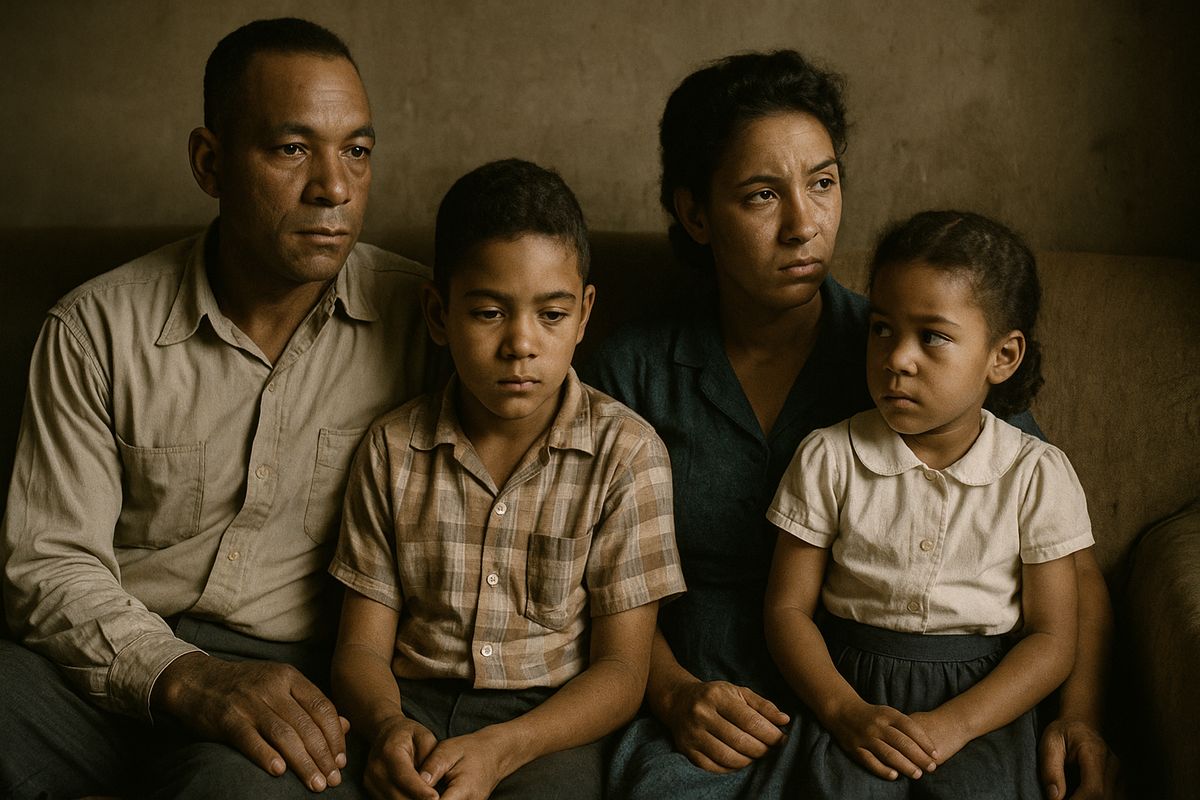
Willmer Reed was a chemical plant worker and farmer in rural Alabama. His crime? Trying to enroll his son Willie at Reeds Chapel School. The boy was turned away—too dark, neighbors said, to attend the local school. Yet the Reeds weren't accepted in Black society either. Their family, like dozens of others scattered across Alabama's backwoods, claimed mixed ancestry—Indian, Portuguese, Spanish—identities preserved across generations of intermarriage within isolated settlements.
Segregation offered them no refuge. The system demanded you check a box. Black or white. Choose.
The Reeds refused. And in 1962 Alabama, that refusal meant their son had no school to attend.
Jet didn't flinch from the paradox. While the cover featured Ivory Coast's First Lady Madame Marie Houphouet-Boigny in elegant conversation with U.S. dignitaries, the interior pages carried Willmer Reed's federal lawsuit—a father fighting not just for his child's education but for his family's right to exist on their own terms.
The photographs told their own story: Willmer, his wife Mary Louise, and their children sitting together, dignified and defiant, faces that segregation's architects never accounted for.
Archive Details
Publication: Jet Magazine
Issue Date: May 24, 1962
Featured Story: "Plight of Alabama's Raceless People"
Central Figure: Willmer Reed and family, rural Alabama
Cover Feature: Madame Marie Houphouet-Boigny, First Lady of Ivory Coast
Historical Context: One year post-Freedom Rides, months before Birmingham campaign
Why 1962 Mattered
The timing was explosive. Just one year earlier, Freedom Riders had forced America to confront the violence of segregation on national television. In Mississippi, James Meredith's fight to integrate Ole Miss was building toward federal intervention. Birmingham and the March on Washington were on the horizon.
Against this backdrop, the Reed family's struggle revealed segregation's deepest absurdity: it wasn't just cruel—it was incoherent. The system couldn't even classify everyone it sought to control.
Jet had built its reputation on refusing to look away. Founded in 1951, the magazine had become the most trusted chronicler of Black American life precisely because it reported what mainstream outlets ignored or distorted. The May 24, 1962 issue embodied that mission perfectly—juxtaposing international diplomacy with the grinding machinery of rural injustice, connecting the global stage to a single Alabama schoolhouse.
The Survival Strategies of the In-Between
Jet's reporting exposed the desperate tactics families deployed to navigate a binary that had no room for them:
Willmer Reed's federal lawsuit wasn't anomalous—it was necessary. Without legal recognition, these communities had no access to schools, no protection from discrimination, no official existence.
Claiming Portuguese or Spanish ancestry wasn't about historical pride—it was survival. In a world where "Negro" meant subjugation and "white" meant access, families invented third categories the law didn't acknowledge.
Rejected by white communities and unrecognized by Black ones, these families became internal exiles—isolated settlements that white supremacy created but refused to name.
Despite everything, families like the Reeds maintained their traditions, married within their communities, and insisted on dignity the state wouldn't grant them.
The cruelty wasn't just in the exclusion. It was in the erasure—being denied the basic human coherence of a recognized identity.
The Legacy of the Unclassifiable
What makes Jet's coverage of Alabama's "raceless" people endure isn't just the reporting—it's the challenge it poses to comfortable narratives. Segregation wasn't a simple story of two sides. It was a byzantine system of control that shattered lives in ways we're still accounting for.
The Reeds and families like them didn't want special recognition. They wanted what segregation denied everyone: the freedom to define themselves, to educate their children, to live without shame or erasure.
Mainstream history simplified segregation into a Black-and-white photograph. Jet showed the static in between—the families who broke the frame just by existing.
That's the magazine's true power. It wasn't just journalism. It was an act of preservation against a system designed to erase.
Why This Issue Matters to Collectors
Few publications documented these gray zones of segregation. Mainstream outlets ignored them entirely. Jet didn't just report the story—it preserved it.
From African diplomatic visits to Alabama's forgotten families, this single issue captures Jet's remarkable range—a publication that understood Black American life as both global and intensely local.
The photographs, the court filings, the interviews—this is primary source material, not secondary interpretation. For historians and descendants researching family stories lost to official records, Jet is often the only archive that exists.
Owning this issue means owning a counter-narrative to sanitized history. These are the stories that textbooks omitted, the families that census forms couldn't categorize, the struggles that didn't fit the civil rights movement's most famous chapters.
Your Archive Awaits
The May 24, 1962 issue is one window into Jet's extraordinary documentary project—decades of reporting that captured the Civil Rights Movement, Black cultural achievement, and the everyday lives mainstream America refused to see.
- Montgomery, Little Rock, Birmingham, and the March on Washington as they unfolded
- Profiles of Martin Luther King Jr., Malcolm X, Rosa Parks, and countless others
- Music, film, sports, and theater—the full spectrum of Black cultural life
- The ordinary moments and forgotten battles that textbooks never mentioned
These aren't reprints or digital scans. They're original issues—newsprint, advertisements, letters to the editor intact. The magazine as it arrived on doorsteps in 1962, 1968, 1975.
Browse Jet Magazine CollectionHold one, and you're holding the archive that refused to let history forget.