
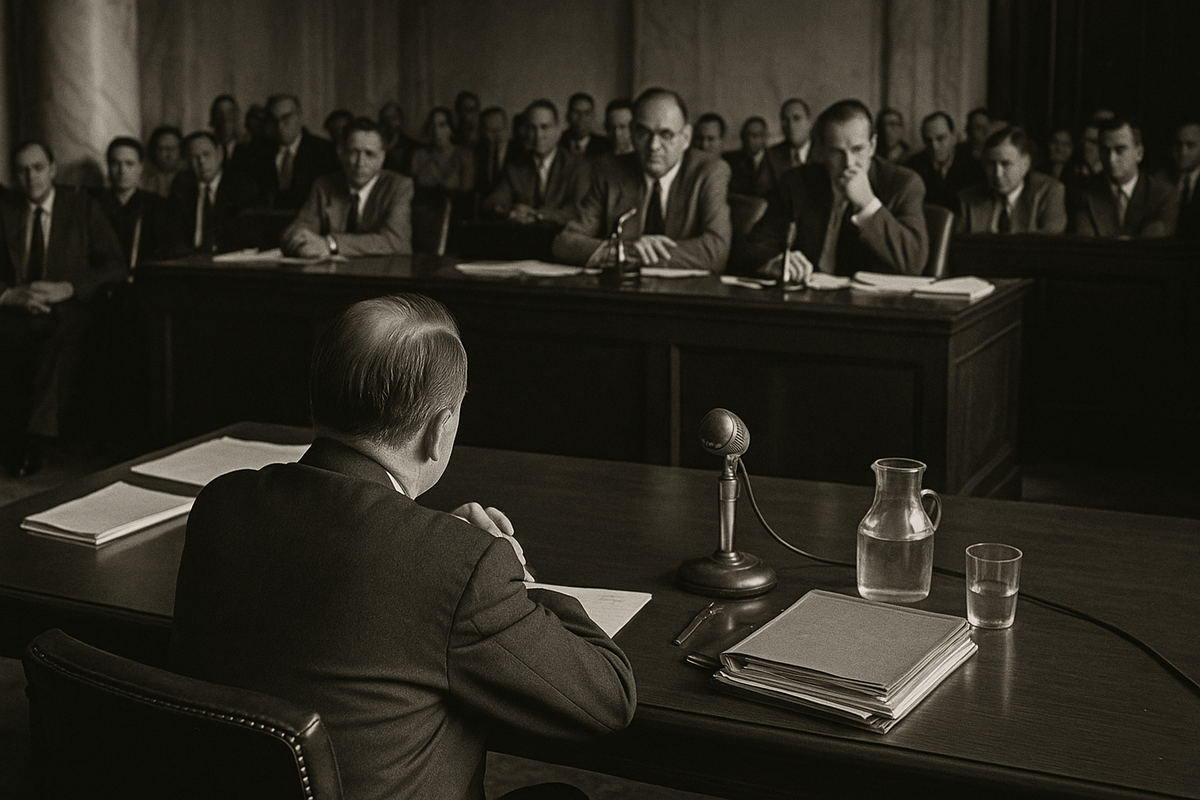
The Terror of Tellico Plains
When Time Magazine Watched McCarthy Begin to Fall
On May 17, 1954, Americans picking up their weekly copy of Time Magazine found something unusual: a small-town Tennessee lawyer being cast as a hero in the nation's most consequential political drama.
His name was Ray Jenkins. Time called him "The Terror of Tellico Plains." And for readers watching Senator Joseph McCarthy's crusade against alleged Communists reach its televised peak, Jenkins represented something increasingly rare in Washington—a man who refused to be intimidated.
This issue of Time didn't just report the Army-McCarthy hearings. It captured the exact moment when fear began losing its grip on the American imagination.
Historical Archive
Publication: Time Magazine
Issue Date: May 17, 1954
Featured Profile: Ray Jenkins, "The Terror of Tellico Plains"
Historical Context: Army-McCarthy Hearings, Cold War Era
Archive Significance: Primary source document capturing McCarthy's downfall in real-time
The Atmosphere of 1954
To understand what made this issue significant, you have to understand what Americans were living through.
The Soviet Union had the atomic bomb. Communist China had emerged under Mao. The Korean War had ended inconclusively just months earlier. At home, the fear of Communist infiltration had metastasized from concern into something darker—a paranoia that destroyed careers, fractured friendships, and made accusations tantamount to guilt.
Joseph McCarthy, the junior senator from Wisconsin, had built his political career on that fear. His weapon was simple: lists of alleged Communists in government, accusations delivered with theatrical fury, and a willingness to destroy anyone who challenged him.
By spring 1954, McCarthy had turned his attention to the United States Army, claiming it harbored Communists and blocked his investigations. The Army pushed back. What followed were hearings that would be broadcast live into 20 million American homes—the first time television would decisively shape a political outcome.
Enter Ray Jenkins
Time's profile of Jenkins was a study in contrasts.
Born in rural Tennessee, Jenkins had made his name in mountain courtrooms, far from Washington's marble corridors. His credentials were solid—sharp legal mind, devastating cross-examinations—but his manner was pure Appalachia: slow drawl, no pretension, and a plainspoken directness that cut through political theater like a knife.
As chief counsel for the Senate subcommittee investigating the Army-McCarthy conflict, Jenkins had a nearly impossible task: maintain order in hearings that McCarthy seemed determined to turn into a circus.
Time showed how Jenkins did it. He didn't grandstand. He didn't match McCarthy's bombast. Instead, he deployed the weapons of a country lawyer: simple questions, relentless logic, and an absolute refusal to be bullied. Where McCarthy blustered, Jenkins remained calm. Where McCarthy accused, Jenkins asked for evidence.
The nickname—"The Terror of Tellico Plains"—captured this paradox perfectly. Jenkins was terrifying not because he shouted, but because he was unshakeable.
The Other Joe
Time paired Jenkins' profile with another: Joseph Welch, the Army's chief counsel, dubbed "The Other Joe" in deliberate contrast to McCarthy.
Welch was everything McCarthy wasn't—urbane, witty, and possessed of a devastating understated style. Where McCarthy saw enemies, Welch saw facts. Where McCarthy dealt in insinuation, Welch deployed precision.
Time's May 17 profile introduced Welch to the nation just weeks before he would deliver one of the most famous rebukes in American political history. In June—after McCarthy attacked a young lawyer in Welch's firm—Welch would respond with words that still echo: "Have you no sense of decency, sir, at long last?"
But in May, Time was already framing the conflict correctly: McCarthy's downfall wouldn't come from a single dramatic blow. It would come from the accumulated weight of men like Jenkins and Welch—lawyers who simply refused to accept that fear was an adequate substitute for evidence.
Time's Editorial Power
By 1954, Time Magazine occupied a unique position in American media. Founded by Henry Luce, it blended sharp reporting with vivid characterization, turning political events into human drama without sacrificing accuracy.
The magazine's coverage of the Army-McCarthy hearings exemplified this approach. Time didn't just summarize testimony—it captured atmosphere, analyzed body language, and crystallized complex political maneuvering into memorable profiles. The writing was punchy, confident, occasionally arch. Nicknames like "The Terror of Tellico Plains" weren't just clever—they were interpretive tools that helped readers understand the stakes.
More importantly, Time contextualized the hearings within the broader currents of the Cold War. The magazine reminded readers that vigilance against genuine threats was necessary, but unchecked fear could destroy the freedoms America claimed to defend.
For families watching the hearings on their black-and-white televisions, it was compelling theater. For Time readers, it was theater explained, dissected, and placed in historical perspective.
Political Theater Meets Television
The 1954 hearings marked the first time television fundamentally shaped American politics, turning McCarthy's tactics from effective to catastrophic under sustained public scrutiny.
The Power of Integrity
Jenkins and Welch embodied quiet courage—refusing intimidation through calm professionalism rather than matching McCarthy's theatrical fury.
Cold War Paranoia
The issue captures the exact moment when American anxiety about Communist infiltration began colliding with concerns about domestic witch hunts.
Journalism as History
Time's real-time reporting shaped how Americans understood the hearings, proving magazines weren't just recording history—they were influencing it.
The Historical Record
Vintage magazine issues function as more than collectibles. They're primary sources that preserve not just what happened, but how contemporaries understood it.
The May 17, 1954 Time Magazine shows us how intelligent observers saw the Army-McCarthy hearings before the outcome was certain. Time's profiles of Jenkins and Welch weren't written with hindsight. They were judgments made in the moment—assessments that history would vindicate, but that required perception and courage to make while McCarthy still held power.
This is what makes original magazines irreplaceable. No history book, no documentary, no retrospective can capture the texture of living through these events as they unfolded.
Why Collectors Value This Issue
Genuine Inflection Point
This wasn't McCarthy's fall—that would come in December when the Senate censured him—but it documented the beginning of the end, when television exposure began turning public opinion.
Defining Portraits
Jenkins and Welch weren't household names when this issue appeared. Time's profiles introduced them to the nation and shaped how Americans understood the hearings.
Television's Political Debut
The hearings proved that McCarthy's style couldn't survive sustained public scrutiny. Time recognized this media shift and documented it in real-time.
Cold War Artifact
Captures not just events but atmosphere—the genuine anxiety about Communist expansion mixed with growing unease about domestic witch hunts.
A Crossroads Preserved
The May 17, 1954 issue of Time Magazine captured America at a decisive moment—when fear-driven politics met its match in the simple integrity of men like Ray Jenkins and Joseph Welch.
For readers in 1954, it offered reassurance that courage still mattered. For readers now, it offers something equally valuable: evidence that when fear threatens to overwhelm reason, the willingness of ordinary individuals to demand evidence and speak truth can change history's trajectory.
The Terror of Tellico Plains wasn't a demagogue or a general. He was a country lawyer who asked hard questions and refused to be intimidated. Time Magazine recognized what that meant. So did millions of Americans watching at home.
Explore the Archive
Discover our complete collection of original Time magazines spanning politics, culture, and pivotal moments from the 1920s through the 20th century. The May 17, 1954 issue isn't just a collectible—it's a window into the moment when Americans began choosing facts over fear.
Browse Time Magazine Collection