
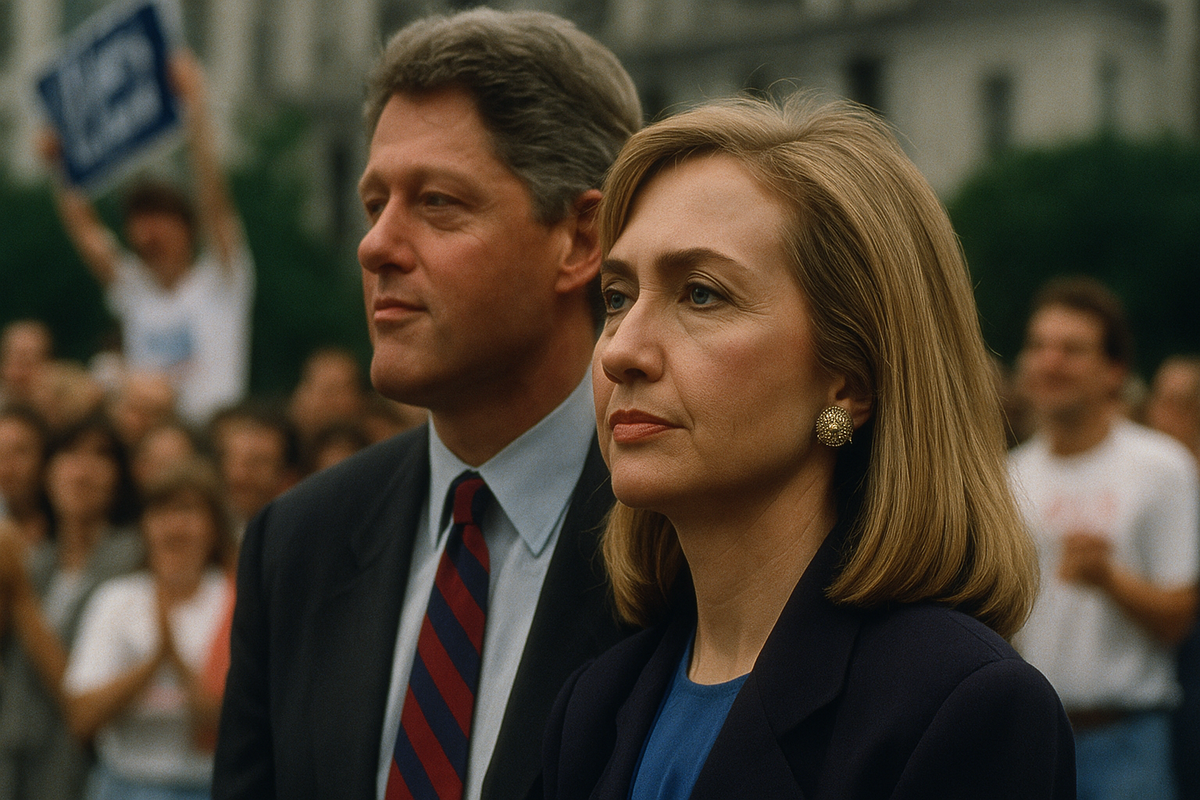
The Moment Hillary Clinton Became Unavoidable
Time's September 14, 1992 Cover That Shook American Politics
September 1992. George H.W. Bush was hemorrhaging approval ratings. Ross Perot was splitting the electorate. And Bill Clinton—a saxophone-playing governor from Arkansas—was selling Americans on generational change.
But the figure dominating headlines wasn't any of them.
When Time Magazine published its September 14, 1992 issue, the cover didn't feature the Democratic nominee. It featured his wife. Three words in bold block letters: "ALL EYES ON HILLARY."
This wasn't a puff piece about a candidate's spouse. It was a cultural reckoning. Hillary Rodham Clinton—Yale Law graduate, children's rights advocate, and unrepentant policy partner—was forcing America to confront a question it had never seriously asked: What happens when a First Lady refuses to stay in the background?
Time's answer was as sharp as it was prescient: chaos, backlash, and the beginning of a political phenomenon that would dominate American life for the next three decades.
Archive Details
Historical Figure: Hillary Rodham Clinton
Issue Date: September 14, 1992
Archive Source: Time Magazine
Cultural Context: 1992 Presidential Election, "Year of the Woman," Culture Wars
The Woman Who Wouldn't Smile and Wave
By 1992, the role of First Lady had settled into comfortable predictability. Barbara Bush embodied the archetype perfectly—warm, grandmotherly, radiating domestic stability in her signature pearls. She baked cookies. She championed literacy. She stayed out of policy debates. Americans adored her.
Hillary Clinton was her opposite in every measurable way.
She reviewed Bill's speeches and sharpened his arguments. She shaped campaign strategy. She stood beside him on stages in Waco, Texas, not as ornament but as equal. When critics suggested she was overstepping, she didn't retreat—she doubled down, telling voters they'd get "two for the price of one" if her husband won the White House.
Time's cover story didn't just report this dynamic. It dissected it, positioning Hillary as the flashpoint for every cultural tension simmering beneath the 1992 election: feminism versus family values, professional women versus traditional wives, the 1960s generation versus the Reagan era.
The magazine's visual strategy was brilliant. A side-by-side portrait of Bill and Hillary—both gazing forward, equal in frame—declared the partnership at the heart of their campaign. An archival photograph showed young Hillary Rodham at Wellesley in 1969, the college's first student commencement speaker, linking her to civil rights activism and second-wave feminism. Candid trail shots captured her in motion, engaged, unavoidable.
Then came the contrast: Barbara Bush in Houston, radiant in red. Marilyn Quayle in Florida, comforting hurricane victims. The visual argument was unmistakable—Hillary's modern ambition set against the traditional script other political wives were following.
The Republican Strategy: Make Her the Issue
The GOP saw an opening. If voters were unsettled by Hillary's prominence, Republicans would amplify that discomfort into a liability.
They painted her as a radical feminist—more comfortable in boardrooms than kitchens, more interested in policy than family. The attacks weren't subtle. Conservative commentators questioned her decision to keep her maiden name professionally. They criticized her headbands. They mocked her refusal to "stand by her man" in the Tammy Wynette mold after questions about Bill's infidelity surfaced.
But Time's reporting revealed the risk in this strategy. Polling data showed Americans held contradictory views: 82% described Hillary as "intelligent." 43% called her "someone I admire." Yet 40% found her "too pushy." She was simultaneously respected and resented—proof that America itself was divided on what women could be.
Republicans betting on backlash faced a problem: working women saw themselves in Hillary. Attacking her meant attacking the millions of Americans trying to balance careers and families, trying to have voices in public spheres traditionally reserved for men.
The "two for one" framing—intended as criticism—became a selling point for voters who wanted competence over convention.
What Time Understood Before Everyone Else
In 1992, dedicating a cover story to a candidate's spouse was audacious. Few publications would risk signaling that Hillary Clinton mattered as much as Bill's candidacy itself.
But Time didn't report politics—it explained cultural shifts. By profiling Hillary weeks before the election, the magazine wasn't just covering a campaign. It was documenting the exact moment American expectations of women in power began to fracture.
The issue captured Hillary before she redefined the role of First Lady by championing healthcare reform. Before her Senate career. Before serving as Secretary of State. Before running for president—twice. This was Hillary Clinton as controversial newcomer, lightning rod, and harbinger of change Americans couldn't yet name.
Time's editors understood what many voters didn't: whether Bill Clinton won or lost, Hillary had already altered the landscape. She made political partnership visible. She refused diminishment. She demonstrated that a woman could be both fiercely intelligent and politically viable—even if half the country wasn't ready for it.
The Visual Legacy
Time's September 14, 1992 issue remains a masterclass in visual storytelling. Each photograph served a purpose beyond documentation—they constructed a narrative about power, expectation, and the price of visibility.
Why Collectors Value This Issue
Owning this issue means holding an artifact from the exact moment one woman forced an entire nation to reconsider what leadership could look like.
Time's Legacy as Cultural Record
Before the internet atomized media, Time Magazine didn't just report events—it shaped how Americans understood them. With a weekly readership in the millions, Time's editorial choices mattered. A cover story conferred legitimacy, urgency, importance.
By placing Hillary Clinton at the center of its September 14 issue, Time signaled that she wasn't a sideshow to Bill's campaign. She was the story—the figure who would define what political partnership, female ambition, and public scrutiny looked like for a generation.
Few magazines captured cultural transformation with such precision. Fewer still have aged into historical documents this revealing.
Own the Moment History Shifted
The September 14, 1992 issue of Time Magazine with "All Eyes on Hillary" didn't just cover an election. It documented the beginning of a political era—one where a woman's refusal to be silent became the story that wouldn't go away.
Browse Time Magazine CollectionFrom World War II to the culture wars of the 1990s, Time chronicled history as it happened. Each issue is more than a magazine—it's a primary source, a window into the moment, a piece of the American story you can hold in your hands.