
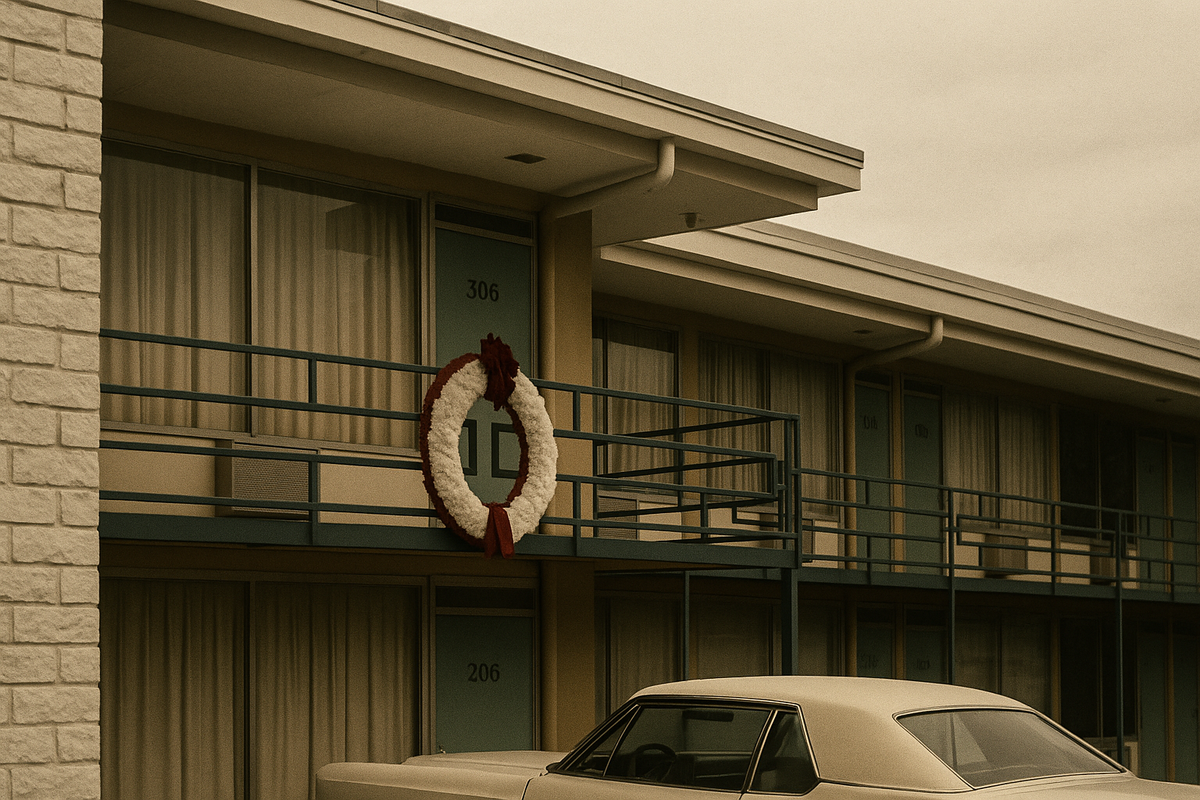
Justice in Question: Martin Luther King Jr.'s Assassination and the Unanswered Doubts of 1972
When Esquire Magazine dared to challenge the official story of Dr. King's murder
March 1972. Americans opened their mailboxes to find the latest Esquire Magazine waiting—but this wasn't the usual blend of fashion spreads and literary fiction. On the pages inside lay something far more unsettling: a direct challenge to the official story of Martin Luther King Jr.'s assassination.
Four years after a sniper's bullet ended King's life at the Lorraine Motel in Memphis, journalist Bynum Shaw published "Are You Sure Who Killed Martin Luther King?"—a piece of investigative skepticism that asked the questions mainstream media wouldn't touch. James Earl Ray sat in prison, convicted without a trial. The case was closed. But Shaw's article made one thing clear: the American public had never seen the evidence.
This wasn't retrospective journalism. It was an active investigation into a wound that refused to heal.
Archive Details
Historical Figure: Dr. Martin Luther King Jr.
Issue Date: March 1972
Archive Source: Esquire Magazine
Feature Article: "Are You Sure Who Killed Martin Luther King?" by Bynum Shaw
The Fracture in American Trust
By 1972, faith in American institutions had cracked wide open.
Three major leaders—John F. Kennedy, Robert F. Kennedy, and Martin Luther King Jr.—had been assassinated in less than a decade. Each death left behind convenient lone gunmen and official explanations that satisfied no one. The Vietnam War dragged on under Nixon's orders while antiwar protests consumed university campuses. The Pentagon Papers had exposed years of government deception. White flight and systemic resistance were dismantling the gains of the Civil Rights Movement.
Into this climate of suspicion, Esquire dropped Shaw's essay like a match on dry timber.
James Earl Ray had pleaded guilty in 1969, accepting a 99-year sentence to avoid a jury trial. No trial meant no witnesses, no cross-examination, no public testing of the prosecution's case. If the evidence against Ray was ironclad, Shaw asked, why had the state been so eager to seal it away from scrutiny?
Esquire's Calculated Provocation
Esquire Magazine in 1972 occupied a rare cultural position. It could publish Norman Mailer's political commentary, John Updike's fiction, and hard-edged investigative journalism in the same issue without diluting its authority. The magazine trusted its readers to handle complexity.
Shaw's feature exemplified that trust. In measured, skeptical prose, he catalogued the peculiarities that haunted the King assassination:
The evidence left behind. Ray supposedly abandoned the murder weapon and his personal belongings in plain sight near the crime scene—simultaneously professional enough to execute a clean shot and careless enough to gift-wrap the prosecution's case.
The escape route. Ray fled through Atlanta, into Canada, and finally to London—a pattern suggesting resources and planning far beyond what a small-time criminal could orchestrate alone.
The phantom radio call. Reports surfaced of a fake police broadcast near the time of the shooting, redirecting officers away from the actual escape route. Who had access to police frequencies?
The absent motive. Ray had no documented history of violent racial extremism. No manifesto. No prior connection to King or the Civil Rights Movement. Just opportunity and a guilty plea.
Shaw didn't sensationalize. He cross-examined. And Esquire's editorial design reinforced the gravity—dense two-column layouts, stark black-and-white photography, minimal flourish. The pages read like a dossier, evidence presented for judgment.
What Shaw Found—And What He Didn't Say
Shaw stopped short of naming alternative suspects or weaving elaborate conspiracy theories. His restraint made the article more powerful. He simply documented what didn't add up:
Ray's guilty plea had prevented any public examination of the state's evidence. The prosecution's case rested on circumstantial evidence that looked too neat. Witnesses reported seeing figures near the boarding house that didn't match Ray's description. The logistics of the escape suggested coordination.
Most damning of all: Ray himself recanted his confession almost immediately after sentencing, claiming he'd been pressured into the plea to avoid the death penalty. For the next three decades until his death in 1998, Ray maintained his innocence and demanded the trial he'd never received.
Shaw wasn't claiming Ray was innocent. He was arguing that America had never actually proven Ray was guilty—at least not in the transparent, adversarial process a democracy promises its citizens.
Why This Issue Still Matters
The March 1972 Esquire exists at a precise historical moment—early enough to capture the raw uncertainty before decades of new evidence, congressional hearings, and cultural reexamination reshaped the narrative.
Four years later, the House Select Committee on Assassinations would conclude that King was "likely the victim of a conspiracy." That finding validated Shaw's skepticism but also deepened the mystery. If Ray didn't act alone, who helped him? And why has no one else ever been charged?
For collectors and historians, this issue represents more than vintage journalism. It's an original witness to America's struggle with institutional credibility. It documents the moment when asking questions about official narratives shifted from fringe paranoia to responsible citizenship.
The magazine itself carries Esquire's mid-century prestige—the era when the publication defined American literary journalism. Issues from this period remain highly sought after, especially those tackling subjects of enduring historical significance.
Historical Timing
Published just four years after King's assassination, capturing the raw uncertainty before decades of reexamination.
Journalistic Courage
Esquire challenged the official narrative when mainstream media remained silent on the case's irregularities.
Cultural Context
Reflects the erosion of institutional trust following Vietnam, the Pentagon Papers, and multiple assassinations.
Enduring Questions
The 1976 House Committee would later conclude King was "likely the victim of a conspiracy"—validating Shaw's skepticism.
The Questions That Won't Die
Fifty years later, Shaw's central question endures: Are you sure who killed Martin Luther King?
Did Ray act alone? If not, who provided support? Why was the case rushed to a guilty plea that prevented public scrutiny? And why, despite decades of doubt and a congressional finding of "likely conspiracy," has the full truth never emerged?
These aren't just questions about one man's guilt. They're questions about whether American justice operates transparently—or whether convenience sometimes trumps truth.
By publishing Shaw's article, Esquire gave its readers permission to doubt, to question, to demand better from their institutions. That invitation remains relevant.
Collector Significance
Primary Source Document
An original witness to America's struggle with institutional credibility, frozen in ink before history could smooth the edges.
Mid-Century Esquire Prestige
From the era when Esquire defined American literary journalism, combining cultural commentary with investigative depth.
Historical Inflection Point
Documents the moment when questioning official narratives shifted from fringe paranoia to responsible citizenship.
Validated Skepticism
Shaw's doubts were later confirmed by the House Select Committee's finding of "likely conspiracy" in 1976.
A Cultural Artifact of National Doubt
The March 1972 issue of Esquire Magazine stands as one of the publication's most historically significant editions. Its feature on King's assassination offered no closure, no tidy resolution. Instead, it delivered a challenge: confront the gaps in the official story, and decide for yourself what justice requires.
For readers and collectors today, this issue isn't just reading material. It's a primary source—a document that captures the doubts, fears, and questions of a nation in transition, frozen in ink before history could smooth the edges.
Explore Our Archive Collection
From politics and culture to style and literature, vintage Esquire magazines remain a vivid record of the 20th century. Holding one in your hands means stepping back into history—and watching it unfold in real time.
Browse Esquire Magazine Collection