
The Last Night the Territories Mattered
When Andre the Giant Broke the AWA and Pro Wrestling Illustrated Documented the End of an Era
September 1979. Pick up that month's Pro Wrestling Illustrated and you're holding something rarer than a clean finish in Memphis—a magazine that accidentally documented the end of an era.
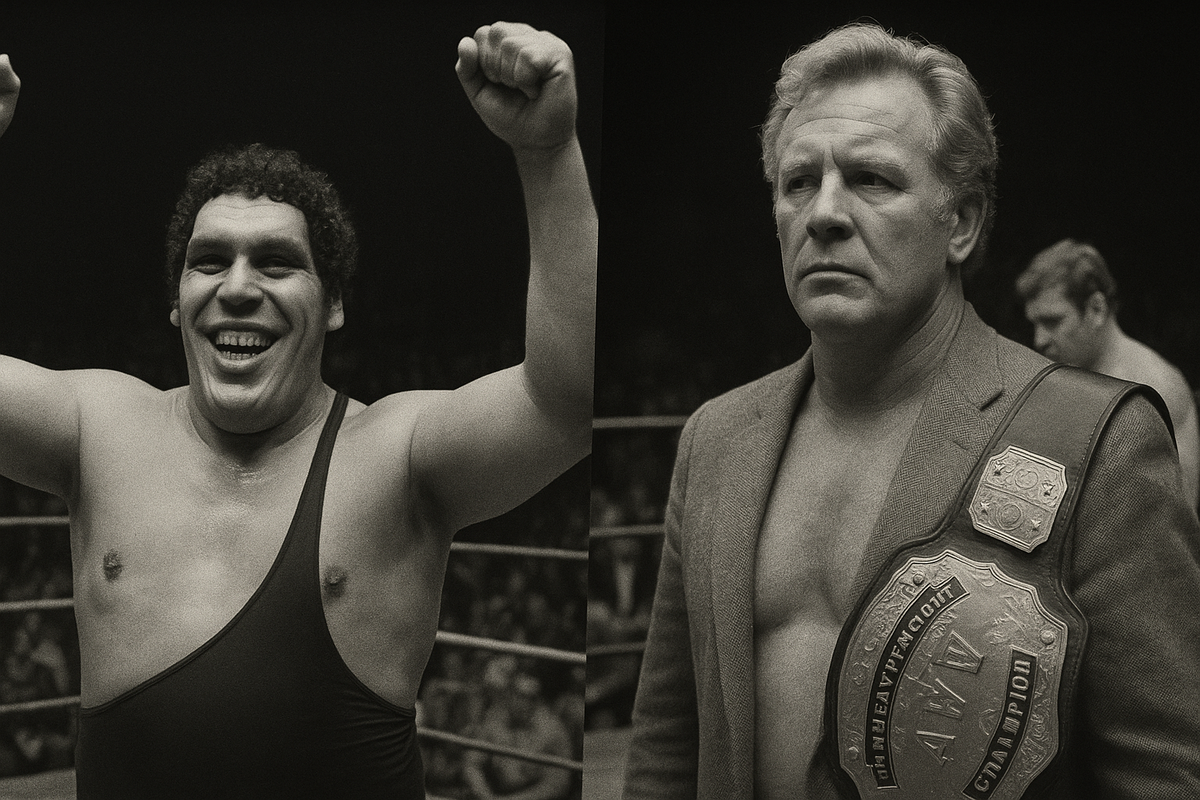
On one page, Andre the Giant stands grinning after dismantling the entire AWA roster in a single battle royal. On another, Nick Bockwinkel clutches his championship belt, jaw set, eyes daring anyone to suggest his reign is finished. Between these two men—one an unstoppable force of nature, the other a cerebral technician refusing to yield—PWI captured the precise moment before everything changed.
Within five years, Verne Gagne's American Wrestling Association would begin its slow collapse. Cable television would shatter the territorial boundaries that had governed wrestling since the 1920s. And Vince McMahon would transform his father's regional promotion into a national juggernaut that would swallow the industry whole.
But in September 1979, none of that had happened yet. The AWA still mattered. The territories still held. And Pro Wrestling Illustrated was there to document it.
Archive Details
Publication: Pro Wrestling Illustrated
Issue Date: September 1979
Featured Subjects: Andre the Giant, Nick Bockwinkel
Historical Significance: Documents the AWA at peak strength before the national expansion
Archive Source: Original magazine collection
When One Man Defeated an Entire Promotion
The feature article didn't bury the lead: "Andre Defeats the AWA... All in One Night!"
Not "wins a battle royal." Not "claims victory." Defeats the AWA. That verb choice matters. PWI's editors understood they were documenting something beyond a match result—they were chronicling the moment a single performer exposed the limits of a promotional system.
Andre hadn't just beaten Pat Patterson. He'd eliminated Ray Stevens, the Super Destroyer, and a roster of contenders who, on any other night, could credibly main event. The article framed this not as athletic competition but as geological force—an earthquake that happened to take human form.
The opening paragraph placed Andre alongside O.J. Simpson, Willie Shoemaker, and Reggie Jackson. This wasn't wrestling reaching for legitimacy through sports comparisons. This was PWI recognizing that Andre had transcended wrestling entirely. He was already operating on a different scale, pulling mainstream attention toward a business most newspapers still relegated to the amusement section.
The photographs tell the rest. Andre's arms raised, that mischievous grin suggesting he'd just completed a light workout rather than demolished a dozen professionals. No menace in his expression—just the casual confidence of someone who knew physics worked differently for him.
The Champion Who Refused to Hear the Clock
Flip the page and you find Nick Bockwinkel, and suddenly you're in a different sport entirely.
Where Andre was spectacle, Bockwinkel was craft. Where Andre overwhelmed, Bockwinkel calculated. The Midwestern Report profiled a champion aware that critics had started whispering about his age, his wear, the inevitable decline—and who met those whispers with cold fury.
"Finished? Does this look like I'm finished?"
That quote, preserved in the article, captures everything about Bockwinkel's reign. Not defiance for show, but genuine indignation that anyone would question his supremacy. He wasn't working the crowd here. He was defending his life's work.
The accompanying images reinforce this. Bockwinkel shaking hands with Billy Robinson after a match, two technicians acknowledging shared excellence. Bockwinkel mid-hold, face contorted not in theatrical rage but actual exertion. These weren't the photos of a champion playing a character. They documented an athlete refusing to surrender his prime.
"I am tough. I am fast. I am the greatest champion of all time."
Pride? Absolutely. But also pressure. Bockwinkel held that belt through an era when championship reigns were measured in years, not months. When defenses happened in different cities every night, not on quarterly pay-per-views. When "title defense" meant walking into hostile territory and wrestling their best man for sixty minutes.
The article acknowledged his physical wear even as it celebrated his resilience. You can feel the editors threading that needle—respecting kayfabe while nodding toward reality, giving fans the drama they wanted and the credibility they needed.
The Magazine That Made Itself Matter
By 1979, Pro Wrestling Illustrated had established itself as something unprecedented: an independent wrestling publication that promoters couldn't control and fans actually trusted.
Bill Apter and Stanley Weston had cracked a code. They understood that fans wanted the theater preserved but not insulted. They wanted to believe in Andre's dominance and Bockwinkel's technical mastery without being treated like children who couldn't distinguish performance from competition.
So PWI gave them both. Andre's feature leaned into mythology—the giant who accomplished in one night what lesser men couldn't achieve in a lifetime. Bockwinkel's profile grounded itself in realism—discussing his psychology, his tactical adjustments, the physical toll of defending a championship across the Midwest.
The black-and-white photography elevated this balance. These weren't promotional stills. They were journalism. Action shots that captured genuine athletic moments. Portrait work that revealed character beyond gimmick. For fans who couldn't travel to matches, these images weren't just illustrations—they were evidence that this world existed beyond their imagination.
In an era before home video, before cable television saturated markets with wrestling content, magazines like PWI served as the primary archive. They were how a fan in New York learned about AWA stars. How someone in Minneapolis discovered what Andre was doing in Japan. How the fragmented territory system maintained any coherent narrative at all.
What the Issue Reveals About 1979
Read this magazine carefully and you can see the tectonic plates shifting beneath wrestling's surface.
Andre the Giant was already too big for the territory system. He worked everywhere precisely because he belonged nowhere—a special attraction who generated money in every market without threatening any local champion's position. His presence in this AWA-focused issue is almost incidental. He showed up, destroyed everyone, and presumably moved on to the next territory by the time readers held this magazine.
That mobility was the future. Within a decade, Vince McMahon would apply that model to his entire roster, turning regional stars into national phenomena who appeared everywhere simultaneously. Andre himself would become the centerpiece of WrestleMania III, the event that proved wrestling could operate as a singular entertainment property rather than a collection of fiefdoms.
Meanwhile, Bockwinkel represented everything that wouldn't survive. His championship mattered because the AWA mattered, and the AWA mattered because it controlled specific geography. His technical excellence, his intellectual promos, his refusal to work broad for cheap reactions—these were virtues in a system that rewarded sustained credibility over explosive moments.
The national model would invert these priorities. Hulk Hogan's WWF Championship would matter because Hogan was everywhere, not because he defended it nightly in Boston or Philadelphia. The title became a prop in a larger spectacle rather than the central artifact of regional competition.
This September 1979 issue documents that transition without knowing it. The editors thought they were covering another month of wrestling. They were actually recording the twilight of a system that had defined American professional wrestling for sixty years.
Andre's Dominance
The article emphasized how Andre defeated multiple AWA stars in a single battle royal—a feat presented as equal to years of wrestling rivalries. His mischievous grin and casual dominance captured his unique blend of intimidation and charisma.
Bockwinkel's Pride
The champion's quote—"I am tough. I am fast. I am the greatest champion of all time"—revealed both his pride and the pressure of constant defenses. Photos of him shaking hands with Billy Robinson reinforced the AWA's reputation for technical wrestling.
Mainstream Comparisons
Opening lines placed Andre alongside O.J. Simpson, Willie Shoemaker, and Reggie Jackson, showing how wrestling sought mainstream sports comparisons to elevate its stars and pull attention from newspapers that still dismissed the business.
Territory System's Depth
The feature reminded fans of the AWA's competitive field, with names like Pat Patterson, Ray Stevens, Super Destroyer, and Jim Brunzell highlighting the roster Andre conquered—each a main-event talent in their own right.
The Artifact in Context
Holding this magazine means holding a specific moment in wrestling time—after the Golden Age of the 1950s, before the Rock 'n' Wrestling explosion of the 1980s. The sport existed in a strange equilibrium, professionally viable but culturally marginal, territorially organized but increasingly tested by media technologies that ignored geography.
Pro Wrestling Illustrated thrived in this gap. It provided the connective tissue the territory system couldn't generate on its own. It gave fans a reason to care about wrestlers they'd never see live. It preserved matches that would otherwise exist only in the memories of those who attended.
The September 1979 issue performs this function perfectly. It documents Andre's dominance and Bockwinkel's defiance. It celebrates the AWA's depth while unknowingly cataloging the stars who would soon scatter to other promotions. It treats wrestling with the seriousness its performers demanded and the showmanship its fans craved.
Five years later, the wrestling world would look radically different. Ten years later, the AWA would be irrelevant. Twenty years later, it would be dead.
But in September 1979, Nick Bockwinkel was still champion. Andre the Giant was still conquering territories one night at a time. And Pro Wrestling Illustrated was there to make sure someone remembered.
Why This Issue Commands Its Price
Vintage wrestling magazines appreciate in value for reasons beyond simple scarcity. They function as primary sources for an industry that deliberately obscured its own history.
Andre the Giant Content
Features documenting his prime remain perpetually valuable. He died in 1993, cementing his legend. He never wrote an autobiography. He rarely gave legitimate interviews. Magazines like this preserve his career in ways nothing else can.
Bockwinkel Documentation
The AWA's legacy has been systematically overshadowed by WWF/WWE's historical dominance. Collectors and historians prize any material that captures what made the promotion significant—and Bockwinkel was its defining champion.
The Supporting Roster
Pat Patterson, Ray Stevens, Billy Robinson, Jim Brunzell—this issue name-checks a who's who of late-1970s wrestling. Each name represents a different branch of wrestling's evolutionary tree, from WWF creative forces to Japanese catch-wrestling masters.
Pre-Expansion Documentation
Before McMahon's national campaign, before cable television homogenized the product, wrestling looked like this—regional, diverse, built on touring champions and local heroes. Issues from this era are increasingly rare as cultural ephemera.
Collectors aren't just buying nostalgia. They're acquiring evidence of a business model that no longer exists, preserved by a magazine that understood its historical significance even if readers in 1979 did not.
Add This Chapter to Your Collection
The September 1979 issue of Pro Wrestling Illustrated belongs in any serious wrestling archive. It captures Andre the Giant at his most dominant, Nick Bockwinkel at his most defiant, and the AWA before its collapse. More importantly, it documents the final years of the territory system—the moment before wrestling changed forever.
Browse Pro Wrestling Illustrated Magazine CollectionFrom the territory wars of the 1970s through the national expansion of the 1980s and beyond, these magazines preserve decades of wrestling history in its original form—before revisionist documentaries, before Wikipedia, before anyone knew which moments would matter.
This isn't just collecting. It's preserving the evidence.