
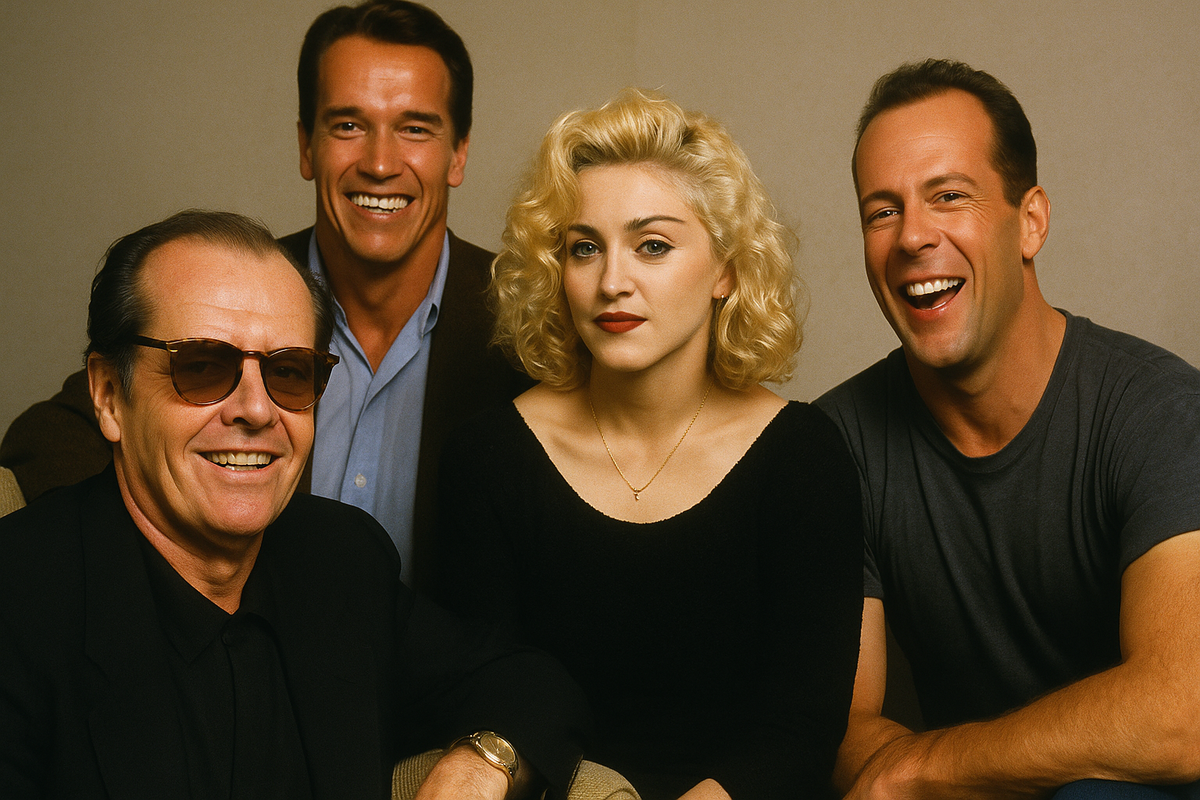
When Hollywood Became Wall Street
The Forbes Issue That Changed Entertainment Forever
On October 1, 1990, a business magazine did something remarkable: it exposed the exact machinery turning actors into empires.
That day, Forbes published "Golden Boys and Girls" by Peter Newcomb with Matthew Schifrin—a cover story that didn't just count celebrity earnings. It dissected them. Bruce Willis wasn't a movie star; he was a $7.5 million investment vehicle with diversified revenue streams. Arnold Schwarzenegger's $15 million Total Recall paycheck wasn't gossip—it was a case study in leverage. And Bill Cosby, pulling in $4 million per month from Cosby Show syndication while his films flopped, proved that Hollywood's real money had migrated to television reruns.
This wasn't Entertainment Tonight. This was an autopsy of how fame became finance.
For anyone who wondered when celebrities stopped being talent and started being corporations, this issue marks ground zero.
Archive Details
Publication: Forbes Magazine
Issue Date: October 1, 1990
Cover Story: "Golden Boys and Girls" by Peter Newcomb with Matthew Schifrin
Historical Significance: Documents the transformation of entertainers into equity partners and corporate-scale earners
The Economic Earthquake of 1990
The early nineties didn't just usher in grunge and the Gulf War. They redrew the map of global entertainment economics, and Forbes was there with the receipts.
Hollywood's Budget Explosion
The $15 million blockbuster was dead. By 1990, $40 million productions were standard, with marketing budgets doubling that figure. Die Hard 2, Total Recall, Rocky V—each carried financial stakes that turned studios into nervous bankers and stars into dealmakers with unprecedented power.
From Paychecks to Profit Shares
Jack Nicholson's backend deal on Batman didn't just supplement his salary—it obliterated it. His percentage of gross receipts reportedly earned him more than the entire upfront fee, establishing the profit participation model that would define Hollywood negotiations for the next three decades.
Music Goes Corporate
Tours now rivaled—and often surpassed—album sales. The Rolling Stones' Steel Wheels tour generated $98 million. New Kids on the Block transformed teen hysteria into a $400 million merchandising juggernaut. Michael Jackson, even without releasing new music, commanded endorsement deals that kept him among the year's top earners purely on brand power.
The Syndication Gold Mine
Bill Cosby's $4 million monthly take from Cosby Show reruns exposed television's dirty secret: syndication rights could eclipse box office returns. While Ghost Dad stumbled in theaters, those syndicated episodes minted money in perpetuity—a revenue model that would inspire every sitcom deal that followed.
Forbes captured the moment when entertainment shed its artistic pretenses and revealed itself as multinational commerce in costume.
A Cover That Chose Calculation Over Glamour
Forbes' October 1990 cover rejected the celebrity magazine playbook entirely. No glossy headshots. No red carpet glamour. Instead, readers found theatrical masks, musical notes, and abstract shapes—visual shorthand that these weren't artists being profiled but financial instruments being analyzed.
The design choice was deliberate: behind every spotlight lies a spreadsheet.
The Language of Ledgers, Not Legends
Forbes wrote about entertainers the way it wrote about Exxon executives—with cold precision and colder numbers.
Bruce Willis became a two-film case study: $7.5 million for Die Hard 2, $5 million for Bonfire of the Vanities. The magazine didn't ask if he was talented. It asked if he was overvalued.
Arnold Schwarzenegger's $15 million Total Recall deal was contextualized against rising production costs and box office projections—investment analysis dressed as film criticism.
Sylvester Stallone's $25 million Rocky V contract wasn't celebrated. It was flagged as evidence of an unsustainable arms race.
By treating entertainers as balance sheets with faces, Forbes forced readers to confront an uncomfortable truth: culture had become commerce, and commerce had won.
The article also posed the questions studios feared asking aloud: Could this growth last? Would audiences keep paying premium prices for inflated spectacles? Forbes identified the bubble before it burst, warning of economic instability that would haunt Hollywood through the decade's studio consolidations and bankruptcies.
Ten Seismic Shifts Captured in Real Time
Why This Issue Matters to Collectors
Captures Bruce Willis, Arnold Schwarzenegger, Madonna, Michael Jackson, and Oprah Winfrey at the exact inflection point when they ceased being performers and became revenue-generating entities.
The celebrity-as-CEO model detailed here now dominates influencer culture, streaming deals, and brand partnerships—this issue documented the birth.
The abstract cover design separates it from photo-driven celebrity magazines, marking it as serious financial journalism rather than entertainment fluff.
Forbes issues covering watershed entertainment moments remain among the most sought-after vintage business publications, especially when featuring multiple cultural icons at their commercial peak.
Owning this issue means possessing primary source material for understanding how modern celebrity economics were built.
For Collectors, Historians, and Students of Power
This October 1990 Forbes isn't just about Hollywood star salaries or eighties excess. It's about the exact moment when art became asset class, when talent became transaction, and when Forbes had the clarity—and audacity—to say it in print.
Whether you collect vintage business journalism, study entertainment economics, or simply want to understand how names like Nicholson, Schwarzenegger, Madonna, Jackson, and Winfrey evolved from celebrities into corporations, this issue delivers authoritative, contemporaneous analysis unavailable anywhere else.
For those seeking original Forbes magazines that document cultural turning points, this edition stands as both artifact and instruction manual.
Experience 1990 as It Was Reported
Step back into the year when Hollywood surrendered to Wall Street's logic and business magazines started reading like tabloids with spreadsheets.
Browse Forbes Magazine CollectionFrom Silicon Valley's ascent to entertainment's financial revolution, these magazines preserve history as it was first understood—before revisionism, before hindsight, before the narratives were polished.
The Blueprint for Everything That Followed
The Forbes "Golden Boys and Girls" cover story remains a landmark not because it celebrated wealth, but because it questioned it. By examining salaries, contracts, and revenue models with the same scrutiny applied to Fortune 500 executives, Forbes legitimized entertainers as economic forces while simultaneously warning of the system's fragility.
For collectors, this issue transcends nostalgia. It's the origin story of the modern celebrity economy—the moment when Nicholson, Schwarzenegger, Madonna, Jackson, and Cosby stopped being performers and became financial institutions.
Hold this issue in your hands and you're holding the blueprint for the entertainment industry we live with today.