
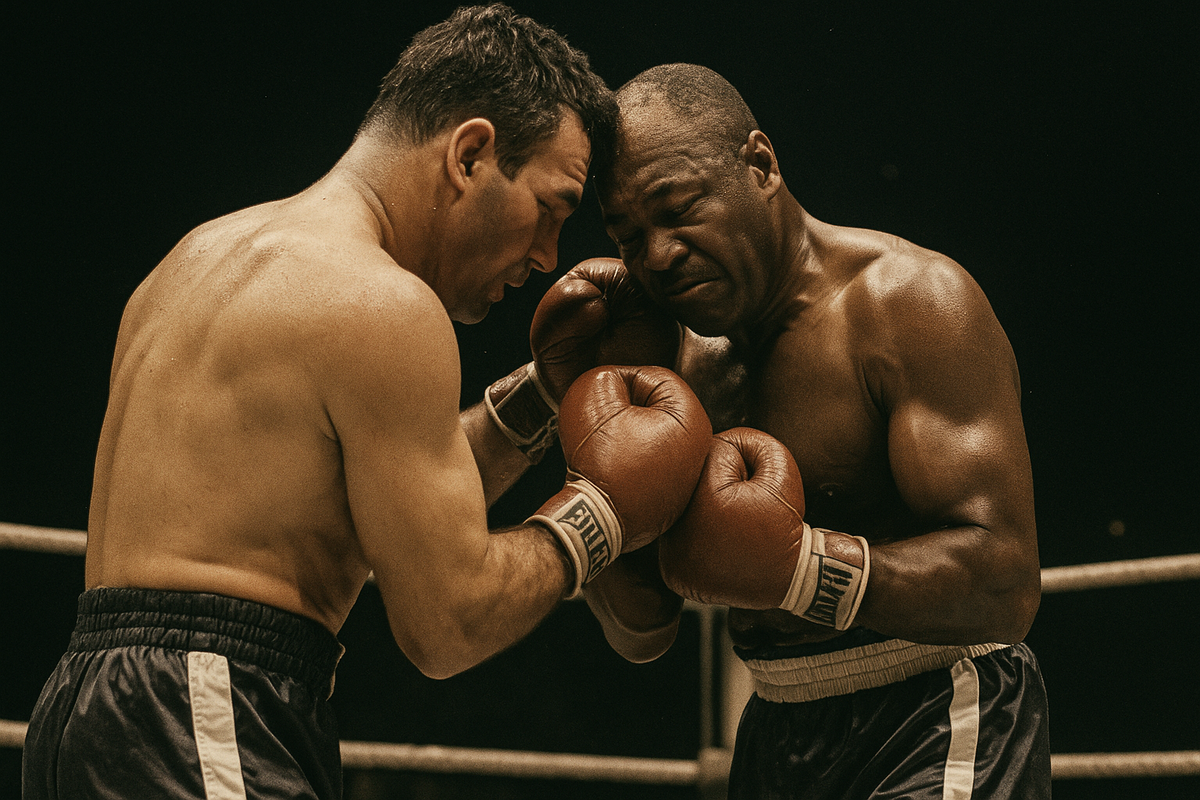
The Night Archie Moore Made Rocky Marciano Bleed
How Jet Magazine's September 15, 1955 exposé transformed a boxing match into a battle for dignity
When the September 15, 1955 issue of Jet Magazine hit newsstands, it didn't whisper. It accused.
The cover promised "Strange Facts Behind the Moore–Marciano Fight"—and inside, readers found something rare in American sports journalism: a Black publication refusing to play nice with boxing's power brokers. While white newspapers hyped the spectacle of an aging challenger facing the undefeated champion, Jet asked the questions that mattered to its audience: Why had Moore been forced to negotiate his own title shot? Was Marciano actually afraid? And what did it mean that a 39-year-old Black fighter had to claw his way into a ring that should have been his years earlier?
This wasn't sports coverage. It was an indictment.
Archive Details
Publication: Jet Magazine
Issue Date: September 15, 1955
Featured Story: "Strange Facts Behind the Moore–Marciano Fight"
Historical Context: Published during the Emmett Till trial, weeks before the Montgomery Bus Boycott
Cover Feature: Beverly Weathersby, Los Angeles City College student
The Context No One Could Ignore
September 1955 was a month that changed America. Just weeks before Jet published this issue, Emmett Till's mutilated body had been pulled from the Tallahatchie River. His open-casket funeral—captured in Jet's pages with unflinching clarity—had awakened a nation to the brutality of Jim Crow violence. By December, Rosa Parks would refuse to surrender her bus seat in Montgomery, igniting a boycott that would reshape the Civil Rights Movement.
In this charged atmosphere, Archie Moore's championship bid carried weight beyond boxing. Here was a Black athlete in his late thirties—an age when most fighters had retired or been discarded—demanding what the system had denied him for decades: a fair shot at the crown. Moore's persistence wasn't just athletic ambition. For Jet's readers, it was a mirror of their own struggle against a nation that asked them to wait, to be patient, to accept scraps from a table they had built.
When Moore stepped into Yankee Stadium on September 21, he carried more than his own dreams into the ring.
Jet's Radical Act: Telling the Truth
By 1955, Jet Magazine had become indispensable. Its pocket-sized format—small enough to slip into a purse or jacket—delivered weekly doses of everything mainstream media ignored or distorted: Black achievement, Black culture, Black anger, Black joy. Publisher John H. Johnson understood that his readers craved both glamour and gravitas, both entertainment and accountability.
The Moore–Marciano feature exemplified this philosophy. Other publications were content to cover training camps and weigh-ins. Jet pulled back the curtain on boxing's machinery:
Marciano's Hesitation
The magazine reported whispers that the champion had dragged his feet, wary of Moore's legendary punching power and ring intelligence. For a fighter marketed as fearless, this reluctance told a different story.
The Business Trap
Even with a million-dollar gate predicted, Moore risked walking away nearly empty-handed after promoters, managers, and hangers-on took their cuts. Boxing's economics had always exploited Black fighters—Moore's transparency about this reality was revolutionary.
Moore's Defiance
In Jet's pages, the challenger declared: "There will be a new heavyweight champion after September 20th. I'll win on superior experience… I'm confident." This wasn't braggadocio. It was dignified certainty from a man who had earned the right to believe in himself.
Systemic Documentation
Jet didn't just report a fight. It documented systemic injustice wearing boxing gloves, transforming sports journalism into social commentary.
The Cover: Beauty and the Question
The September 15 issue's cover captured Jet's genius in a single frame. Above the Moore–Marciano headline sat a photograph of Beverly Weathersby, a stunning Los Angeles City College student, accompanied by the question: "How Many Negroes in College?"
This juxtaposition—glamour and interrogation, aspiration and reality—was classic Jet. The magazine refused to choose between celebrating Black beauty and confronting Black barriers. Both truths could coexist on a single cover, just as they coexisted in Black life across America.
Inside, the boxing feature maintained this duality. Readers got drama and detail, yes—but they also got an education in how power operates, how opportunities are gatekept, and how even extraordinary talent must fight twice: once for recognition, once for reward.
What the Fight Meant Then (And Now)
On September 21, 1955, Rocky Marciano knocked out Archie Moore in the ninth round at Yankee Stadium. Moore had stunned the champion early, dropping him to the canvas in the second round—the moment captured in photographs that still define the fight. But Marciano, resilient and relentless, recovered to deliver a knockout that preserved his undefeated record.
Moore lost the fight. But Jet's coverage ensured he didn't lose the narrative.
The magazine's pre-fight exposé had already accomplished something larger than sports journalism: it had refused to let Moore's quest be diminished or dismissed. By documenting the obstacles he'd overcome just to enter the ring, Jet transformed a boxing match into a parable about perseverance against institutional resistance.
For readers in 1955, Moore's courage resonated beyond the ropes. If a 39-year-old fighter could force his way into a championship bout, what else might become possible?
Why Collectors Covet This Issue
Historical Convergence
Published in the same month as the Emmett Till trial, this issue captures the atmosphere of a nation at its breaking point—when sports, culture, and civil rights were colliding in ways that would reshape America.
Journalistic Rarity
Jet's behind-the-scenes reporting on the Moore–Marciano fight remains one of the most candid pieces of boxing journalism from the era, offering insights no mainstream publication dared print.
Cultural Artifact
These magazines weren't just read—they were passed from hand to hand, discussed in barbershops and beauty salons, preserved in family albums. Each surviving copy represents a piece of lived African American history.
The Jet Legacy
No publication combined investigative rigor, cultural commentary, and visual storytelling quite like Jet. Owning an original issue means possessing a fragment of the Black press's golden age.
For families, historians, and collectors of African American ephemera, this issue isn't memorabilia. It's testimony.
The Archive Speaks
This magazine sits within a larger collection of original Jet issues that document the full sweep of mid-century Black life. Explore the complete collection to discover:
- Civil rights milestones: Montgomery, Selma, the March on Washington
- Athletic legends: Joe Louis, Sugar Ray Robinson, Jackie Robinson, Althea Gibson
- Cultural icons: Miles Davis, James Baldwin, Lena Horne
- The unvarnished truth: stories of triumph and tragedy told without apology
Each issue remains a time capsule—not of how history was supposed to be, but how it actually was.
What Endures
The September 15, 1955 issue of Jet Magazine didn't just cover a fight. It documented what it cost to demand dignity in an America built on denial. Archie Moore lost to Rocky Marciano that September night in the Bronx. But in Jet's pages, he had already won something more enduring: his story, told on his terms.
Nearly seven decades later, that story still punches back against erasure. The magazine remains what it was in 1955—evidence that African Americans refused to wait for mainstream media to tell their truths. They printed their own.
For anyone who understands that history isn't written by the winners but by whoever controls the press, these pages remain sacred text.
Explore the Complete Archive
Discover original issues of Jet Magazine and other historic publications that documented the African American experience in the 20th century. Each magazine is an authentic piece of history.
Browse Jet Magazine Collection