
The Moment Frank Sinatra Proved Legends Don't Stay Dead
Time Magazine, August 29, 1955 — When America's most famous has-been became an Oscar winner and reclaimed his throne
In August 1955, Americans opened their mailboxes to find something unexpected on the cover of Time Magazine: not a general, not a president, but a street kid from Hoboken who had clawed his way back from oblivion.
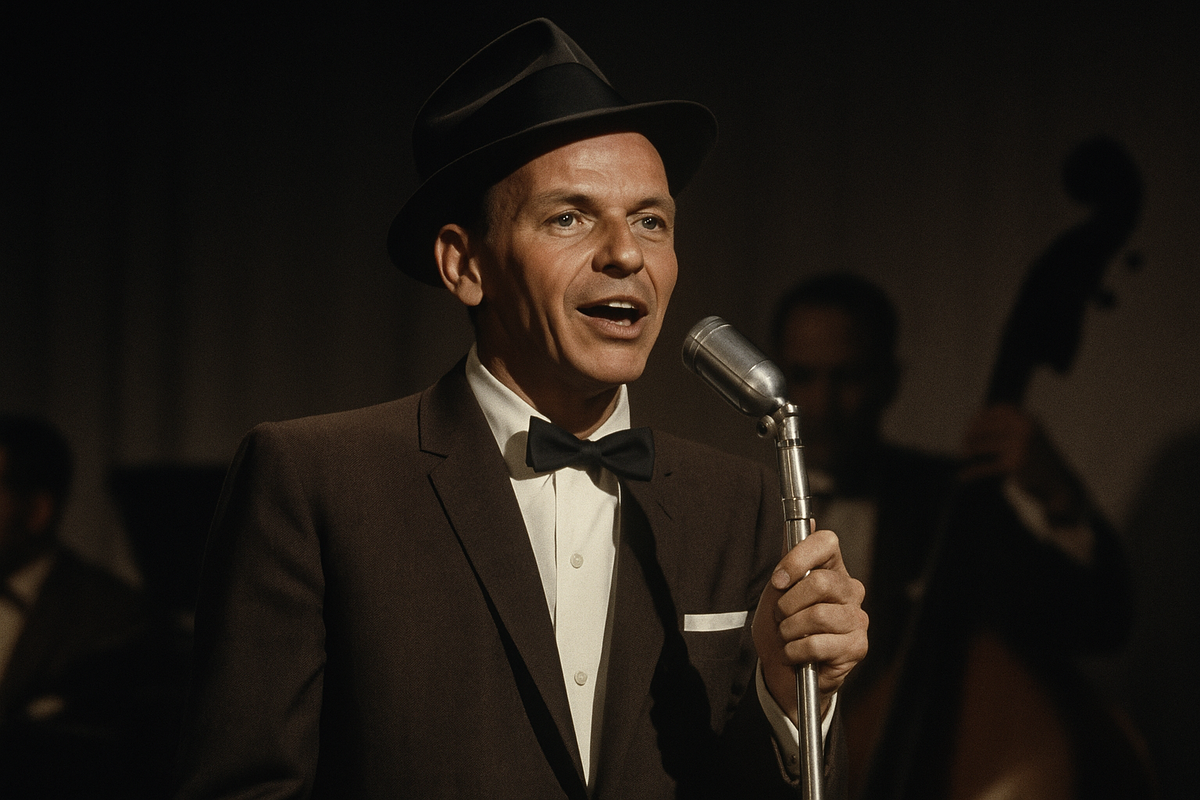
Five years earlier, Frank Sinatra had been dismissed as washed-up, a has-been crooner whose voice and career had both gone hoarse. Now he stared out from newsstands across the country—mid-performance, electric, undeniable—as Time declared what Hollywood had just learned the hard way: you don't bury Sinatra twice.
"The Kid from Hoboken" wasn't just a celebrity profile. It was an autopsy of failure and a blueprint for resurrection, published at the exact inflection point when Sinatra transformed from fading idol into cultural institution. For readers in 1955, this was the story of their own postwar America—scrappy, fallen, rebuilt.
Archive Details
Historical Figure: Frank Sinatra
Issue Date: August 29, 1955
Archive Source: Time Magazine
Feature: "The Kid from Hoboken" — Cover Story
Three Acts of an American Life
By the time Time put Sinatra on its cover, he had already died and been reborn in public view.
Act I: The Voice (Early 1940s)
Sinatra became a wartime phenomenon—the first modern teen idol. His concerts ignited hysteria. Bobby-soxers mobbed theaters, screamed until they fainted, rushed stages with the kind of fervor that would later define Beatlemania. His crooning offered escape from rationing and casualty lists, romance in a world at war.
Act II: The Fall (Late 1940s)
Then came the collapse. Singing contracts evaporated. Film roles dried up. Tabloids feasted on scandals—his volcanic temper, messy personal life, clashes with columnists. By 1950, critics wrote his obituary. Sinatra, they agreed, was finished.
Act III: The Resurrection (1953–1955)
What happened next became legend. Sinatra lobbied, begged, and fought for the role of Private Angelo Maggio in From Here to Eternity. His performance—raw, desperate, authentic—won him the 1954 Academy Award for Best Supporting Actor and detonated his comeback. By August 1955, he was starring opposite Marlon Brando in Guys and Dolls, recording hit albums, and reclaiming his throne. The washed-up crooner had become an Oscar-winning actor and America's most compelling symbol of second chances.
How Time Told the Story
Time didn't just catalog Sinatra's career—it dramatized it with the narrative velocity of a noir film.
The article opened in Hoboken, rooting Sinatra in working-class immigrant soil, reminding readers that even gods come from Jersey tenements. It painted him as mercurial and magnetic: a man who could seduce audiences with a ballad one night and alienate colleagues with his temper the next morning. The prose moved like Sinatra himself—smooth, sudden, sharp.
What made the piece remarkable was its refusal to canonize. Time's editors balanced admiration with skepticism, acknowledging Sinatra's genius while cataloging his flaws. The article connected his personal arc to larger American themes: the possibility of reinvention, the democratization of fame, the tensions between postwar conformity and individual ambition. This wasn't hagiography. It was cultural criticism disguised as biography.
The photography reinforced the duality: Sinatra in the recording studio, lost in performance; Sinatra mobbed by fans; Sinatra in Guys and Dolls and The Tender Trap, proving his range extended beyond song. The cover image itself—Sinatra mid-performance, intensity radiating from newsprint—signaled that Time was covering more than entertainment. This was power.
Why This Issue Matters Now
The August 29, 1955 issue endures because it captured lightning. Not Sinatra at his peak in the 1940s, not his later Rat Pack swagger, but the precise moment when failure converted to triumph—when the comeback was still fresh enough to shock.
Historical Precision
Documents Sinatra at the turning point, when his Oscar win had just rewritten the rules and his film career was exploding. Reading it now is like watching a legend's birth certificate being signed in real time.
Cultural Archaeology
Connects Sinatra to mid-century American identity: immigration, class mobility, the postwar entertainment industry, the rise of youth culture. A window into how 1955 understood fame, failure, and redemption.
Editorial Craftsmanship
Time's mid-century voice—authoritative, literate, occasionally barbed—represents a vanished species of American journalism. These magazines didn't just report culture; they shaped how generations interpreted it.
Photographic Evidence
The images of Sinatra recording, performing, and navigating stardom make this issue visually arresting, not just textually significant.
Sinatra went on to define American music for another four decades. But this issue caught him at the moment when comeback was still fragile, when the narrative could have collapsed again. It didn't. And Time was there to witness the resurrection.
The Artifact
In an era when celebrity coverage lives and dies in hours, this magazine is a reminder that some stories were built to last. The August 29, 1955 issue doesn't just tell you about Sinatra—it lets you hold the moment when America realized the crooner from Hoboken couldn't be killed.
For collectors of music history, Hollywood's golden age, or mid-20th-century American culture, this is essential. It's the story of the fall, the fight, and the Phoenix act—told when the ashes were still warm.
Collector Significance
Historical Timing
Captures Sinatra at the precise moment of his legendary comeback, between his Oscar win and his return to film stardom.
Cultural Impact
The feature connects Sinatra to larger shifts in American entertainment, youth culture, and postwar identity.
Striking Photography
The images of Sinatra singing, acting, and engaging with fans make this issue especially appealing to collectors.
Enduring Relevance
With Sinatra enshrined as one of the greatest entertainers of the 20th century, early magazine features like this hold lasting value.
Collectors prize this issue not only for Sinatra's profile but as a cultural artifact of 1950s America.
Explore the Collection
From postwar politics to studio system Hollywood, these issues are portals to the century that built modern America—waiting to be opened again.
Browse Time Magazine Collection