
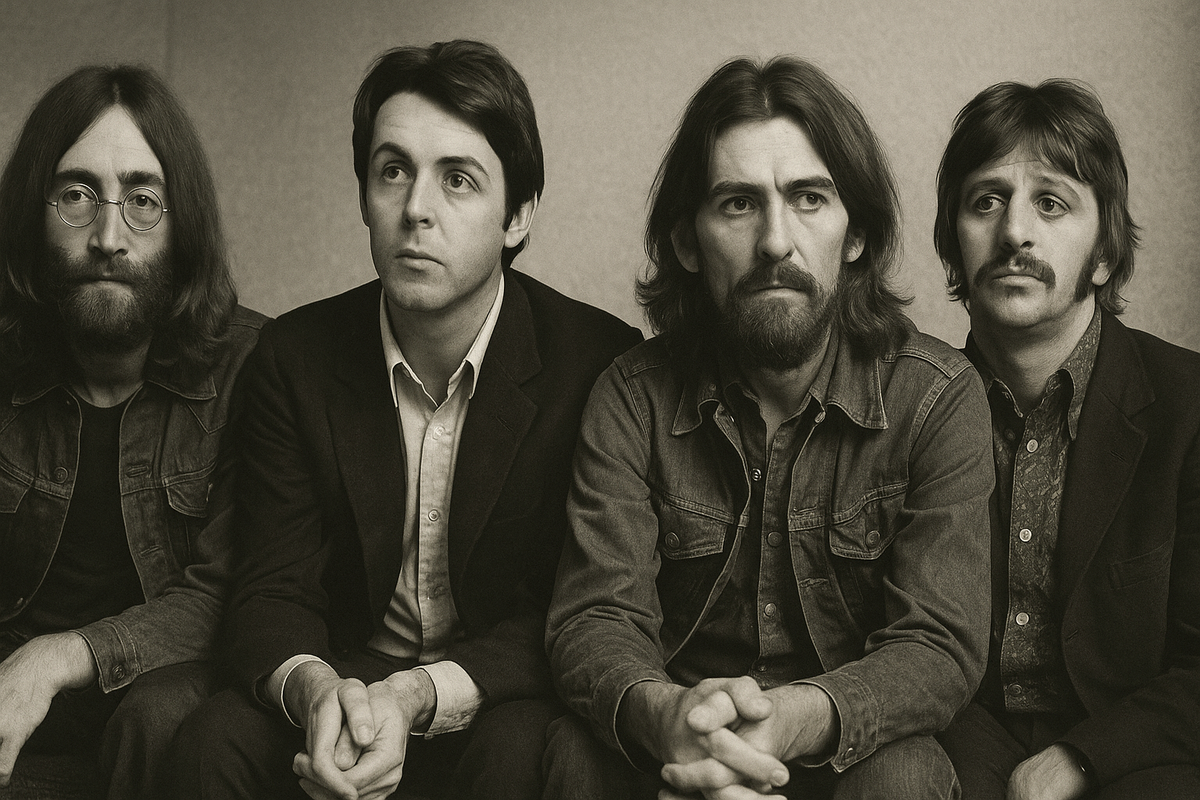
The Magazine That Announced the Death of the Beatles
How Rolling Stone's November 15, 1969 issue revealed the breakup before it was official
November 15, 1969. A Saturday. Across America, newsstands displayed the latest issue of Rolling Stone—and for anyone who opened it, the illusion died in their hands.
The Beatles were finished.
Not officially. Paul McCartney wouldn't make the breakup formal until the following April. But for readers of "You Never Give Me Your Money," the magazine's devastating cover story on the band's financial meltdown, the ending had already been written. The world's most famous partnership was collapsing under the weight of bad business, worse egos, and a manager nobody could agree on.
What made this moment extraordinary wasn't just what was revealed—it was who was revealing it. At a time when mainstream publications still treated the Beatles like untouchable gods, Rolling Stone did something radical: it told the truth.
Archive Details
Publication: Rolling Stone Magazine
Issue Date: November 15, 1969
Featured Story: "You Never Give Me Your Money"
Cover Subject: Mick Jagger
Historical Context: Beatles' final year together
When Utopia Became Bankruptcy
By late 1969, the counterculture that had propelled the Beatles to messianic status was cracking. Woodstock's mud-soaked idealism had given way to Altamont's violence. The antiwar movement was fragmenting. And the Beatles' own experiment in countercultural capitalism—Apple Corps—had become a cautionary tale.
Launched in 1968 as a utopian artist collective, Apple was supposed to be different: a company where creativity mattered more than profit, where the Beatles could bankroll films, electronics, and music without corporate interference. Instead, it hemorrhaged millions. Lavish spending went unchecked. Business ventures collapsed. The company's purpose became as confused as its bookkeeping.
Enter the managers.
Paul McCartney wanted Lee Eastman, a respected New York entertainment attorney—and, inconveniently, his new father-in-law. John Lennon championed Allen Klein, a street-tough operator who promised to "clean house" and recover the band's losses. George Harrison and Ringo Starr sided with John. Paul refused to yield.
This wasn't a business dispute. It was the fault line that split the Beatles permanently.
Rolling Stone's Gambit: Reporting Rock as Tragedy
The headline said everything: "You Never Give Me Your Money"—lifted directly from Abbey Road, the album the Beatles had just released. It was journalism as critique, using the band's own lyrics to frame their collapse.
The article delivered what mainstream outlets wouldn't: forensic detail on Apple's financial chaos, unflinching portraits of the internal rift, and a clear-eyed assessment that the Beatles were no longer functioning as a band. John Lennon was quoted praising Klein as a savior. Paul was depicted as isolated, outvoted, increasingly estranged from his bandmates. The empire, readers learned, was already rubble.
This was Rolling Stone at its most essential. Founded only two years earlier by Jann Wenner and Ralph Gleason, the magazine had built its reputation on treating rock music as serious art—and serious business. It didn't traffic in fan-magazine puffery. It investigated. It criticized. It assumed its readers wanted complexity, not mythology.
The Beatles story was proof.
The Cover That Said It All
The irony was inescapable: Mick Jagger graced the cover, not a Beatle.
Photographed mid-sentence, lips parted, Jagger's candid portrait rejected the polished glamour shots typical of music magazines. It was raw, immediate, unstudied—everything Rolling Stone aspired to be. And its message, intentional or not, was unmistakable: the Rolling Stones were ascendant. The Beatles were history.
Inside, a haunting black-and-white close-up of John Lennon's eyes behind his signature round glasses reinforced the tension. Those eyes—intense, unblinking—seemed to interrogate the reader as much as the article interrogated the band. Lennon had already begun speaking publicly about life beyond the Beatles, about his future with Yoko Ono, about moving on. The photograph captured that defiance.
Together, the Jagger cover and Lennon interior shot created a visual thesis: one era was ending, another beginning, and Rolling Stone would document both without sentiment.
What the Article Revealed
Why This Issue Remains Essential
For collectors and historians, the November 15, 1969 issue of Rolling Stone is irreplaceable.
Historical Timing: Published during the Beatles' final months as a functioning band, it captured their dissolution as it happened—not in retrospect, but in real time.
Journalistic Courage: Few publications had the access or the nerve to report this story with such specificity while the Beatles were still together.
Visual Archive: The Lennon close-up and Jagger cover make this a visually significant issue, representing both the end of one era and the continuation of another.
Cultural Document: This wasn't gossip. It was investigative reporting on the biggest cultural phenomenon of the 1960s, done at the moment of fracture.
Collector Value: Beatles-related issues—especially those documenting pivotal moments like business collapses or breakups—remain among the most sought-after in Rolling Stone history.
Owning this issue means holding the original artifact that announced the end before it was official. It's journalism as historical evidence.
Why Vintage Magazines Endure
These publications survive as time capsules because they preserve something irretrievable: the immediate experience of cultural upheaval. When we read this November 1969 issue today, we're not just learning about the Beatles' breakup. We're experiencing how that breakup was understood and reported to a generation that had grown up with the band as soundtrack and symbol.
The Beatles weren't always mythic icons frozen in collective memory. They were men navigating impossible fame, generational expectations, and incompatible visions of the future. They were a business that failed. They were friends who stopped being friends.
That's what makes original issues of Rolling Stone from this era invaluable. They're not nostalgia objects. They're primary sources—unedited records of how rock music, counterculture, and celebrity intersected at a moment when all three were redefining American life.
Collector Significance: Holding History
If you're building a collection focused on rock history, Beatles memorabilia, or 1960s counterculture, this issue belongs in it. The November 15, 1969 Rolling Stone represents a turning point not just for the Beatles, but for music journalism itself.
Explore the Archive
This issue is part of a larger collection documenting rock's defining decades. From the Beatles' collapse to the Stones' ascendance, from Dylan's transformations to punk's emergence, each original Rolling Stone captures the moment when music history was being written.
Browse Rolling Stone Magazine CollectionWhether you're a Beatles scholar, a 1960s historian, or a collector seeking culturally significant artifacts, these magazines provide direct access to the era that changed popular music forever.
Conclusion: The Issue That Told the Truth
The November 15, 1969 issue of Rolling Stone stands as one of the most important documents of the Beatles' final chapter. Its cover story, "You Never Give Me Your Money," revealed the financial chaos and personal fractures that would end the world's most famous band—and it did so months before the official announcement.
This wasn't fan service. It was journalism.
For collectors, historians, and anyone who understands that rock music was never just entertainment—it was the cultural battleground of a generation—this issue is essential. It's the magazine that announced the death of the Beatles before the funeral was held.
And it's proof that Rolling Stone, in its earliest years, wasn't just covering rock history. It was shaping how that history would be remembered.