
Mickey Mantle, Baseball's Prodigy of Power, and the Summer America Found Its New Hero
When Life Magazine captured the Yankee slugger at the peak of his Triple Crown season, they documented more than baseball history—they froze a nation's dreams in mid-swing
The photograph stopped America mid-breakfast.
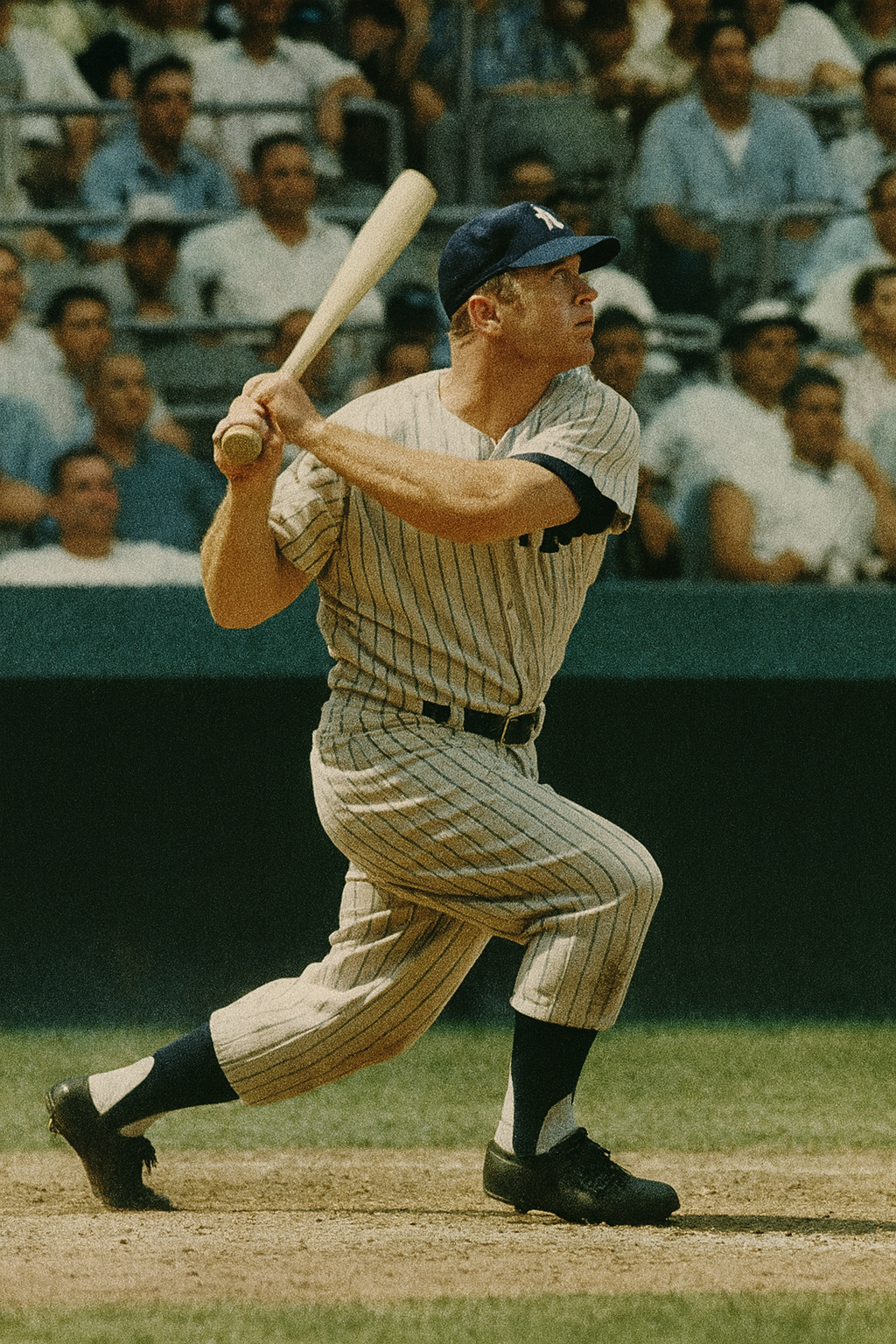
There, on newsstands across the country on June 25, 1956, Mickey Mantle hung frozen in mid-swing on the cover of Life Magazine—24 years old, muscles coiled, about to shatter Babe Ruth's home run record. Inside, Ralph Morse's camera had captured something unprecedented: not just an athlete at his peak, but the precise moment a working-class kid from Commerce, Oklahoma became the face of postwar American ambition.
Fifty-six games into the season. Twenty-four home runs already. The math was impossible to ignore—Mantle was on pace to hit 77 homers, obliterating Ruth's sacred 60. But Life's "A Prodigy of Power" photo-essay understood something deeper: this wasn't just about numbers. This was about what America needed in 1956, and what one switch-hitting center fielder could deliver.
Archive Details
Historical Figure: Mickey Mantle, New York Yankees Center Fielder
Issue Date: June 25, 1956
Feature Title: "A Prodigy of Power"
Photographer: Ralph Morse
Archive Source: Life Magazine
Historical Context: Triple Crown Season, 1956
The Perfect Storm of Talent and Timing
Nineteen fifty-six demanded a hero. The nation had money in its pockets, suburbs spreading across former farmland, and television sets glowing in living rooms. But prosperity breeds restlessness. The certainties of wartime victory were fading. The Eisenhower years hummed with quiet anxiety beneath their confident surface.
Baseball offered clarity. And the New York Yankees—Ruth's team, Gehrig's team, DiMaggio's team—remained the country's most potent symbol of excellence. Now Mantle wore the pinstripes. The weight of that inheritance would have crushed a lesser player.
Instead, he was rewriting the record books. His switch-hitting power defied physics—tape-measure shots that seemed to leave the atmosphere, including a 565-foot blast in Washington that turned grown men into believers. His speed on the basepaths combined the grace of a sprinter with the recklessness of someone who'd grown up playing hurt.
By June, the question wasn't whether Mantle would win the Triple Crown—leading the league in batting average, home runs, and RBIs—but by how much. Life's editors understood they were documenting history as it happened.
What the Camera Revealed
Life Magazine had perfected a particular kind of alchemy by 1956: the ability to collapse distance between celebrity and ordinary American life. Where newspapers offered box scores and wire photos, Life delivered intimacy.
Ralph Morse's lens captured Mantle in motion—a blur of pinstripes sliding headfirst into second base, dirt exploding around him. Multiple-exposure sequences showed the arc of his swing, the crack of contact, the ball disappearing, Mantle rounding the bases, teammates mobbing him at home plate. All in one frame. Pure visual storytelling.
But the genius of the essay lay in its contrasts. After the stadium heroics came the domestic scenes: Mantle in his suburban home with his wife Merlyn, their sons Mickey Jr. and David toddling underfoot. One photograph showed him in the backyard, teaching his boy the fundamentals of the swing—the same motion millions of fathers were teaching their own sons that summer. The Yankee star as everyman.
Then came the complications of fame. Mantle looked uncomfortable in a pajama advertisement, his natural shyness obvious. He rehearsed awkward lines for an appearance on The Perry Como Show, the transition from athlete to television personality not yet smooth. Fans swarmed his car during parades, their hands pressed against the glass. The photos asked an uncomfortable question: what does greatness cost?
Life never preached. It simply showed, and let America draw its own conclusions.
The Architecture of an Icon
The cover announced its ambitions without subtlety: Mantle at peak extension, the moment before thunder. No illustrations. No artistic interpretation. Just the raw fact of athletic power, captured on film.
Inside, Morse built a narrative through images alone. The explosive athleticism—yes. But also the physical toll: collisions with shortstops, the grimace of pain after a slide, the tape on his chronically injured knees. Mantle's body was already paying the price for his greatness, and the camera didn't look away.
The quieter moments carried equal weight. Mantle signing autographs at his kitchen table, patient with every request. Mantle surrounded by reporters, answering the same questions he'd answered a hundred times before. Mantle in the dugout, concentration absolute, separate from the crowd even as 60,000 fans screamed his name.
This was Life's craft: presenting heroes as three-dimensional beings. Mythic and mortal. Superhuman and startlingly ordinary. The combination made Mantle more compelling, not less.
The Story Behind the Photographs
Every image in "A Prodigy of Power" carried its own revelation:
Why This Issue Matters to Collectors Today
Why the Story Endures
Nearly seventy years later, "A Prodigy of Power" retains its grip on the imagination. Part of that durability comes from Morse's photography—the images simply haven't aged. But the deeper reason is what the essay understood about its subject.
Mantle represented possibility. He arrived from poverty in Oklahoma, played through chronic pain, and carried the Yankees to glory while the entire country watched. His flaws made him human. His talent made him transcendent. Life captured both sides, and that tension between the ordinary and the extraordinary is what turns athletes into mythology.
The photographs remind us of a time when baseball mattered in a way that's hard to explain to anyone who wasn't there. When a magazine could land on doorsteps and change how America saw itself. When one player could embody a nation's hopes without the machinery of modern branding and corporate sponsorship.
Own a Piece of History
Original copies of Life Magazine from June 25, 1956 remain available to collectors who understand their significance. These aren't reprints or commemorative editions—they're the actual artifacts that Americans held in their hands that summer, when Mantle was chasing immortality.
Browse Life Magazine CollectionWhether you're a Yankees devotee, a student of American culture, or someone who recognizes the power of great photojournalism, this issue offers direct access to one of baseball's defining summers.