
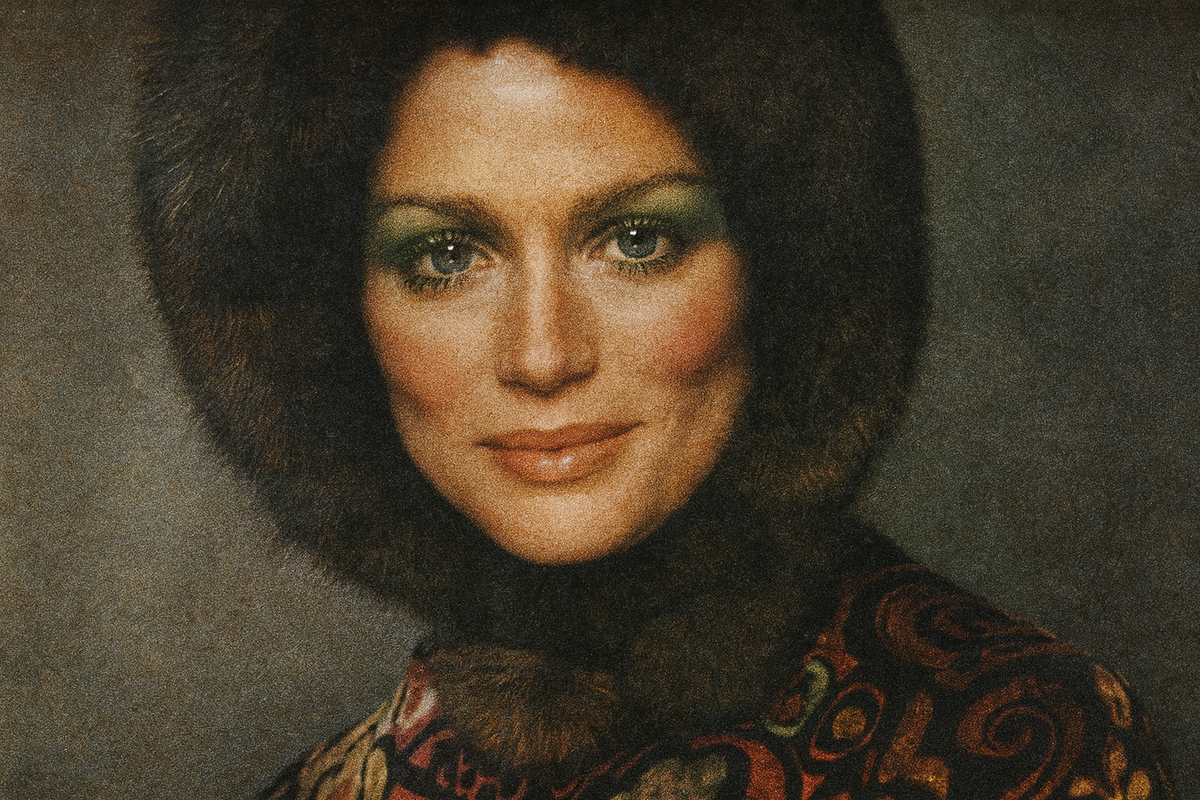
The Issue That Medicalized Beauty
How Vogue's November 1, 1970 issue transformed beauty journalism by fusing clinical dermatology with high fashion—and changed what perfection meant
When a woman opened the November 1, 1970 issue of Vogue, she expected couture. What she got was a prescription.
Tucked between photographs of Parisian gowns and jewel-toned party makeup was something unprecedented: a Beauty Bulletin titled "HELP is on the way—" that read less like fashion guidance and more like a dermatologist's clinic notes. Here were chemical peels described in clinical detail. Dermabrasion explained with rotary brushes and resurfaced skin. Dandruff remedies presented alongside product recommendations for Head & Shoulders and Selsun Blue—not whispered as beauty secrets, but declared with medical authority.
This wasn't Vogue dabbling in science. This was Vogue rewriting the rules of what beauty journalism could be. And for women standing at the crossroads of second-wave feminism and traditional beauty culture, it marked a turning point: the moment when flawlessness became something you didn't just aspire to—you could medically engineer it.
Archive Details
Publication: Vogue Magazine
Issue Date: November 1, 1970
Featured Content: Beauty Bulletin – "HELP is on the way—"
Historical Context: Dawn of the 1970s, intersection of feminism and beauty culture
Archive Source: Original Magazines Collection
The World That Made This Issue Necessary
By November 1970, the optimism of the Swinging Sixties had curdled into something more complicated. The women's liberation movement was questioning everything—gender roles, workplace discrimination, the very concept of "femininity." Betty Friedan's The Feminine Mystique had blown open the myth of the satisfied housewife. Gloria Steinem was months away from launching Ms. magazine.
Yet beauty culture hadn't retreated. If anything, it had doubled down.
The 1970s didn't abandon the pursuit of perfection—it professionalized it. Yves Saint Laurent had democratized high fashion with ready-to-wear lines, proving that Vogue's world wasn't just for heiresses anymore. Middle-class women could buy into the dream. But access came with expectations. If fashion was now attainable, so too was the pressure to meet its standards.
Enter dermatology.
Medical science, once confined to academic journals, was migrating into glossy magazines. Procedures that had been whispered about in private consultations—chemical peels using phenol and trichloroacetic acid, dermabrasion with rotary instruments—were now being presented as routine maintenance. Vogue didn't just report on this shift. It accelerated it.
What Vogue Had Become By 1970
By the time this issue hit newsstands, Vogue wasn't simply the world's most influential fashion magazine—it was a cultural authority that shaped how women understood themselves. Its editors believed that style wasn't superficial. It was identity.
The November 1970 Beauty Bulletin proved it. The feature opened with winter weather warnings: doctors cautioned that cold air aggravated scalp conditions, making dandruff a seasonal enemy. It dismantled myths, declaring that "dry scalp" was often oily scalp in disguise. It championed frequent shampooing—a radical stance when conventional wisdom still held that washing "too often" damaged hair.
But the real revelation came deeper in the text, where Vogue introduced readers to dermabrasion and chemical peels with the same editorial confidence it brought to hemlines and heel heights.
Dermabrasion, the article explained, used a rotary brush to literally resurface skin—scraping away imperfections to reveal "new skin from the bottom up." Chemical peels employed acids to strip away damaged layers, promising regeneration through controlled destruction. Case studies followed: narratives of patients who had undergone these procedures, their transformations presented as both medical triumph and aspirational drama.
This wasn't second-hand beauty gossip. This was clinical education delivered in the voice of high fashion. For many readers, terms like "trichloroacetic acid peel" appeared here first—not in a medical textbook, but sandwiched between editorials on Tuscan-inspired winter complexions and references to Givenchy.
The effect was intoxicating. Vogue had made science glamorous.
The Magazine as Physical Artifact
The cover of the November 1, 1970 issue reflected the sharp, modernist aesthetic that defined early '70s Vogue. Gone were the illustrated covers of earlier decades. In their place: stark photography, contemporary elegance, models presented as cultural figures rather than decorative fantasies.
Inside, the layout married clinical precision with editorial sophistication. Bold headlines promised salvation—"HELP is on the way—"—while body text delivered both product endorsements and medical insight with equal authority. Other publications might have stuck to makeup tutorials. Vogue gave its readers an education.
What made this issue extraordinary wasn't just what it said, but how it said it. The language carried the weight of medical legitimacy ("curing dandruff," "resurfacing procedures") while maintaining Vogue's signature aspiration ("Beautiful People never suffer from visible flaws"). The result was a new genre: beauty journalism that treated readers simultaneously as patients and aspirants, fusing medicine with desire.
Ten Details That Define This Issue
Together, these elements created something unprecedented: a beauty feature that functioned as both fashion editorial and medical consultation.
Why This Issue Endures for Collectors
For those who collect vintage Vogue, the November 1, 1970 issue isn't just paper and ink—it's a historical inflection point.
Published at the dawn of a new decade, it captures the moment when beauty culture absorbed medical science during an era of profound social upheaval.
Few issues so openly blended dermatology, consumer product endorsements, and haute couture in a single editorial voice.
Givenchy and dermabrasion. Trichloroacetic acid and Tuscan complexions. The collision was intentional, and the synthesis was new.
This issue documents how beauty standards evolved precisely when women were challenging those very standards—a paradox that defines the era.
Early 1970s Vogue issues command attention for their modernist photography, fearless editorial choices, and role as primary sources for understanding mid-century beauty culture.
To hold this issue is to hold the moment when aspiration became medicalized, when flawlessness became clinical, when Vogue taught its readers that beauty could be studied, corrected, and engineered.
Why Vintage Vogue Still Matters
Digital beauty advice is ephemeral. It appears, it's consumed, it vanishes. But these magazines were made to last. They were saved in family collections, stored in attics, passed between generations. They were physical witnesses.
That permanence gives them power. To read a 1970 Vogue today is to access not just fashion history, but the ideals, anxieties, and aspirations of an entire culture. Every page carries the voice of its moment—unfiltered, unrevised, undeniably real.
This is why serious collectors, fashion historians, and cultural researchers return to these issues again and again. They're not looking for trends. They're looking for truth.
Explore the Archive
Dozens of original Vogue magazines—from the 1920s through the 1990s—are available in our collection. Trace entire decades of fashion, culture, and beauty as they were documented in real time, in their own words, through their own photographs.
Browse Vogue Magazine CollectionFinal Word
The November 1, 1970 issue of Vogue remains one of the most striking publications of its decade—not because it was beautiful (though it was), but because it was bold. It took beauty advice and gave it the weight of medical authority. It took aspiration and fused it with clinical precision. It showed readers that flawlessness wasn't just attainable—it was engineered.
Holding this issue is holding a transformation. The moment when Vogue didn't just report on beauty culture—it remade it.
And thanks to the magazine's unmatched blend of fashion, culture, and commentary, those pages remain as essential today as they were fifty years ago.
For anyone who values history, these aren't just magazines. They're living artifacts. And through them, the past speaks directly.