
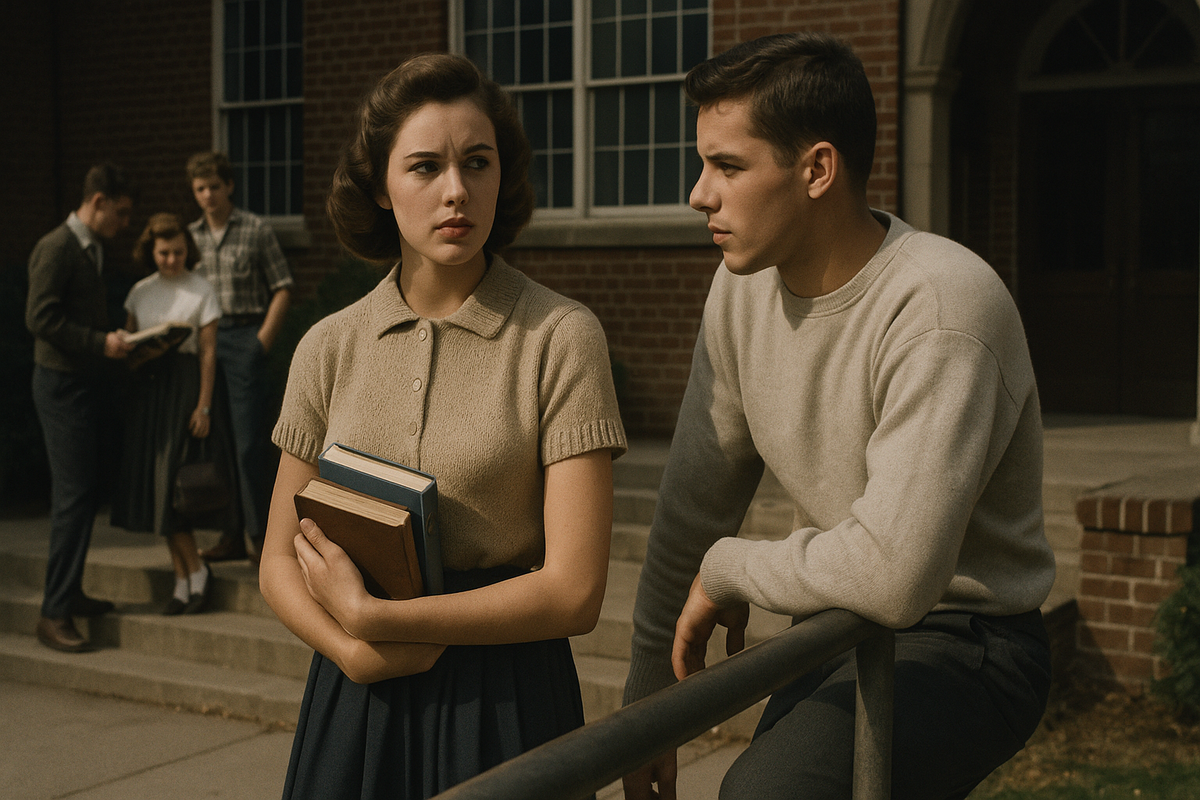
When Dorothy Thompson Asked the Question That Terrified Cold War America
May 1954. McCarthyism at flood tide. And America's most influential women's magazine dared to ask: Are your children communists?
When Dorothy Thompson—the journalist who'd been expelled from Nazi Germany, who'd interviewed Hitler, who commanded more respect than half the men in Washington—posed her question in the May 1954 Ladies' Home Journal, she wasn't trafficking in hysteria. She was dismantling it.
"Is American Youth Radical?" The title alone would have stopped readers mid-recipe. This was the height of the Red Scare. Universities were being purged. Loyalty oaths proliferated like dandelions. Parents eyed their college-aged children with a mixture of pride and suspicion. Were they studying economics or absorbing Das Kapital? Joining debate clubs or communist cells?
Thompson had heard the rumors. Youth "infiltrated with communists," the fearmongers claimed. So she did what great journalists do: she went looking. She visited campuses. She talked to students, educators, and administrators. And what she found wasn't what Cold War America expected.
Historical Context
Featured Voice: Dorothy Thompson, journalist and foreign correspondent
Issue Date: May 1954
Archive Source: Ladies' Home Journal
Historical Period: Height of McCarthyism and the Second Red Scare
Visual Element: Thomas Gainsborough, "Horse-drawn Cart Descending a Hill" (1782–1788)
The Verdict That Nobody Saw Coming
The postwar generation wasn't radical. They were cautious. More conservative than Thompson's own peers from the 1920s and '30s—those restless children of the Jazz Age who'd embraced Sturm und Drang (storm and stress) like a religion. That earlier generation had been adventurous, willing to gamble, hungry for disruption.
The Class of 1954? They wanted stability. Security. A house, a career, a pension. They'd grown up during the Depression and come of age during World War II. They'd seen enough chaos to last a lifetime.
Thompson's analysis cut both ways. Yes, these young people weren't communists. But they also weren't particularly anything. They were conformists—a realization that should have been comforting but somehow felt just as unsettling. Was this generation too timid to lead? Or were they simply the most rational people in an irrational time?
Why Ladies' Home Journal Mattered More Than You Think
Here's what modern readers miss: Ladies' Home Journal wasn't just peddling casserole recipes and curtain patterns. It was one of the most powerful cultural institutions in mid-century America, reaching eight million households monthly. The magazine that taught women how to cook also taught them how to think about democracy, citizenship, and their children's future.
The May 1954 issue proves it. The editors didn't illustrate Thompson's explosive essay with images of student protests or communist propaganda. They chose Thomas Gainsborough's "Horse-drawn Cart Descending a Hill" (1782–1788)—a serene pastoral sketch. The message was deliberate: generational anxiety is timeless. This too shall pass. Calm down.
That editorial choice reveals the magazine's genius. Ladies' Home Journal brought weighty national debates into American living rooms without setting off alarm bells. Women who read it weren't just learning homemaking—they were absorbing political philosophy between the fashion spreads. And in 1954, when women couldn't serve on juries in many states and were largely excluded from political power, this magazine gave them a front-row seat to the debates shaping their country.
What Thompson Saw (And What We Still Recognize)
The patterns Thompson identified in 1954 have replayed in every decade since:
The Young Are Always Suspect
The 1960s generation became "radicals and hippies." The 1980s cohort were "materialistic sellouts." Today's youth are "digital extremists" or "snowflakes," depending on who's talking.
Conformity and Radicalism Flip Sides
Every generation gets accused of both—sometimes simultaneously. The contradiction tells you more about the accusers than the accused.
War Shapes Everything
Thompson understood that growing up amid global conflict creates a hunger for normalcy. The same pattern emerged with millennials after 9/11 and Gen Z during COVID-19.
Mothers Are Gatekeepers of Culture
By addressing Ladies' Home Journal readers directly, Thompson was speaking to the people who actually shaped how these debates played out at dinner tables across America.
She wasn't writing for politicians or professors—she was writing for the women raising the next generation.
The Question Never Dies
"Is American Youth Radical?" could run as a headline today and nobody would blink. The question is immortal because every generation faces it. What changes is the fear: communism, drugs, technology, social media, political extremism.
Thompson's real contribution wasn't answering whether 1950s youth were radical. It was demonstrating that the question itself reveals more about the askers than the asked. Cold War parents feared their children were too radical and too conformist—a logical impossibility that Thompson gently exposed.
Reading this essay seventy years later, you realize she was writing about something bigger than one generation. She was writing about the permanent anxiety of parenthood, the eternal suspicion of youth, and the way fear makes us see enemies everywhere.
And she was doing it in a magazine that also contained pot roast recipes.
Why Collectors Prize This Issue
Historical Rarity
Major magazines rarely addressed generational politics this directly in the 1950s. Most stuck to scare tactics or platitudes. Thompson offered analysis.
Cultural Artifact
The Gainsborough illustration, the essay's placement alongside household content, the editorial tone—every choice reveals how mainstream America processed existential fear.
Women's History
This is evidence that women's magazines weren't trivial. They were where serious national conversations happened, mediated for the people who actually ran American households.
Authentic Material
This isn't a reprint or a digital scan. It's the actual pages that sat on coffee tables in May 1954, when families were genuinely asking themselves if their children had been compromised by enemy ideology.
For collectors of Cold War ephemera, mid-century publications, or women's history, this issue is foundational. It captures the exact moment when America's anxiety about youth peaked—and when one brave journalist said, "Look closer."
Explore the Full Archive of Cultural History
Discover original issues of Ladies' Home Journal from the early 20th century through the postwar decades—each one a time capsule of women's lives, intellectual debates, and the domestic front of American history.
Browse Ladies' Home Journal Magazine CollectionEvery issue is an artifact. Every page is a window into how America actually lived—and worried—through the most transformative century in modern history.