
The Nose That Launched a Thousand Scalpels
How Vogue's October 1970 issue transformed cosmetic surgery from medical secret to lifestyle aspiration
When Vogue published Simona Morini's "What plastic surgery can do to make you beautiful... more interesting" on October 1, 1970, it wasn't reporting on cosmetic surgery. It was licensing it.
For the first time, America's most influential fashion magazine had transformed the rhinoplasty from a medical procedure into a lifestyle choice—complete with the stark, sculptural photography and clinical precision that defined high fashion itself. What readers held in their hands that autumn wasn't just another issue of Vogue. It was a blueprint for reconstructing the female face.
Archive Details
Publication: Vogue Magazine
Issue Date: October 1, 1970
Editor-in-Chief: Diana Vreeland (1963–1971)
Featured Article: "What plastic surgery can do to make you beautiful... more interesting" by Simona Morini
Historical Context: Published at the intersection of second-wave feminism and the normalization of elective cosmetic procedures
The Surgical Decade Begins
The year 1970 arrived trailing cultural wreckage. The utopian dreams of the 1960s had collapsed into political fury, second-wave feminism was dismantling traditional gender roles, and fashion itself was fragmenting—skirts shortened, trousers invaded women's wardrobes, designers raided ethnic traditions for inspiration. Liberation was the language of the moment.
Yet something else was happening in examining rooms across America. By the decade's turn, rhinoplasty had become one of the nation's most requested procedures. The medical secret was out. And Vogue, under the audacious editorship of Diana Vreeland, decided to print it in full.
The timing was no accident. Vreeland's tenure at Vogue (1963–1971) redefined fashion journalism as cultural provocation. She published this surgical exposé at the precise moment women were marching to be valued beyond their appearances—a contradiction so profound it defines the entire era.
Anatomy as Aesthetics
Morini opened with a line from Stendhal: "Quite handsome, if she had only had nose." The implication was surgical: beauty hinged on a single anatomical structure, and that structure could be corrected.
What followed read like a technical manual disguised as lifestyle journalism. Morini dissected the nose into its components—cartilage, septum, columella—before cataloging the defects requiring intervention. "Parrot's beak." "Hawk nose." "Potato nose." "Shovel-tipped nose." Each term a diagnosis. Each diagnosis a sentence.
But Vogue wasn't selling medicine. It was selling art. Surgeons, Morini explained, worked in sixteenths of an inch. Remove too much and you destroyed character. Remove too little and harmony failed. The ideal nose emerged as "smooth and geometric"—a structure "worthy of Attic marble." Rhinoplasty wasn't vanity. It was restoration of classical proportion.
This was the genius of the piece: by anchoring cosmetic surgery in ancient aesthetics, Vogue made it respectable. You weren't mutilating your face. You were correcting it according to principles established in fifth-century Athens.
The Clinical Portrait
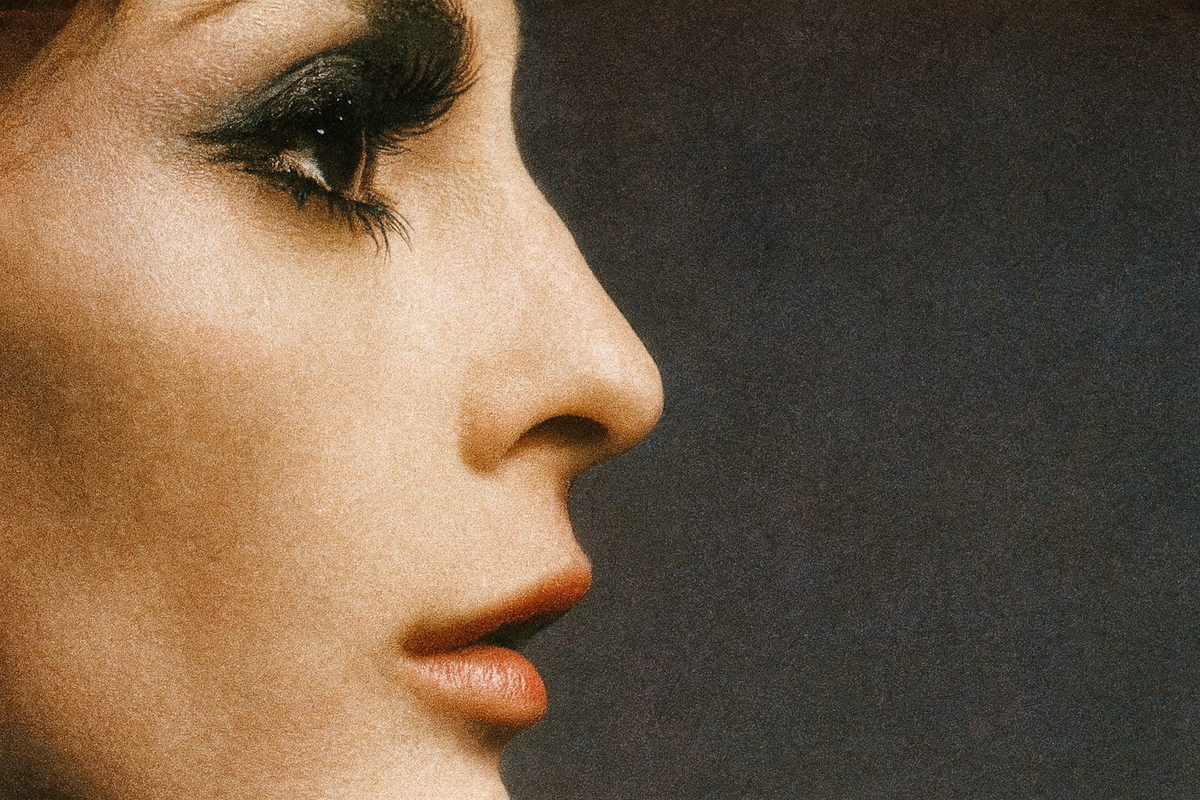
The photography was deliberate. Stark black-and-white profiles. A woman's face half in shadow, stripped of context or personality. No romantic glamour, no editorial fantasy—just line, angle, proportion. The images belonged in a medical textbook or a sculptor's studio, not a fashion magazine.
That was the point. By presenting the nose in isolation, Vogue transformed the face into architecture. These weren't portraits of women. They were studies in geometry, visual arguments that beauty could be measured, analyzed, and surgically achieved.
The photographs did what the text could not: they made cosmetic surgery look inevitable.
The Empowerment Trap
For Vogue's readers in 1970, this article offered a seductive promise: control. In a society that judged women relentlessly on appearance, surgery provided a way to answer back. You could take your face into your own hands.
But control came with conditions. The article assumed your natural face required correction. It assumed you understood the vocabulary of defects. It assumed you would measure your nose against classical ideals and find it wanting.
This is what makes the October 1, 1970 issue historically essential. It captures a moment when two cultural forces collided: the feminist demand to be valued beyond appearance, and the beauty industry's insistence that appearance determined value. Vogue published a radical article about women's autonomy that simultaneously reinforced their submission to aesthetic judgment.
The contradiction wasn't accidental. It was the entire point.
Key Themes in the Article
Medicalized Beauty
The nose dissected into cartilage, septum, and columella—beauty transformed into a clinical diagnosis requiring surgical correction.
Classical Justification
Surgery framed as restoration of ancient Greek proportions, making rhinoplasty respectable by linking it to "Attic marble" aesthetics.
Precision Culture
Surgeons working in sixteenths of an inch—an obsession with perfection that quantified beauty down to fractions.
Diagnostic Language
Terms like "parrot's beak" and "potato nose" created a taxonomy of facial defects requiring intervention.
Clinical Photography
Stark profiles stripped of personality, transforming women's faces into architectural studies rather than human portraits.
The Feminist Paradox
Published during second-wave feminism's peak—offering autonomy through surgery while reinforcing appearance-based judgment.
The Archive as Evidence
Vintage fashion magazines endure because they document aspiration. They show not just what was worn, but what was expected—what women were told to desire, to purchase, to surgically pursue. The October 1, 1970 Vogue is particularly valuable because it made the implicit explicit. It published the terms of the beauty contract in clinical detail.
In an era when cosmetic procedures have become routine, when filters simulate surgical outcomes, when body modification exists on a spectrum from subtle to extreme, this issue provides historical context. The conversation about beauty standards, surgical intervention, and women's autonomy didn't begin with Instagram. It was already fully formed in Vogue fifty-five years ago.
The magazine is evidence. The question it poses remains unresolved.
Why Collectors Pursue This Issue
Vreeland Era Prestige
Diana Vreeland's editorial tenure (1963–1971) produced Vogue's most experimental and culturally significant issues, commanding premium collector value.
Cultural Threshold
Documents the precise moment cosmetic surgery migrated from medical necessity to lifestyle aspiration in mainstream media.
Cross-Disciplinary Appeal
Valued by fashion historians, medical historians, feminist scholars, and visual culture researchers—a primary source across multiple fields.
Modernist Photography
The stark, clinical imagery has enduring aesthetic value, representing a sophisticated approach to editorial photography.
Historical Contradiction
Captures the tension between feminist liberation and beauty industry conformity at the dawn of the 1970s.
Primary Documentation
An unfiltered artifact showing how beauty standards were constructed, marketed, and medicalized in real time.
Original Vogue Magazines Collection
For collectors, historians, and anyone tracking the evolution of beauty culture through primary sources, vintage Vogue magazines offer direct access to the moments when cultural standards shifted. These aren't reproductions or retrospectives—they're the original artifacts, preserved in print.
Browse Vogue Magazine CollectionThe October 1, 1970 issue of Vogue endures because Simona Morini wrote an article that was simultaneously progressive and regressive, liberating and restrictive, medical and aesthetic. She presented rhinoplasty as both artistic correction and necessary intervention—a procedure measured in fractions of an inch that could determine a woman's entire social value.
Holding this issue means holding a cultural turning point, the moment when surgery became fashion and the face became a problem to solve. It remains essential reading not because it resolved the tension between autonomy and conformity, but because it crystallized it with such clinical precision.
Some artifacts document what happened. This one documents what we asked women to become.