
The Magazine That Defined a Movement
When Jet Put Black Power on America's Coffee Tables
The summer of 1966 didn't ask permission to arrive. It erupted.
In living rooms from Harlem to South Central, on bus seats in Birmingham, tucked into the pockets of factory workers in Detroit, a magazine no bigger than a paperback novel was rewriting the rules of American resistance. The July 28, 1966 issue of Jet didn't just report on Black Power—it was Black Power, compressed into 112 pages of defiant clarity.
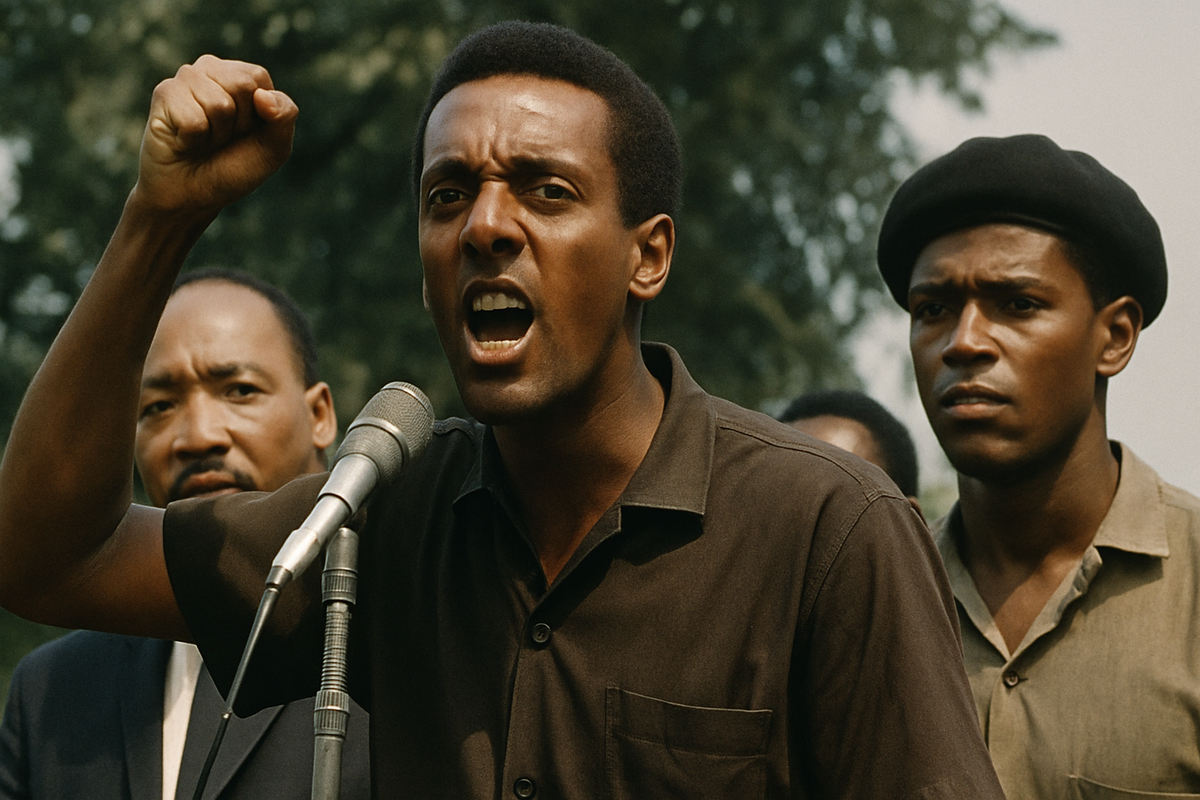
On the cover: Stokely Carmichael, 24 years old, fist raised, face locked in mid-declaration. The headline beneath him cut straight to the bone: "Black Power: What It Really Means."
While Time and Newsweek scrambled to frame the slogan as a threat to white America, Jet did something revolutionary—it let Black leaders define it themselves.
Archive Details
Historical Figure: Stokely Carmichael, Chairman of SNCC
Issue Date: July 28, 1966
Archive Source: Jet Magazine, John H. Johnson Publishing
Historical Context: Published weeks after the James Meredith March Against Fear
The Powder Keg of 1966
One year earlier, the Voting Rights Act of 1965 had outlawed literacy tests and cracked open polling places across the South. It was a victory. It was not a solution.
In Chicago, Detroit, and Los Angeles, African Americans still choked on segregated housing, underfunded schools, systematic job discrimination, and police violence that came with impunity. In the South, new laws on paper meant little when civil rights workers still faced bullets, bombings, and terror in broad daylight.
Then came June 1966. James Meredith—the man who had integrated the University of Mississippi four years earlier—set out on a solo "March Against Fear" from Memphis to Jackson. On the second day, a white gunman shot him. Meredith survived. The march did not stop.
Civil rights leaders converged on Mississippi to finish what Meredith started. Martin Luther King Jr. walked alongside Stokely Carmichael, the newly elected chairman of the Student Nonviolent Coordinating Committee (SNCC). And somewhere between Memphis and Greenwood, Carmichael lit the fuse.
"What we need is Black Power!"
The crowd erupted. The movement split. The nation recoiled.
Jet leaned in.
The Pocket-Sized Revolution
Founded in 1951 by John H. Johnson—the publishing titan behind Ebony—Jet was engineered for the everyday grind of Black life. Small enough to fit in a purse. Cheap enough to buy on a lunch break. Sharp enough to cut through the noise of white-owned media.
Where Ebony offered glossy elegance, Jet offered speed and punch. It was the magazine you read on the bus, debated in the barbershop, passed around at church. It was Black America's newswire, its cultural GPS, its mirror.
The July 28, 1966 issue proved why Jet mattered. While mainstream outlets distorted "Black Power" into a synonym for violence and separatism, Jet gave its architects space to explain what they actually meant. The magazine devoted multiple pages to voices that refused to be filtered through white anxiety.
What Black Power Actually Meant
Jet preserved these voices in real time, before the slogan could be sanitized, weaponized, or erased. It captured Black Power as a living debate, not a monolith.
The Power of the Cover
Stokely Carmichael's photograph is seared into history for a reason.
Captured mid-speech, his expression radiates urgency and refusal. His fist—raised not in violence but in declaration—became the visual grammar of a generation demanding to be seen. Jet's bold typography framed him not as a threat, but as a leader. Youthful. Brilliant. Unapologetically Black.
Inside, the magazine combined sharp political reporting with cultural commentary and striking photography. Readers saw marchers in Philadelphia carrying Black Power signs. Editorial cartoons from white-owned newspapers mocking the slogan. Images of Carmichael and King walking side by side, two visions of freedom in tense coexistence.
The pocket-sized format made these stories portable and personal. A reader in Chicago could carry this issue on the El train and feel connected to the struggle unfolding in Mississippi. Jet didn't just inform—it empowered.
Why Jet Got It Right
Jet's coverage of Black Power demonstrates the magazine's unmatched influence. It gave voice to the voiceless. It offered clarity where others sowed confusion. Where white-owned newspapers painted slogans as threats, Jet explained them as strategies. Where mainstream media emphasized riots, Jet highlighted leadership.
More than half a century later, these pages remain essential because they remind us that history is not only written by the powerful. Sometimes it survives in the pocket-sized magazine clutched in the hands of everyday people.
Why This Issue Matters to Collectors
To hold this issue is to hold 1966 itself—a year when the civil rights movement pivoted from integration to self-determination, from moral appeals to political demands.
Own a Piece of the Movement
If you collect African American history, study political movements, or seek primary sources from the frontlines of the struggle for justice, the July 28, 1966 Jet is indispensable.
Each issue is an artifact. A voice from the past speaking directly to the present. A reminder that the fight for dignity, power, and self-determination was never abstract—it was printed, passed around, and preserved by people who refused to be erased.
Browse Jet Magazine CollectionFinal Word
The July 28, 1966 Jet captured a turning point. Not just in the civil rights movement, but in how Black Americans understood their own power.
For readers in 1966, this wasn't news. It was a manifesto. For us today, it's proof that the most important revolutions are often the size of a pocket, bold enough to fit in your hand, and powerful enough to change the world.
Black Power was more than a slogan. It was a declaration. And Jet made sure the world heard it.