
Stress, Science, and the 1970s Awakening to the Mind-Body Connection
When Vogue diagnosed modern life in November 1971
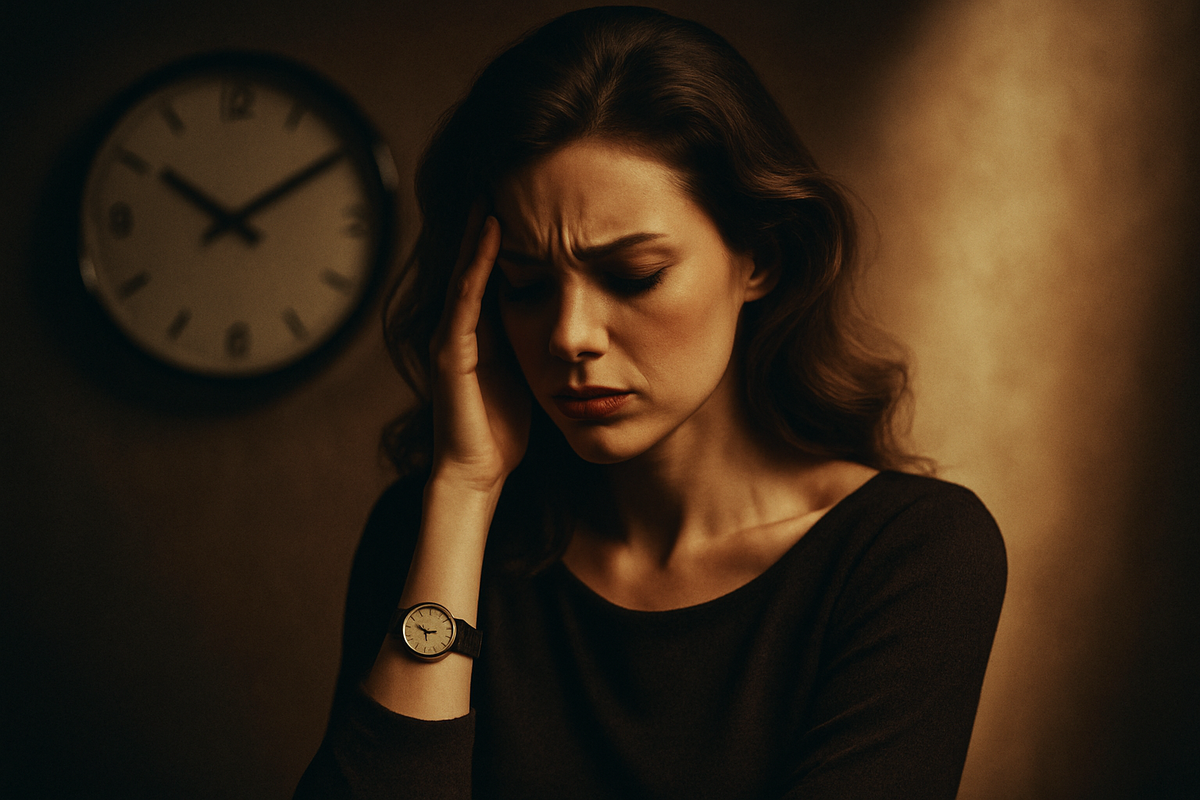
Between 4 A.M. and 8 A.M., when most Americans lay sleeping, their bodies betrayed them. Adrenal hormones surged. Anxiety peaked. Fear found its easiest entrance. And in November 1971, Vogue magazine told them why.
The November 15, 1971 issue arrived on newsstands as something unprecedented: a fashion bible that dared to diagnose its readers. Tucked between fall couture and holiday beauty spreads, Gay Gaer Luce's feature "Stress" delivered what no one expected from a magazine synonymous with elegance—a clinical dissection of how modern life was breaking the American psyche.
This wasn't lifestyle advice dressed as science. It was science itself, unadorned and unflinching, published in a venue where most readers came for escape, not examination.
Archive Details
Historical Figure: Gay Gaer Luce, Science Writer
Issue Date: November 15, 1971
Editor-in-Chief: Grace Mirabella
Archive Source: Vogue Magazine
1971: The Year America's Nerves Became News
The context matters. Vietnam bled into its seventh year. Campus protests had evolved from idealism to rage. The women's liberation movement was dismantling the very archetypes Vogue had once celebrated. And medicine was undergoing a quiet revolution: the mind and body, long treated as separate kingdoms, were being recognized as a single, vulnerable system.
Stress—the word itself—was new to popular vocabulary. What previous generations dismissed as "nerves" or "breakdowns" now had hormonal explanations, circadian patterns, measurable biological markers. Luce's article brought this frontier research into the pages of a magazine read by millions, reframing health as something beyond diet and exercise. It was about pace. Environment. The body's internal clock ticking against the demands of modern life.
Scientists quoted in the piece noted that humans were most vulnerable to anxiety and fear between 4 A.M. and 8 A.M., when adrenal hormones surged. Therapies, they suggested, might be more effective when timed to these rhythms. This was revolutionary at a moment when psychiatry, psychology, and biology were only beginning to converge into what we now take for granted as holistic health.
Vogue readers encountered "Stress" surrounded by glamour, yes—but also by an implicit acknowledgment that glamour alone could not armor them against what their lives had become.
Grace Mirabella's Vogue: Practical, Modern, Unafraid
By 1971, Vogue was in transition. Grace Mirabella had replaced the flamboyant Diana Vreeland earlier that year, and the magazine's editorial DNA was shifting. Where Vreeland trafficked in fantasy—exotic locations, theatrical styling, fashion as pure spectacle—Mirabella wanted relevance. Her Vogue would still showcase beauty, but it would also speak to women navigating careers, families, and a world that no longer followed the old scripts.
The "Stress" article exemplified this philosophy. Its layout abandoned conventional fashion photography for stark typography, bold subheads, and pull quotes designed to arrest the eye:
"Drugs we take affect us differently, depending upon the time we take them."
"Mysterious cycles in your body may control your sickness or health."
"Expect maximum vulnerability to fear between 4 A.M. and 8 A.M."
For many readers, this was their first encounter with the concept that the body's biological clock influenced not just sleep, but vulnerability to illness, anxiety, even the efficacy of medical treatment. Vogue was teaching circadian biology before most Americans knew the term existed.
What the Article Revealed
Luce's piece delivered insights that would take decades to become mainstream:
Biological Rhythms and Anxiety
Timing mattered. Therapy sessions and drug treatments worked differently depending on the hour, a revelation that anticipated chronotherapy by years.
Urban Life as Pathology
Crowding, pollution, the relentless pace of cities—these weren't just inconveniences. They were direct contributors to nervous disorders.
Mind-Body Unity
What we think produces physical changes in the body. This assertion overturned centuries of Cartesian dualism.
Dr. Charles Stroebel's Experiments
His work showed how disrupted sleep patterns created "ghost" symptoms in patients, proving that stress could convincingly mimic physical illness.
Peak Vulnerability at Dawn
The 4 A.M. to 8 A.M. window, when hormones surged and defenses dropped, became the article's most haunting detail.
Behavior Therapy as Exposure
Still relatively novel, behavior therapy was described as exposing patients to fears in controlled ways, retraining the body's stress response.
Everyday Evidence
From ulcers to colitis, diseases labeled purely "physical" were increasingly understood as stress-triggered or stress-worsened.
A Cultural Mirror
By featuring this article, Vogue acknowledged that its readers were experiencing these pressures firsthand and deserved answers, not evasion.
Together, these insights offered a radical reframing: illness wasn't random fate. It was shaped by environment, biology, and psychology in ways that could be understood and, potentially, managed.
The Issue That Saw Tomorrow
What makes this issue fascinating is its prescience. Today, discussions of burnout, sleep cycles, and holistic health saturate wellness culture. In 1971, these were radical ideas being introduced in an unexpected venue—a fashion magazine.
Just as wartime issues of Life endure as historical witnesses, issues like this one matter because they document cultural turning points. They show how magazines functioned not merely as entertainment but as instruments shaping how readers understood their world and themselves.
Why Collectors Value This Issue
Editorial Milestone
One of the earliest issues shaped under Grace Mirabella's vision of a more grounded, relevant Vogue.
Cultural Documentation
The "Stress" article preserves a turning point in how Americans conceptualized health and psychology, captured in real time.
Beyond Fashion
This issue speaks to historians of medicine, psychology, and wellness as much as to fashion archivists.
Evergreen Relevance
Stress management, circadian rhythms, the mind-body connection—these remain urgent topics today, making the article as prescient as it was timely.
For Collectors and Historians
Original copies of Vogue from the 1960s and 1970s remain accessible to collectors, though issues of particular editorial significance—like this one—command attention for reasons beyond aesthetics. These magazines are artifacts of cultural history, each page preserving the style, debates, and anxieties of its moment.
Browse Vogue Magazine CollectionA Magazine That Diagnosed Its Moment
The November 15, 1971 issue of Vogue remains one of the most compelling cultural documents of its era. With Gay Gaer Luce's "Stress" feature, it offered readers not just beauty and fashion, but insight into the biological reality of modern life.
Holding this issue today means holding a moment when medicine, psychology, and fashion spoke to one another across the same glossy pages. It reminds us that magazines once served as the place where people learned not only what to wear, but how to live—and, in this case, how to survive the pace of a world accelerating beyond human design.
For anyone who values history, vintage Vogue magazines are not simply reading material. They are evidence. And through them, 1971 speaks directly to us.