
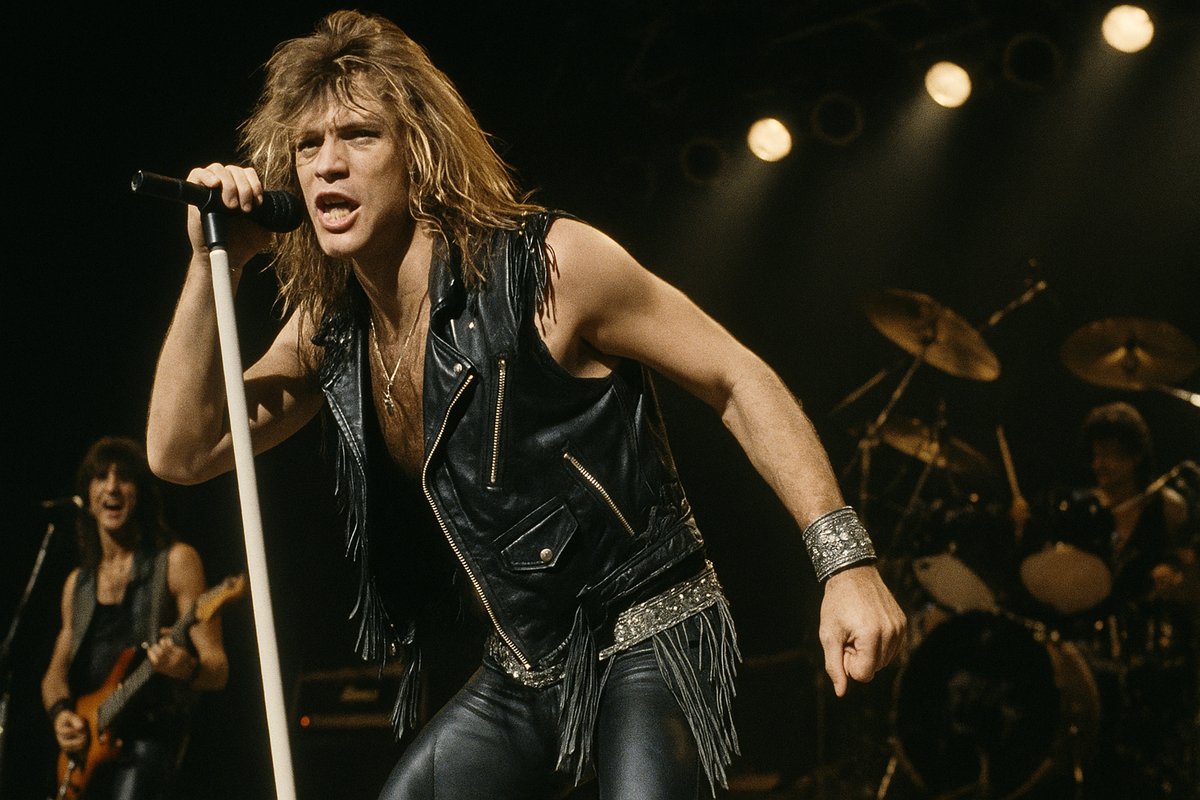
The Last Photograph Before Superstardom
Inside Bon Jovi's 1986 Homecoming and the Circus Magazine Issue That Captured Them on the Brink
On January 31, 1986, readers across America opened their copies of Circus Magazine and discovered something they didn't yet know they were witnessing: the final documentation of Bon Jovi before the world changed for them forever.
Within months, Slippery When Wet would detonate across MTV and radio, transforming five New Jersey musicians into one of the biggest rock acts on the planet. But in this issue—in these photographs, in Jon Bon Jovi's candid admissions, in the band's defiant vow to "never open for anyone again"—Circus captured something more valuable than fame. It captured hunger.
The feature, titled "Bon Jovi: A runaway success comes home," documents the band's triumphant return to Byrne Arena in the Meadowlands after their second album, 7800° Fahrenheit, achieved gold certification with 500,000 copies sold. For collectors and music historians, this issue represents a vanishing point in rock journalism: the moment when a band stands between obscurity and immortality, when doubt and ambition still coexist on the same stage.
Archive Details
Featured Band: Bon Jovi (Jon Bon Jovi, Richie Sambora, Alec John Such, David Bryan, Tico Torres)
Publication: Circus Magazine
Issue Date: January 31, 1986
Featured Event: Byrne Arena Homecoming, The Meadowlands, New Jersey
Historical Context: Six months before Slippery When Wet launched Bon Jovi to global superstardom
The Context: Arena Rock at the Crossroads
By early 1986, American rock had fractured into competing aesthetics. MTV was rewriting the rules of fan engagement. Glam metal was ascending from the Sunset Strip. The line between pop accessibility and hard rock credibility had become a tightrope every band had to walk.
Bon Jovi was navigating that tightrope in real time. Their self-titled 1984 debut had generated respectable attention, but 7800° Fahrenheit pushed them into the national conversation—not without controversy. Critics debated its direction. Radio stations picked certain tracks and ignored others. But fans responded with their wallets, driving the album past gold certification.
The Byrne Arena show wasn't simply another tour stop. For Jon Bon Jovi, Richie Sambora, Alec John Such, David Bryan, and Tico Torres, it was a homecoming with stakes. New Jersey had produced Bruce Springsteen, the poet laureate of working-class America. Could it also produce a new breed of stadium rock—hair-sprayed, spandex-clad, unapologetically theatrical?
This Circus feature was their answer: Yes.
Why Circus Mattered in 1986
In the pre-internet landscape of rock journalism, Circus Magazine occupied vital territory. While Rolling Stone pursued literary credibility and Creem wielded Detroit snark, Circus understood something fundamental: fans wanted access. They wanted glossy photographs, backstage stories, direct quotes from their heroes, and the feeling of being inside the music.
Circus delivered that intimacy. This January 31, 1986 issue exemplified the magazine's formula: serious band coverage wrapped in fan-friendly presentation, with photography that made readers feel like they'd attended the show themselves.
Unlike mainstream outlets that reported sales figures and moved on, Circus captured the sweat-drenched, electrically charged atmosphere of the performance itself. The lights. The screams. The physicality of rock music as a live experience.
What the Photographs Reveal
The images in this issue function as cultural archaeology. They capture:
Jon Bon Jovi with teased blond hair, stretching across the stage in leather-fringed costumes, exuding the confidence of someone who knows the cameras are watching and the stakes are rising.
Richie Sambora—still the new guitarist, still proving himself—grinning mid-riff as he helped forge the Bon Jovi sound that would soon dominate rock radio.
Alec John Such on bass, David Bryan at the keys, Tico Torres behind the drum kit: five musicians in full arena rock regalia, caught between proving themselves and achieving inevitability.
The captions tell their own story. The vow never to open for another act again. The gold album validation. The intensity of a band that understood this moment might be their only shot.
For anyone studying the visual language of 1980s rock, these photographs are primary sources. The spandex, the hair spray, the theatrical poses weren't affectations—they were the aesthetic vocabulary of the era, and Circus documented it without judgment or irony.
The Historical Inflection Point
Here's what makes this issue culturally significant: timing.
In January 1986, Bon Jovi was still a band with something to prove. Critics remained skeptical. The gold record was real, but it wasn't platinum. They were selling out regional arenas, but not yet dominating stadiums worldwide.
Six months later, none of that would be true. Slippery When Wet would sell over 28 million copies globally. "You Give Love a Bad Name" and "Livin' on a Prayer" would become anthems. The band would become inescapable.
This Circus issue captured the before. The magazine documented Bon Jovi when they were still fighting, still declaring their intentions, still electric with the possibility of failure. That's what makes it valuable—not just as a collectible, but as historical evidence.
The Magazine as Time Machine
Circus endured through the 1970s and 1980s by building community before the word "fandom" had been codified by the internet. This was how fans learned album release dates, tour schedules, and backstage dynamics. This was how they accessed the mythology.
Revisiting these issues now offers something beyond nostalgia. It provides perspective on an era when rock music operated as mass culture, when magazines mediated between artists and audiences, and when a homecoming show in New Jersey could carry genuine dramatic weight.
The hairstyles date the photographs. The quotes reveal ambitions that would soon be realized or abandoned. The energy—the sense that something important was happening—remains palpable.
That's why vintage Circus issues aren't simply collectibles. They're portals into a specific moment when rock music mattered differently, when magazines created shared experiences for millions of readers simultaneously.
Why Collectors Pursue This Issue
For serious collectors, authenticity matters. Not scans, not reprints—original newsprint from the week of publication, with period advertisements, original layout, and the tactile reality of a magazine that passed through American households 39 years ago.
The Document Endures
The January 31, 1986 issue of Circus Magazine stands as more than a fan publication from the Reagan era. It's a document of transformation—capturing Bon Jovi as they celebrated their gold record, wrestled with newfound fame, and declared their intent to dominate American arenas.
For readers in 1986, these pages were exhilarating. For collectors in 2026, they're invaluable.
To hold this issue now is to hold the moment before everything changed. Before the massive commercial success. Before the burnout and lineup changes. Before decades of touring and nostalgia acts. This is Bon Jovi hungry, defiant, and still convinced they had to prove something.
Thanks to Circus Magazine's commitment to photographic documentation and unfiltered access, that moment survived. Page by page. Riff by riff. Photograph by photograph.
For Collectors and Historians
Explore decades of rock history documented in real time—from the 1960s through the 1980s.
Browse Circus Magazine Collection