
The Girl Who Changed the Game: Tallulah Reed's 1967 Victory
When Jet Magazine put the first Black Miss Teenage Los Angeles on its cover, it wasn't just documenting history—it was making it
On June 8, 1967, when African Americans pulled a pocket-sized magazine from the newsstand, they found themselves staring at a revolution in heels. Tallulah Reed—17 years old, UCLA freshman, Army daughter—stood on that cover as the first Black winner of Miss Teenage Los Angeles. Not the first to compete. The first to win.
Jet Magazine didn't bury this story on page 12. They put her on the cover because they understood what mainstream America refused to acknowledge: when a Black girl breaks a barrier in 1967, it's not just personal triumph. It's ammunition.
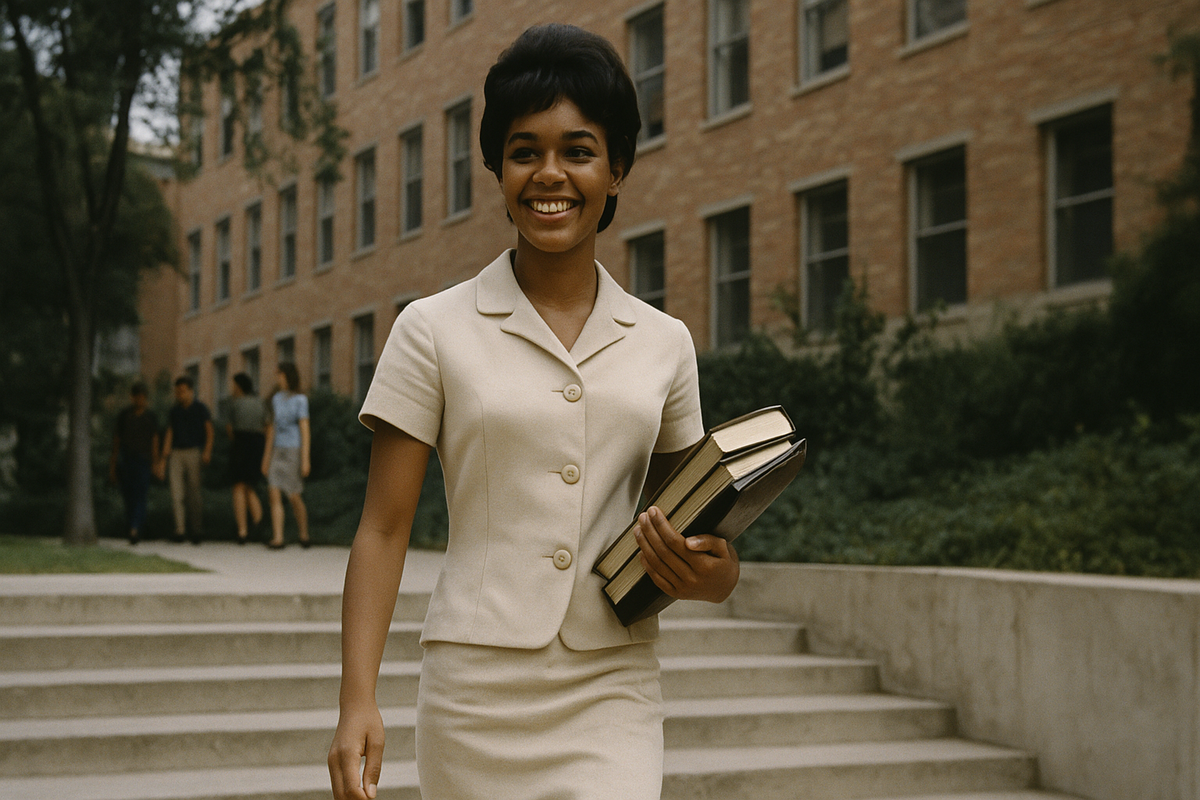
This wasn't the summer of love. This was the summer before Detroit burned. This was a year when "Black Power" became a rallying cry and white America clutched its pearls. And here was Tallulah Reed—poised, brilliant, walking down a staircase with books in hand—forcing the question: What does American beauty actually look like?
The Battlefield of Beauty
By 1967, the Civil Rights Act was three years old. The Voting Rights Act, two. African Americans had won the legal right to sit at lunch counters, vote without intimidation, and attend integrated schools. But they hadn't won the right to be beautiful in public. Not in the ways that mattered.
Beauty pageants remained fortresses of whiteness. Black women could clean the dressing rooms, but wearing the crown? That was reserved for a very specific American ideal—one that didn't include Reed's face, her intelligence, or her ambitions.
When she defeated 64 national contestants in Dallas, Texas, she didn't just win a sash. She detonated an assumption. The judges, the audience, the other contestants—all had to reconcile their expectations with the reality standing before them: a Black teenager who embodied everything they claimed to value. Grace. Intelligence. Poise. Ambition.
Tallulah wasn't auditioning for white approval. She was demanding recognition on equal terms. And she got it.
Issue Profile
Historical Figure: Tallulah Reed, First Black Miss Teenage Los Angeles
Issue Date: June 8, 1967
Archive Source: Jet Magazine
Publication: Founded 1951 by John H. Johnson
Historical Context: Published weeks before the Detroit Uprising of July 1967
Why Jet Staked Its Cover on a Teenage Queen
John H. Johnson founded Jet Magazine in 1951 with a radical premise: Black life deserved documentation beyond tragedy and protest. Yes, Jet covered lynchings and marches and political battles. But it also covered weddings, scandals, beauty queens, and baseball stars. It refused to let white America define what was "newsworthy" about Black existence.
The June 8, 1967 issue embodied this philosophy perfectly. On one page: Tallulah Reed, Miss Teenage Los Angeles, smiling with her sorority sisters at UCLA. On another: Jet's survey on Black leadership, featuring Dr. Martin Luther King Jr. and President Lyndon B. Johnson. Beauty queen meets civil rights icon. Pageant photos alongside political analysis.
This wasn't contradiction. This was the full spectrum of Black life—achievement in every arena, not just the ones white editors deemed "important."
Jet's coverage of Reed went deeper than most pageant features. She wasn't just a pretty face in a crown. She was a UCLA student studying theater arts, history, political science, and English. She'd lived in Scotland and England as an Army brat. She wanted to join the Peace Corps and serve in India. She represented a generation of globally conscious, highly educated African American youth who refused to be boxed into anyone's limited imagination.
Mainstream outlets might have reduced her to "first Black winner" and moved on. Jet showed readers who she was—and in doing so, gave young Black girls a blueprint for their own ambitions.
What the Magazine Captured
She won as the first Black Miss Teenage Los Angeles, competing on a national stage where Black contestants had long been unwelcome or invisible.
At 17, she was already a UCLA student juggling multiple disciplines—proof that beauty and intellectual rigor weren't mutually exclusive, no matter what stereotypes suggested.
Her upbringing as the daughter of an Army officer gave her a worldview most teenagers lacked. She'd lived abroad, navigated different cultures, embodied the discipline and resilience of military families—particularly Black military families who served a country that didn't always serve them back.
Her aspiration to join the Peace Corps and work in India revealed something crucial: she wasn't treating this pageant as a career endpoint. It was a platform. A launching pad for service and leadership on a global scale.
These details transformed Reed from symbol to person—a young woman with agency, ambition, and a vision of her future that extended far beyond the pageant circuit.
The Cover That Tells the Story
Jet's visual language spoke as loudly as its text. The cover showed Reed descending a staircase in classic mid-'60s style—modest, elegant, books in hand. Not provocative. Not trying to prove anything. Just confident. Just present.
Inside, candid photographs showed her chatting with sorority sisters, walking UCLA's campus, standing alongside other contestants. These weren't glamour shots designed to sell fantasy. They were documentary images of a real young woman navigating real spaces—college, competition, community.
Jet's photographers understood that representation wasn't just about putting Black faces in magazines. It was about showing Black life as ordinary—in the best possible sense. Reed wasn't an exotic curiosity. She was a student. A competitor. A winner. And she belonged in every frame.
Why Collectors Covet This Issue
Not just Reed's victory, but the moment when pageantry—that most resistant of cultural institutions—had to acknowledge Black beauty on its own terms.
This issue arrived in homes just weeks before the Detroit Uprising. It featured both a teenage beauty queen and civil rights leadership surveys. It held the tension of that year—progress and backlash, hope and fury—within its pocket-sized pages.
These aren't stock images or publicity stills. They're documentary evidence of Reed's life at UCLA, her interactions with peers, her presence in spaces where Black students were still novelties. For historians studying integration in higher education, these photos are primary sources.
Jet's format—small enough to fit in a pocket or purse—made it portable and accessible. It also made it disposable. Copies got folded, torn, lost, discarded. Well-preserved issues from this era are increasingly scarce, particularly ones documenting cultural milestones like Reed's victory.
For families, this issue offers a tangible link to the generation that fought for representation in every arena—politics, education, culture, beauty. For serious collectors, it's a cornerstone piece in any archive focused on the 1960s civil rights era or African American women's history.
Explore thousands of issues that capture milestones in civil rights, entertainment, culture, and everyday Black life.
Browse Jet Magazine CollectionWhether you're building a research archive, honoring family heritage, or preserving the material culture of Black America, vintage Jet magazines offer something no digital scan can replicate: the weight of history in your hands.
The Long View
Fifty-eight years after Tallulah Reed claimed her crown, the fight for representation in beauty, media, and culture continues. But battles don't repeat—they echo. And Reed's victory echoes still.
She proved that Black women could compete and win in arenas designed to exclude them. She demonstrated that intelligence and ambition could coexist with grace and style. She showed young Black girls that their faces, their talents, their dreams had value—regardless of who tried to convince them otherwise.
Jet Magazine made sure that story didn't disappear into footnotes or get reduced to a trivia question. They gave it a cover. They gave it context. They gave it permanence.
This issue isn't just a collectible. It's evidence. Evidence that every crown won by a Black woman, every door forced open, every assumption shattered—all of it mattered. All of it was documented. All of it endures.
When you hold the June 8, 1967 issue of Jet Magazine, you're not holding nostalgia. You're holding proof that representation was fought for, inch by inch, stage by stage, crown by crown. And that fight was worth winning.
1 comment
Craig
Tallulah Reed is better known as actress Tracy Reed. She is known for playing in the TV shows “Barefoot in the Park”, “The Love Boat”, and “Love American Style”. She was in many movies such as “Car Wash”, “A Piece of the Action”, “…All the Marbles”, and “Running Scared”.