
Gloria Emerson, Vietnam Diaries, and the War Vogue Brought Into the Living Room
When fashion's most glamorous magazine published frontline war reportage—and changed what Vogue could be
Picture this: January 1972. Lauren Hutton smiles from the cover of Vogue in a cloud of blonde hair and cashmere elegance. You turn the page expecting Yves Saint Laurent and diamond bracelets. Instead, you find a war correspondent in a helicopter over Saigon, documenting an 11-year-old prisoner who whispers, "I am so frightened."
Gloria Emerson's Vietnam diary didn't just appear in Vogue—it detonated inside it.
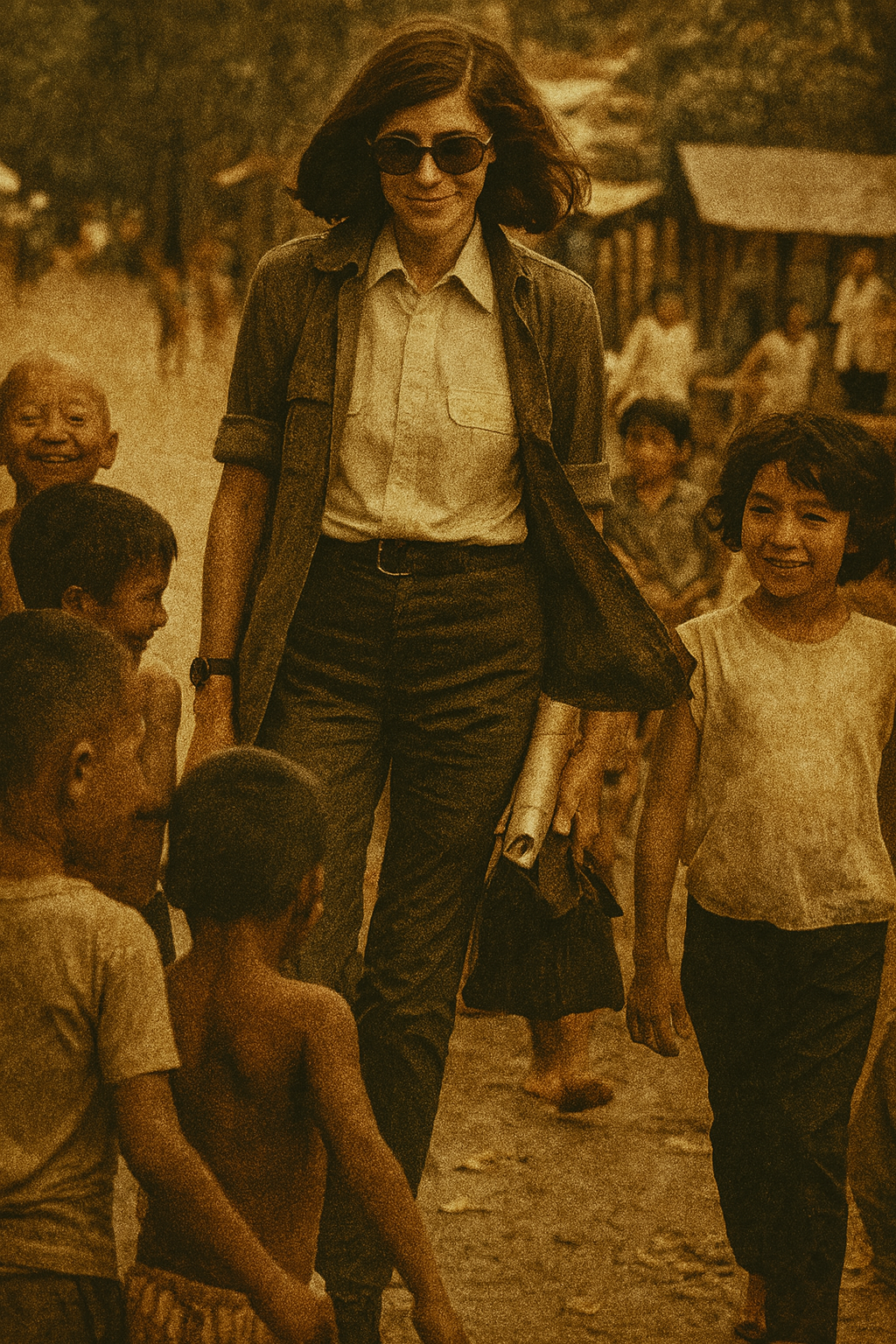
The feature, titled "Gloria Emerson, Full Speed," ran with stark black-and-white photographs: Emerson on a motorbike through Saigon streets, crouched in a helicopter with soldiers, surrounded by orphaned children in makeshift hospitals. This wasn't a sidebar about "fashion goes to war." This was frontline reportage—raw, unsparing, and furious—printed between haute couture and Max Factor ads.
For a magazine built on aspiration and beauty, it was an act of editorial courage that still reverberates today.
Archive Details
Historical Figure: Gloria Emerson, War Correspondent
Issue Date: January 1, 1972
Archive Source: Vogue Magazine
Feature Title: "Gloria Emerson, Full Speed"
The War That Wouldn't Stay Silent
By early 1972, the Vietnam War had devoured a generation. Nixon's "Vietnamization" policy was pulling American troops home, but the bombing campaigns raged on. The My Lai Massacre had been exposed. The Pentagon Papers had shattered public trust. College campuses burned with protest. The nation had fractured into camps: those demanding immediate withdrawal and those warning of communist domination.
This was the backdrop when Vogue made its gamble.
The magazine had always been more than hemlines and lipstick—but war reportage? That was uncharted territory. Yet under editor Grace Mirabella, Vogue was quietly transforming into something bolder, more socially conscious. The modern Vogue reader, the magazine wagered, didn't want escapism alone. She wanted to know. She wanted to be informed, engaged, morally awake.
Emerson's diary proved them right.
What Emerson Saw—And What She Showed
The piece reads like a fever dream of contradictions: Emerson navigating Saigon traffic, documenting paraplegic children cared for by the Committee of Responsibility, interviewing prisoners whose bodies shook with trauma. One photo shows her face—helmet on, expression stone-serious—flying with soldiers into combat zones. Another captures her kneeling beside Vietnamese children, stacks of medicine visible in the frame.
The writing matched the images in intensity. Emerson didn't observe from a distance. She testified. Her accounts included:
Emerson refused detachment. Her prose bristled with empathy and rage, blending journalism with moral reckoning. Vietnam, she insisted, was not abstract. It was human, immediate, and unbearable—and it demanded witness.
A Magazine That Dared to Hold Two Truths
What makes the January 1, 1972 Vogue so extraordinary is not that it chose war over fashion—it's that it held both simultaneously. The juxtaposition was jarring, even radical. Flip backward, and you're reading about Paris runways. Flip forward, and you're staring at the wreckage of Saigon.
This wasn't cognitive dissonance. It was honest reflection. In 1972, American women were living in both worlds: buying couture and attending antiwar rallies, raising children while their brothers shipped overseas, reading about Halston while body counts scrolled on the evening news. Vogue didn't sanitize that reality. It documented it.
In doing so, the magazine joined a tradition pioneered by wartime issues of Life—publications that understood their responsibility extended beyond entertainment. They were cultural archives, capturing not just what people wore but what they carried, what they feared, what they could no longer ignore.
What Vintage Vogue Teaches Us
Like the best wartime issues of Life, vintage Vogue endures because it captured more than surfaces. These magazines are time capsules. They show us what women wore, yes—but also what they thought about, argued over, mourned, and demanded change for.
The January 1972 issue proves that fashion and conscience are not opposing forces. Couture gowns and napalm scars existed in the same historical moment—and Vogue had the guts to print both.
Today, this issue stands as testimony: a fashion magazine can also be an act of witness.
Why This Issue Matters to Collectors
Historical Timing
Published at the apex of antiwar sentiment, it captured a nation at moral breaking point.
Emerson's Trajectory
Gloria Emerson would go on to win the George Polk Award and the National Book Award for her Vietnam coverage. This Vogue feature is an early monument to her fearlessness.
Editorial Audacity
No fashion magazine before or since has placed war reportage so boldly beside luxury advertising. It was a risk that redefined what Vogue could be.
Cross-Market Demand
The issue appeals equally to fashion historians, Vietnam War scholars, and collectors of women's journalism—giving it rare multidisciplinary value.
Visual Power
The collision of Lauren Hutton's pristine cover with Emerson's combat photos creates an unforgettable cognitive shock.
Cultural Artifact
This isn't just a magazine. It's proof that style publications can hold a mirror to geopolitics without flinching.
Own a Piece of History
To hold the January 1972 Vogue is to hold contradiction itself: Yves Saint Laurent jackets and Vietnamese orphanages, beauty ads and Emerson's searing diary entries. It's glamour and grit, aspiration and accountability, bound together in 200 pages.
Browse Vogue Magazine CollectionFrom the 1910s to the 1990s, every issue offers a portal into history—documenting not only fashion but the lives lived alongside it, the wars fought during it, the voices that refused to be silenced.
The January 1, 1972 Vogue remains one of the most unusual and significant issues the magazine ever published. By giving Gloria Emerson's Vietnam diary a home beside its fashion spreads, Vogue reminded readers that beauty, luxury, and moral reckoning could—and should—share the same stage.
This issue is collectible not just for its style, but for its spine. It proves that vintage Vogue is more than a style guide. It's living history: the glamour and the grit, held together in defiant, necessary tension.