
When America Saw Liberation: The August 14, 1944 Life Magazine That Captured France Breaking Free
On August 14, 1944, mailboxes across America received what would become one of the most consequential pieces of journalism in the Second World War—not because it announced victory, but because it proved liberation was real.
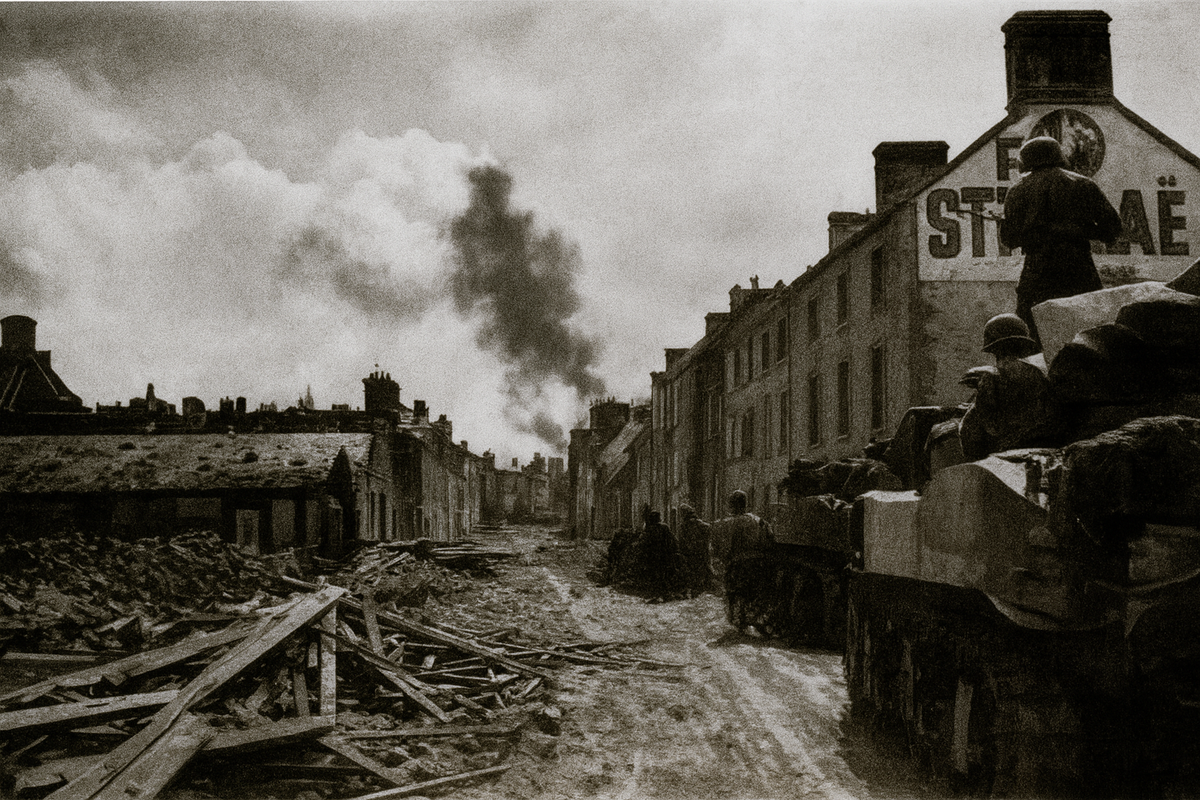
The latest issue of Life Magazine carried no abstract promises, no distant communiqués from Allied headquarters. Instead, it delivered something American families had waited four years to see: photographs of French citizens flooding into streets, tears streaming down faces that had known only occupation since 1940, as Allied tanks rolled through villages the Nazis were abandoning in panic.
This wasn't the war as distant strategy. This was the face of a continent shaking itself free.
Archive Details
Publication: Life Magazine
Issue Date: August 14, 1944
Historical Context: Allied Breakthrough in France, Pre-Liberation of Paris
Significance: First photographic evidence of liberation reaching American households
Archive Source: Original 20th Century Magazine Collection
The Breakthrough That Changed Everything
By mid-August 1944, the brutal calculus of the Normandy campaign had finally shifted. The D-Day landings of June 6 had been costly—thousands of Allied soldiers killed on beaches that ran red before the sun rose. What followed was even grimmer: weeks of hedgerow-to-hedgerow combat through Norman countryside, where German divisions transformed every field and stone wall into a killing ground.
Then Operation Cobra shattered the stalemate.
The massive Allied offensive tore through German defenses and opened the road to Paris. French resistance fighters—who had spent years in the shadows, sabotaging rail lines and disrupting communications—emerged to fight alongside liberating forces. The German retreat became a rout.
Life Magazine captured this exact inflection point. The August 14 issue went to press just as the breakthrough became undeniable, just as the first liberated towns were raising the tricolor for the first time since France fell.
For American readers scanning these pages in living rooms from California to Maine, this was the first proof that the gamble of D-Day—the lives spent on Omaha and Utah beaches—was yielding the liberation it promised.
Photojournalism as Witness
By 1944, Life had mastered what no other publication could match: placing readers directly onto the battlefield through photography that refused to soften or sanitize.
The August 14 issue delivered this formula at its finest. Page after page showed liberation not as abstract military achievement but as visceral human experience:
Soldiers advancing through towns still smoldering from recent combat. Civilians pressing forward with hastily sewn French flags, many crying openly as Allied troops passed. Children offering flowers to American GIs who looked barely older than the boys receiving them. The wreckage left behind—German equipment abandoned in retreat, buildings reduced to skeletal frames, exhausted prisoners being marched away.
And the faces. Close-up portraits of Allied soldiers revealed exhaustion and determination in equal measure, the weight of what they'd survived and what remained ahead.
These weren't propaganda images staged for maximum patriotic effect. They carried the grit and immediacy of frontline reporting—dust still settling, emotions raw and unfiltered. The captions provided context, but the photographs themselves told the story. Readers didn't just learn about liberation; they witnessed it unfolding.
Other magazines offered dispatches. Life offered presence.
What the Issue Revealed
The feature wove together multiple dimensions of the campaign, creating a portrait of liberation that went far beyond tactical maps:
Each element worked together to help readers not merely understand the campaign but grasp its human stakes and historical weight.
The Permanence of Print
Life Magazine's wartime issues endure because they function as time capsules in the most literal sense. Long after radio broadcasts faded and newspaper headlines yellowed beyond legibility, these magazines remained—on shelves, in attics, passed between generations.
They carry not just historical facts but the emotional texture of the moment: urgency, fear, cautious hope, relief. In an era when news evaporates into digital feeds within hours, these magazines remind us that history was once encountered deliberately, page by page, in full-scale photographs that demanded attention and contemplation.
This is why collectors, historians, and families continue to seek them out—not as artifacts of nostalgia, but as original witnesses to the past.
Why This Issue Endures
For collectors of vintage magazines, the August 14, 1944 issue represents something beyond ephemeral journalism—it's a primary historical document from one of the war's pivotal moments.
Its collectibility stems from multiple factors:
Holding an original copy means holding what Americans held when they first learned liberation was succeeding. The photographs haven't changed. The paper has aged, but the moment it preserved remains immediate.
Explore the Collection
Thousands of original Life Magazines spanning the 1930s through the 1970s are available to browse in our archive. Follow entire decades of history, culture, conflict, and art as they were first reported—from the Great Depression through Vietnam, the Space Race, and the cultural upheavals that reshaped America.
Whether you're a seasoned collector hunting specific issues, a historian conducting primary research, or someone preserving family memory by acquiring the magazines a grandparent once read during the war—these publications offer something irreplaceable: history in its original form, unrevised and unfiltered.
Browse Life Magazines CollectionThe August 14, 1944 issue of Life Magazine stands among the most significant wartime publications of the twentieth century. Its coverage of the Allied breakthrough in France delivered more than military updates—it showed Americans what liberation actually looked like as it happened, village by village, face by face.
Eighty years later, those photographs retain their power. The faces of French civilians seeing freedom return, the exhaustion in Allied soldiers' eyes, the German retreat captured in real time—none of it has diminished.
For anyone who values primary historical sources, vintage Life magazines like this aren't simply collectibles. They're original witnesses to the moments that bent the arc of the twentieth century. They preserve what no secondary account can fully capture: how history felt when it was still unfolding, when the outcome remained uncertain, when every photograph carried the weight of a world at war.