
The Night Madison Square Garden Went Silent
Inside Wrestling's Chronicle of Bruno Sammartino's Fall
Twenty-one thousand voices died at once.
On January 18, 1971, Madison Square Garden—an arena famous for its thunder—became a tomb. Bruno Sammartino, the "Living Legend" who had held the WWWF Heavyweight Championship for eight unbroken years, lay pinned beneath Ivan Koloff's 298-pound frame. The referee's hand hit the mat for the third time. The impossible had happened.
The crowd didn't boo. They didn't gasp. They simply... stopped. Grown men wept openly. Others sat frozen, unable to process what their eyes had just witnessed. Even Vince McMahon Sr., the battle-hardened promoter who had seen everything, reportedly murmured that night: "A terrible thing has happened here tonight."
Four months later, the May 1971 issue of Inside Wrestling hit newsstands carrying the full weight of that silence between its pages.
Historical Archive
Champion: Bruno Sammartino
Match Date: January 18, 1971
Venue: Madison Square Garden, New York
Issue: Inside Wrestling, May 1971
Feature Story: "Bruno Loses to Koloff in the Upset of the Century"
Eight Years of Invincibility, Gone in One Atomic Drop
Bruno Sammartino wasn't just a champion—he was a cultural monument. For the immigrant communities of the Northeast, his rise from Italian poverty to American triumph embodied the promise that hard work and resilience could conquer anything. Over 110 successful title defenses had made him seem untouchable, a fixture as permanent as the Garden itself.
Ivan Koloff, billed as the "Russian Bear," was the perfect Cold War villain: massive, brutal, and foreign. But nobody truly believed he could dethrone Bruno. Champions like Sammartino didn't lose—not at Madison Square Garden, not after eight years, not ever.
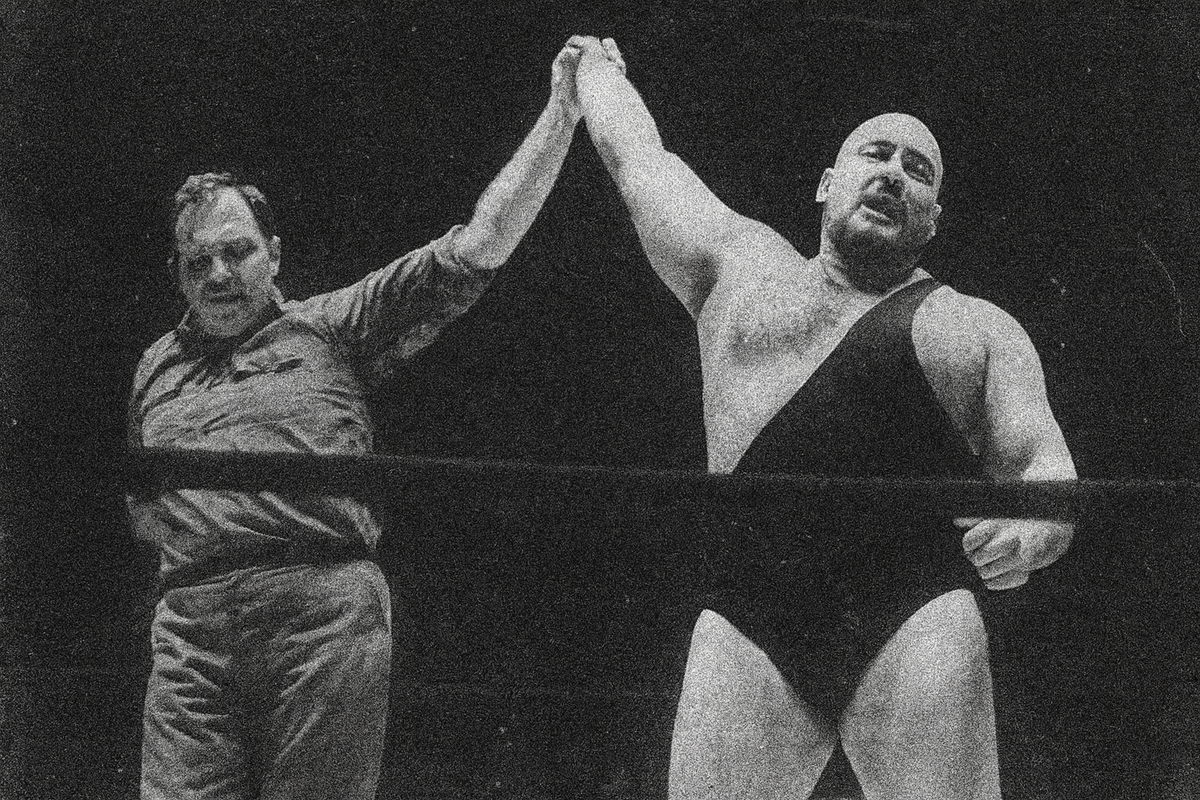
The match itself was textbook Koloff: methodical punishment building to a devastating finish. A knee to Bruno's stomach doubled him over. Then came the Atomic Drop—Koloff's signature move—and the three-count that shattered an era. What followed wasn't celebration. It was shock so profound that the silence itself became part of wrestling lore.
One witness described it perfectly: the crowd sat stunned, "as if at a funeral."
How Inside Wrestling Captured Lightning in a Bottle
By 1971, Inside Wrestling had established itself as the photojournalistic conscience of professional wrestling. While other magazines trafficked in sensationalism and kayfabe, Inside Wrestling understood something essential: the real drama wasn't just in the ring. It was in the fans' faces, the managers' anguish, the weight of history being made in real time.
The May 1971 issue—headlined "Bruno Loses to Koloff in the Upset of the Century"—is a masterclass in documentary storytelling:
The Anatomy of an Upset
What made this particular issue essential reading—then and now—are the specific details that transform a match result into mythology:
The Silence: More than 21,000 fans rendered mute by disbelief. For an arena synonymous with noise—cheers, boos, chants—the absence of sound became the story's defining characteristic.
Arnold Skaaland's Loyalty: The photographs of Bruno's manager offering comfort in defeat humanized what could have been just another title change. Wrestling had real consequences, real emotions, real bonds.
McMahon's Mourning: The promoter's sorrow-tinged words reflected something deeper than lost box office revenue. The WWWF itself had lost its foundation, its cornerstone, its reason for existing.
The Coronation of a Villain: Koloff standing victorious, Albano celebrating with manic glee—these images confirmed that this wasn't just Bruno's tragedy. It was someone else's triumph, and the wrestling world would have to reckon with its new reality.
A Living Time Capsule
Like Life Magazine's wartime issues or The Saturday Evening Post's Depression-era covers, vintage wrestling magazines serve as cultural X-rays of their moment. They reveal what mattered, who mattered, and how communities processed triumph and tragedy before the digital age atomized shared experience.
Inside Wrestling's coverage of Bruno Sammartino's loss demonstrates how powerful wrestling storytelling can be when executed with photojournalistic rigor and emotional honesty. One match didn't just change a title holder—it altered the entire landscape of northeastern sports culture.
Reading this issue today means encountering wrestling when it still possessed the power to make thousands of people weep in public, when matches carried genuine stakes, when magazines served as the sole repository of collective memory.
Why This Issue Endures
Experience History Firsthand
Original copies of Inside Wrestling—including this legendary May 1971 issue—are available through our curated collection. These aren't reproductions or digital scans. They're the actual magazines that sat on newsstands, passed through fans' hands, and carried wrestling's most dramatic moments to living rooms across America.
Browse Inside Wrestling Magazine CollectionWhether you're a dedicated collector, a cultural historian, or someone honoring a family member who cheered for Bruno Sammartino at the Garden, these magazines offer something irreplaceable: direct connection to the nights when wrestling wrote its own mythology.
The Upset of the Century didn't end when Ivan Koloff's hand was raised. It lives on in every page, every photograph, every caption of the May 1971 Inside Wrestling. The silence has been broken, but the memory remains perfect.