
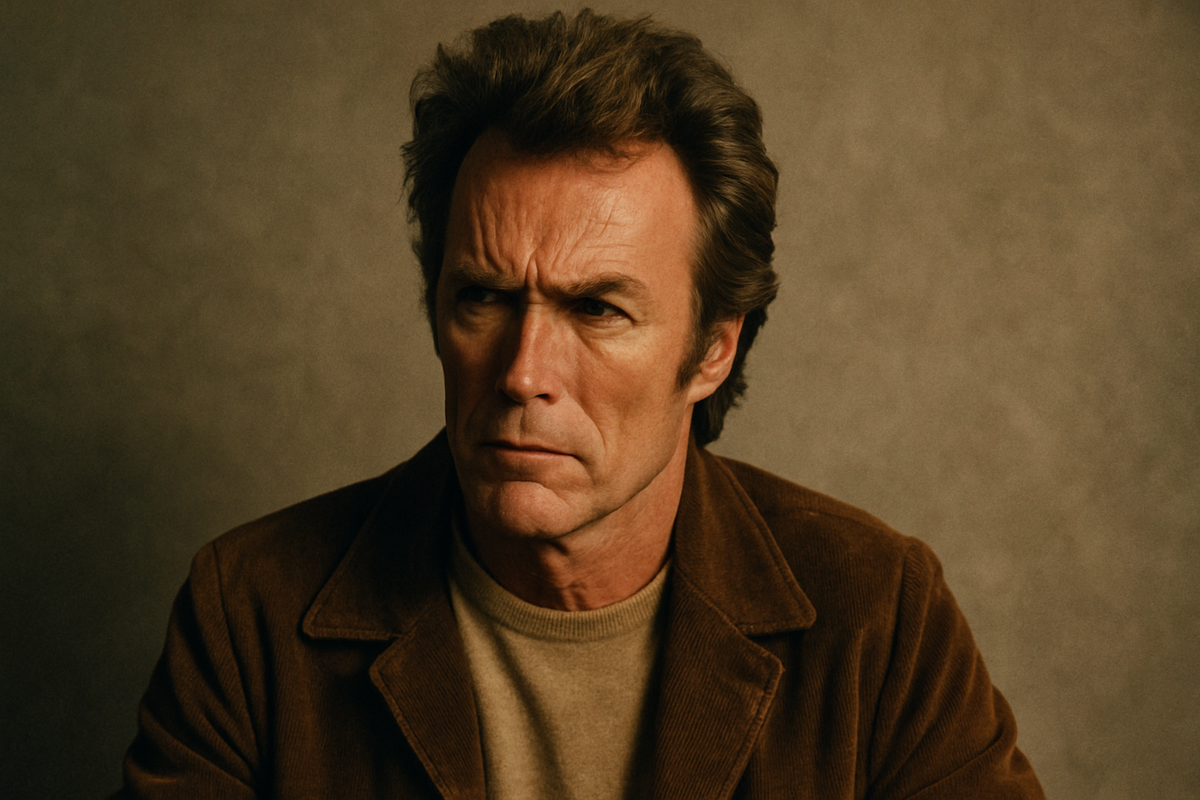
The February 1974 Playboy That Made Clint Eastwood Dangerous
When America's biggest box-office star sat down to explain why violence isn't simple
Picture this: February 1974. Richard Nixon is seven months from resignation. Saigon will fall in a year. And America's biggest box-office star—a laconic gunslinger who'd made justice look simple through a .44 Magnum—sits down with Playboy to explain why violence isn't simple at all.
The resulting interview didn't just capture Clint Eastwood at his zenith. It froze a nation's crisis of masculinity in amber.
Archive Details
Featured Subject: Clint Eastwood
Issue Date: February 1974
Publication: Playboy Magazine
Historical Context: Watergate scandal unfolding, Vietnam War winding down, height of Eastwood's cultural influence
When America Needed a Man With No Answers
The early 1970s weren't just changing—they were fragmenting. Vietnam had gutted the country's faith in righteous force. Watergate was demolishing trust in authority. Urban crime rates climbed while the sexual revolution rewrote the rules of intimacy and gender. Americans were hungry for strength but terrified of power, craving order but suspicious of anyone who promised to deliver it.
Enter Eastwood. Fresh off Sergio Leone's operatic westerns and the seismic Dirty Harry, he'd become both icon and target. His characters dispensed frontier justice in a lawless world, and audiences packed theaters to watch. Critics accused him of fascism. Fans saw him as the last honest man in a corrupt system.
He was, in short, the perfect subject for Playboy in 1974—a magazine that had spent two decades insisting that American men could be both virile and intellectual, hedonistic and politically engaged.
The Magazine That Made Interviews Matter
By February 1974, Playboy had evolved far beyond its centerfolds. The magazine's long-form interview format had become a cultural institution—the place where Malcolm X explained Black nationalism, where Martin Luther King Jr. defended nonviolence, where John Lennon dissected the Beatles. These weren't puff pieces. They were primary sources.
The Eastwood interview followed that tradition. Sprawling and unvarnished, it gave the actor space to wrestle with his own mythology. Playboy understood something other publications missed: the most interesting stories weren't about what made Eastwood famous. They were about what it cost him to embody what America wanted from its heroes.
The magazine wrapped this seriousness in its signature aesthetic. The February cover featured a blonde model in lace, rose in hand—pure Playboy eroticism, shot through with 1970s softness. But flip inside, and you found black-and-white photographs of Eastwood that refused glamour. His gaze was direct, uncompromising. His face carried the weight of playing men who never blinked.
What Eastwood Actually Said
The interview revealed fractures in the myth:
Eastwood pushed back hard against accusations that his films glorified brutality, arguing instead that they examined moral ambiguity and human conflict. He wasn't interested in making violence pretty—he was interested in showing its consequences.
He admitted discomfort with the tough-guy image audiences projected onto him, suggesting that the myth belonged more to them than to him. The icon and the man weren't the same person.
With rare candor, Eastwood dissected the film industry's brutal economics and power structures. He described working modestly, avoiding excess, staying grounded—a counternarrative to the celebrity culture exploding around him.
He spoke about his working-class roots and the discipline that shaped him, reminding readers that before the myth came the man—someone who'd struggled, adapted, and climbed without forgetting where he started.
Each revelation complicated the simple narrative. Here was America's avatar of masculine strength confessing that strength itself was complicated, that the roles he played weren't instructions but provocations, questions disguised as answers.
Archives of American Desire
The 1970s Playboy issues endure because they preserved what digital media lets evaporate: context, texture, contradiction. These magazines were designed to be kept, revisited, argued over. They show us not just what Americans consumed, but what they wanted—and what they were afraid to want.
Unlike the algorithmic feeds that dominate now, these pages offered permanence. The Eastwood interview still reads the same in 2026 as it did in 1974. The arguments haven't aged out. The questions he grappled with—about violence, masculinity, power, responsibility—remain unanswered.
Why This Issue Still Matters
Perfect Timing
Eastwood captured at maximum cultural voltage, when his films were shaping national debates about justice, authority, and what it meant to be a man in America.
Landmark Interview
The format was built for depth, not soundbites. This stands alongside Playboy's interviews with MLK Jr., Malcolm X, and John Lennon in cultural weight.
Cover Appeal
The 1970s Playboy covers remain documents of the sexual revolution's visual language—artistry and provocation in perfect balance.
Historical Artifact
Well-preserved copies represent a media landscape that no longer exists—where long-form celebrity journalism could change how Americans thought about themselves.
Where the Collection Leads
The Eastwood issue opens a door to the full sweep of Playboy's cultural archive. From the 1950s through the 1990s, the magazine chronicled American transformation: the sexual revolution's rise and backlash, Hollywood's evolution, civil rights, feminism, and rock and roll's maturation.
Browse Playboy Magazine CollectionThe Man, The Myth, The Magazine
The February 1974 Playboy succeeded because it refused easy answers. In an era desperate for clarity, it gave readers Clint Eastwood—a man playing heroes while admitting heroism was a trap, embodying strength while questioning what strength meant, becoming an icon while resisting what icons represent.
That tension made the interview matter then. It makes the magazine matter now. Not as nostalgia, but as evidence: proof that even at the height of his power, when America most needed someone to play the strong, silent savior, Eastwood understood the role was killing something true.
The magazine captured that understanding. And anyone holding this issue today holds that contradiction—frozen, preserved, still asking its questions.