
When Elizabeth Taylor Became Cleopatra — And America Watched Its Values Unravel
Inside the April 13, 1962 Life Magazine that captured Hollywood's most scandalous moment
The woman staring from the cover of the April 13, 1962 Life Magazine wore the face of a queen and the eyes of a scandal. Elizabeth Taylor, captured in full Cleopatra regalia — heavy kohl liner, regal bearing, vulnerable gaze — had become something more dangerous than a movie star. She had become a mirror, and America didn't like what it saw reflected back.
Archive Details
Historical Figure: Elizabeth Taylor
Issue Date: April 13, 1962
Archive Source: Life Magazine
Cultural Context: The Cleopatra scandal and the transformation of celebrity culture
Inside those pages, readers found a spectacle that transcended celebrity gossip. This wasn't merely another Hollywood romance gone wrong. It was a cultural fissure opening in real time: Taylor's affair with Richard Burton, a film production hemorrhaging money like a wounded empire, and the death rattle of Old Hollywood morality playing out in Technicolor photographs.
For anyone who opened that issue in 1962, the message was unmistakable. The rules had changed, and Elizabeth Taylor was the one who had rewritten them.
The Crossroads of 1962
America in the early 1960s stood suspended between worlds. The Cold War had frozen into an anxious stalemate. Civil rights battles were moving from courtrooms to lunch counters. The studio system that had manufactured stars like factory goods was collapsing, leaving actors with unprecedented power — and unprecedented exposure.
Elizabeth Taylor embodied this transformation with almost reckless precision. At thirty, she had already cycled through five husbands. Her affair with Richard Burton on the Cleopatra set was about to detonate across front pages worldwide. Meanwhile, the film itself was mutating into Hollywood's most spectacular disaster: originally budgeted at $2 million, costs were metastasizing toward $25 million, threatening to sink 20th Century-Fox entirely.
What made Taylor's story irresistible wasn't just the glamour or the scandal. It was the contradiction. She was simultaneously princess and transgressor, fairy tale heroine and moral provocateur. She refused to apologize, refused to hide, and in doing so, became the first modern celebrity — famous not despite her scandals, but because of them.
Life's Lens on Cultural Upheaval
By 1962, Life Magazine had perfected the art of turning moments into monuments. Its editors understood that photographs could excavate truth in ways prose never could. Where newspapers trafficked in innuendo and gossip columns, Life delivered sweeping photo-essays that transformed private lives into public theater.
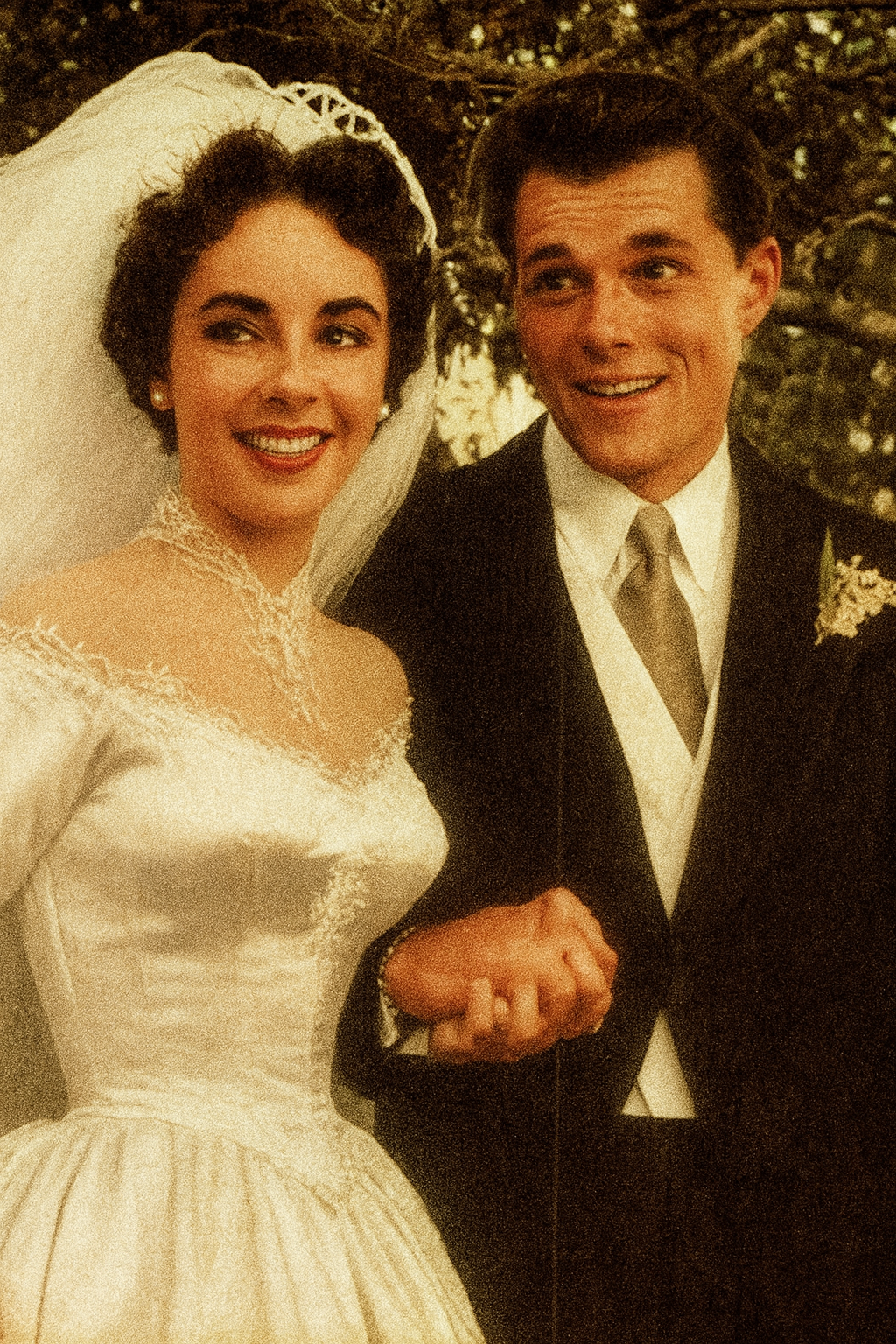
The April 13 issue deployed this technique with surgical precision. The layout moved like a biography in images: Taylor as the radiant child star in National Velvet, beaming beside Lassie. Young bride to hotel heir Nicky Hilton in 1950. Subsequent weddings to actor Michael Wilding, producer Mike Todd, singer Eddie Fisher — each ceremony more lavish than the last, each marriage more doomed.
But the most devastating images were the simplest: tender portraits with her children, accompanied by captions like "Please… who's my daddy now?" The question hung in the air, indicting and humanizing in equal measure.
And then, Cleopatra herself — Taylor in full Egyptian regalia, already infamous not for her performance but for what was happening between takes.
This wasn't journalism. It was orchestrated revelation, each photograph a confession the subject hadn't necessarily agreed to make.
Performance, Reality, and the Space Between
The cover itself functioned as thesis statement: Taylor's face in extreme close-up, Cleopatra's dramatic eyeliner transforming her into something both ancient and immediate. She looked regal. She looked trapped. She looked like a woman playing a queen while her own kingdom burned.
Life's photographers captured something more elusive than scandal — they documented the moment when acting and living became indistinguishable. Photos of Taylor and Burton kissing on set deliberately blurred the line between scripted passion and genuine affair. Wedding portraits from her multiple marriages created a visual timeline of romantic wreckage. Family snapshots revealed the human cost of living as public spectacle.
The magazine's genius lay in its use of juxtaposition. Taylor as innocent ingénue became Taylor as femme fatale. Private wedding became public commodity. Screen kiss became evidence of adultery.
Unlike the gossip rags proliferating across grocery checkout stands, Life treated these images as historical record. The magazine was documenting not just a scandal, but a turning point — the moment celebrity culture as we know it was born.
The Fairy Tale That Wouldn't End
Life's narrative strategy was deceptively simple: frame Taylor as a princess endlessly searching for her prince, marrying one suitor after another in a cycle of hope and inevitable heartbreak.
The Fisher-Burton debacle became the climax of this fairy tale gone toxic. Taylor had stolen Eddie Fisher from America's sweetheart Debbie Reynolds — already scandalous. Now she was abandoning Fisher for Burton, as their on-screen Cleopatra romance metastasized into tabloid reality.
Meanwhile, Fox's accountants watched in horror as Cleopatra's budget spiraled beyond control. Taylor's record-breaking million-dollar salary became both achievement and accusation. Production delays caused by her illnesses and the chaos of her personal life added millions more. The studio, once mighty, teetered on the edge of bankruptcy.
One section of the issue traced Hollywood's tangled genealogy of marriages and affairs, revealing how stars like Taylor, Fisher, Wilding, and Todd formed an incestuous aristocracy of fame. It read like a royal family tree from a particularly decadent dynasty.
The subtext was inescapable: Taylor had become Cleopatra not just on screen, but in the cultural imagination — a queen presiding over her own destruction, dragging an empire down with her.
Inside the Issue: Key Features
The Fairy-Tale Narrative
Life framed Taylor as a princess endlessly searching for her prince, marrying one after another in a cycle of hope and heartbreak.
The Lavish Weddings
From Nick Hilton to Mike Todd to Eddie Fisher, readers saw photos of each marriage, each more dramatic than the last.
Children in the Spotlight
Family photos emphasized the impact of Taylor's turbulent life on her children, with captions underscoring their innocence.
The Fisher-Burton Scandal
The piece detailed how Taylor's marriage to Eddie Fisher crumbled as her on-screen romance with Richard Burton became reality.
The Cost of Cleopatra
With Fox spending millions in overruns, the article pointed to Taylor's million-dollar salary and production delays.
Screen vs. Reality
A famous photo showed Taylor and Burton in a passionate kiss, blurring performance with their real affair.
Hollywood's Family Tree
One section traced the tangled web of Hollywood marriages, showing how stars were all connected.
Cleopatra as Metaphor
Taylor's role symbolized both her power and vulnerability — a queen on screen, beset by scandal off-screen.
The Power of the Magazine Form
Life's influence stemmed from its understanding that celebrity coverage could function as cultural commentary. The magazine never treated Hollywood scandals as mere entertainment — they were symptoms of larger social transformations.
This approach elevated photojournalism into something closer to anthropology. Life's images were composed with the gravity of history painting, its captions layered with irony and unexpected empathy. The magazine could be simultaneously judgmental and compassionate, titillated and thoughtful.
That's why these issues transcend their moment. They're not just records of what happened, but excavations of what it meant. Every photograph was an argument about American values, every caption a meditation on who we were becoming.
Collector Significance
Historical Timing
Published at the height of the Cleopatra scandal, the issue captures Taylor and Burton just as their affair became public knowledge.
Iconic Photography
The dramatic cover and behind-the-scenes images of Cleopatra remain among the most recognizable photos of Taylor's career.
Cultural Significance
This issue marks the turning point where celebrity scandal became inseparable from stardom in America.
Collector Demand
Taylor remains one of the most collectible Hollywood icons, and this issue is a centerpiece for any serious collection of vintage Life magazines.
Holding this issue is not simply flipping through an old magazine. It is touching the very pages that defined how Americans viewed fame, scandal, and morality in 1962.
A Living Archive
Thousands of original Life magazines remain available to collectors, each issue a portal into America's cultural memory. From Hollywood's golden age through world wars, civil rights struggles, and social upheavals, Life documented the twentieth century with unmatched depth and artistry.
Whether you're a serious collector building a comprehensive archive, a cultural historian researching mid-century media, or someone seeking a tangible connection to family members who lived through these transformative decades, these magazines offer something irreplaceable: history as it was first witnessed, unfiltered by retrospective analysis.
The Woman Who Rewrote the Rules
The April 13, 1962 Life Magazine remains definitive — not just as celebrity journalism, but as cultural diagnosis. Its coverage of Elizabeth Taylor, her tumultuous romances, and the disastrous Cleopatra production captured Hollywood at its most glamorous and most grotesque, America at its most judgmental and most fascinated.
The photographs, alternately stunning and intrusive, told the story of a woman who refused to be anything less than fully human — mistakes, scandals, and all. The reporting reflected not just the making of a movie, but the making of modern celebrity culture itself.
Taylor became Cleopatra not merely by playing her, but by embodying what the role represented: a woman wielding power in a world determined to punish her for it, a queen presiding over her empire's twilight, a symbol of excess and ambition and the price both demand.
For collectors today, this issue isn't reading material. It's testimony — evidence of the moment when Hollywood, scandal, and stardom collided with such force that the shockwave is still felt today.
Explore the Archive
Discover thousands of original Life magazines and trace decades of cultural history through unmatched photojournalism.
Browse Life Magazine Collection