
The Day LIFE Magazine Looked Back at the Year the World Changed
Inside the June 30, 1972 issue that revisited 1953's defining moments: Soviet tanks in East Berlin, the Rosenbergs' execution, and the first ascent of Everest
On June 30, 1972, Americans opened their mailboxes to find something unexpected: not another dispatch from Vietnam, not another Watergate update, but a mirror held up to 1953—the year the Cold War calcified into something permanent.
Inside that week's LIFE Magazine, the feature "19 Years Ago" did what few retrospectives accomplish: it made the past feel urgent again. Soviet tanks in East Berlin. The Rosenbergs strapped into electric chairs at Sing Sing. Two men standing where no human had ever stood—29,029 feet above sea level on Mount Everest. These weren't nostalgic vignettes. They were the three moments that defined how the postwar world would actually work: through force, through fear, and through the stubborn insistence that humans could still do impossible things.
LIFE didn't just report these stories in 1972. It had been there in 1953, cameras ready, when history cracked open. Now, nearly two decades later, with America waist-deep in a different war and a different kind of disillusionment, the magazine asked its readers to remember what the stakes used to be.
What they found in those pages still resonates today.
Three Flashpoints, One Pivotal Year
The year 1953 moved fast. Stalin died in March. The Korean War armistice was signed in July. And between those seismic events, three separate dramas unfolded that would shape the Cold War's trajectory for decades.
East Berlin, June 1953: Workers in Soviet-controlled East Germany walked off construction sites to protest increased production quotas. Within hours, the demonstration metastasized into something the Communist authorities hadn't anticipated—a full-scale uprising against Soviet occupation. Germans hoisted their flag over the Brandenburg Gate in open defiance. The Soviets responded with T-34 tanks. The rebellion was crushed within two days, but the images—crowds hurling stones at armored columns, Soviet soldiers beating demonstrators—became proof that the Iron Curtain was held in place by force, not consent.
Sing Sing Prison, June 19, 1953: Julius and Ethel Rosenberg were executed for conspiracy to commit espionage. Accused of passing atomic secrets to the Soviet Union, they became the first American civilians executed for espionage during peacetime. Their trial and execution polarized the nation. To some, they were traitors who handed Stalin the bomb. To others, they were scapegoats sacrificed to Cold War hysteria. Protesters gathered outside the White House until the end. The case remains contested to this day.
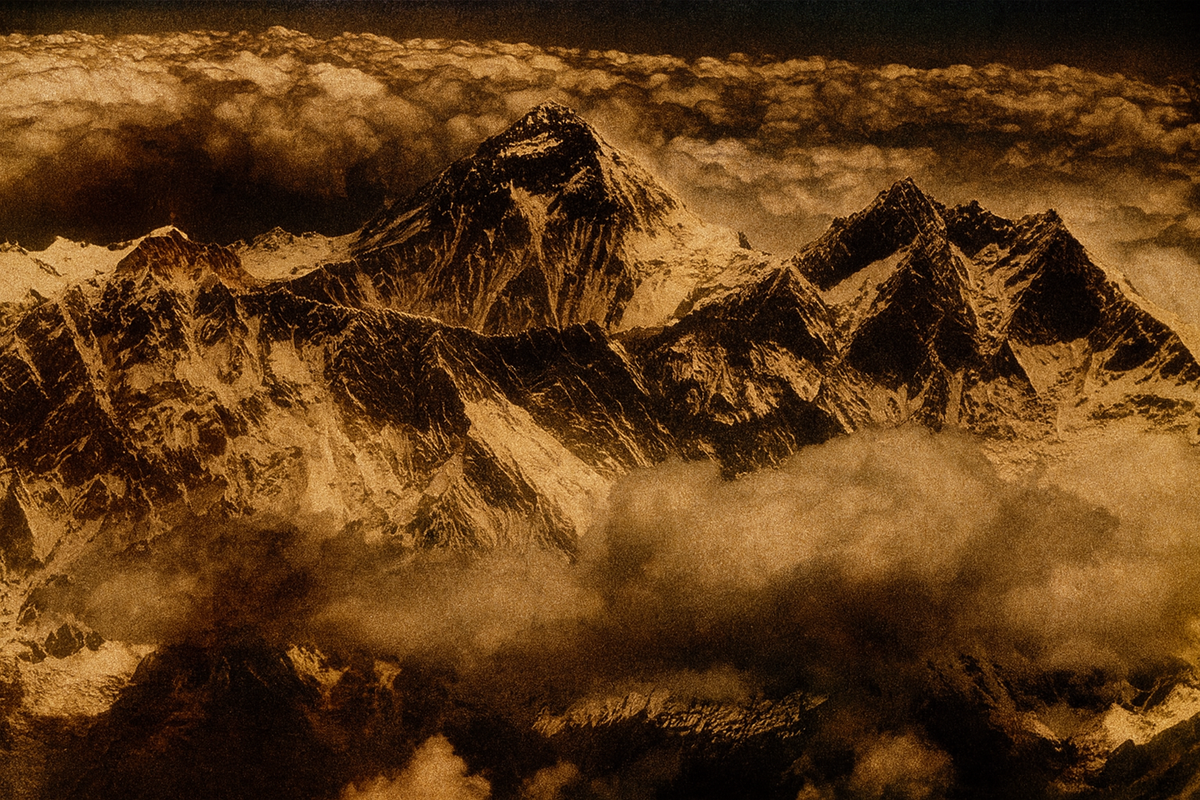
Mount Everest, May 29, 1953: New Zealander Edmund Hillary and Sherpa Tenzing Norgay reached the summit of Mount Everest, the first confirmed ascent of the world's highest peak. After decades of failed expeditions and deaths on the mountain, their success felt like vindication—not just of mountaineering technique, but of human will itself. The British expedition's timing was deliberate: the news reached London just before Queen Elizabeth II's coronation, a symbolic capstone to the fading British Empire's ambitions.
By 1972, when LIFE revisited these events, the context had shifted entirely. The Berlin Wall was eleven years old. The Rosenbergs had been dead for nineteen years, their guilt still debated. Everest had been summited dozens of times. But the images—those frozen moments LIFE specialized in—hadn't aged at all.
Issue Archive Details
Publication: LIFE Magazine
Issue Date: June 30, 1972
Feature Title: "19 Years Ago"
Historical Events Covered: East Berlin Uprising (June 1953), Rosenberg Execution (June 19, 1953), Mount Everest Summit (May 29, 1953)
Archive Significance: Dual-layer retrospective capturing both 1953 Cold War events and 1972 cultural perspective
Why LIFE's Coverage Still Matters: The Permanence of the Photograph
Television news in 1953 was still primitive. Newspapers offered words and the occasional grainy photo. LIFE offered something else entirely: witness.
The magazine's photographers didn't just document the Berlin uprising—they captured the exact moment a Red Army speaker was beaten by protesters before East German police pulled him to safety. They froze the chaos: cobblestones torn up for ammunition, Soviet tank treads crushing pavement, young Germans with flags raised against impossible odds.
For the Rosenberg execution, LIFE published courtroom sketches of Julius in the electric chair and photographs of candlelight vigils outside the prison. These weren't abstractions. They were the physical manifestation of the atomic age's terror—the idea that secrets could kill you, that espionage had become a capital crime, that the state could execute a mother and leave two orphaned sons.
The Everest photographs remain among the most reproduced images in mountaineering history: Hillary and Norgay at the summit, flags of Britain, Nepal, and the United Nations snapping in the wind, the Himalayas stretching endlessly below. For Americans in 1953—still riding the optimism of winning World War II—it was proof that even nature's greatest fortress could be conquered.
What made LIFE different wasn't just the quality of its photography. It was the editorial philosophy: show, then tell. Where other publications gave readers a story, LIFE gave them evidence. And evidence, unlike narrative, doesn't fade.
The 1972 Retrospective: History with Hindsight
The June 30, 1972 issue didn't lead with these stories on its cover. Inside, however, the "19 Years Ago" feature functioned as the magazine's centerpiece—a meditation on how rapidly the world had changed and how little, in some ways, it had changed at all.
LIFE's editors structured the retrospective with precision, juxtaposing three types of human drama:
The layouts were generous—full-page spreads, archival photographs reproduced with care, captions that didn't over-explain. This was LIFE's signature: let the image carry the weight, and let the reader lean in.
By 1972, America was deep into Vietnam, negotiating détente with the Soviets, and still processing the assassinations of the 1960s. Revisiting 1953 wasn't nostalgia. It was a reality check. The Cold War hadn't ended—it had simply evolved. The Rosenbergs were still divisive. Berlin was still divided. Everest was still deadly.
And LIFE was still the publication that could make you see history, not just read about it.
Why This Issue Is Highly Collectible Today
Vintage LIFE magazines have become sought-after artifacts for a reason: they are physical evidence of the 20th century's most consequential moments, preserved in a format that was designed to last.
The Enduring Power of Print in a Television Age
LIFE's great advantage over television news was permanence. A broadcast disappeared. A magazine stayed.
Families kept issues in basements. Libraries bound them into volumes. Today, collectors seek them out as primary sources—not just for the events they covered, but for how they covered them. The editorial choices, the photo selection, the layout decisions—all of these reveal how Americans understood their own history in real time.
The June 30, 1972 issue endures because it understood something fundamental: history isn't just dates and policy decisions. It's faces in crowds, flags raised in defiance, men standing on summits, and the choice to preserve these moments in images that don't fade.
When you hold this issue today, you're not reading about the Cold War. You're holding the Cold War itself—frozen in gelatin silver prints and offset lithography, as immediate now as it was fifty years ago.
Explore the Full Archive
If the Berlin uprising, the Rosenberg execution, or the first ascent of Everest resonates with you, this issue is worth owning. But it's only one artifact among thousands.
LIFE documented the 20th century as it happened—D-Day, the moon landing, the civil rights movement, the fall of Saigon. Each issue is a time capsule, not just reporting but experiencing history through the unmatched power of photojournalism.
Browse Life Magazine CollectionThe June 30, 1972 issue of LIFE Magazine remains one of the most powerful retrospectives the publication ever produced. By looking back at 1953 through the lens of 1972, it captured two eras at once: the early Cold War's raw drama and the reflective, disillusioned America that came after.
Its photographs remain unforgettable. Its reporting remains authoritative. And its value as a collectible—both monetary and historical—continues to grow.
This isn't just a magazine. It's an artifact of how a generation tried to make sense of the world it inherited, one image at a time.