
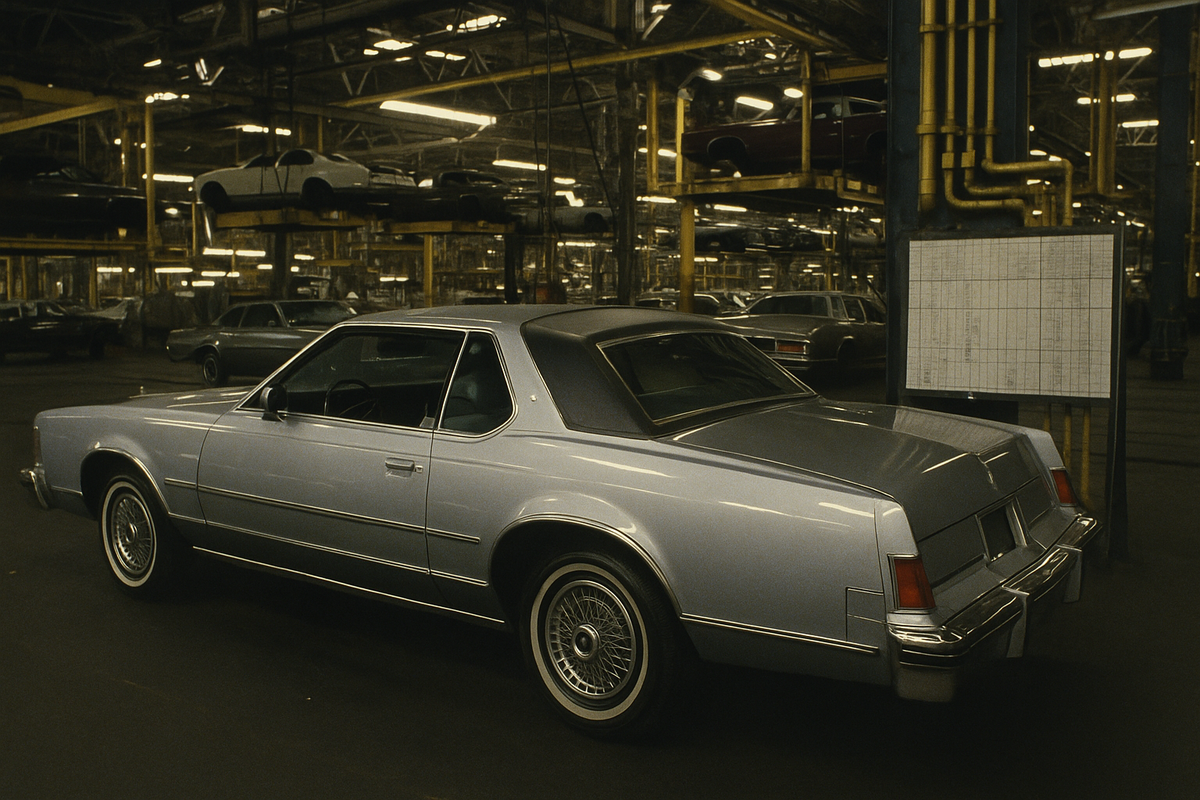
The Last Days of the Land Yacht
Inside Forbes' 1977 Autopsy of Detroit's Dying Dream
On New Year's Day 1977, Forbes Magazine readers opened an issue that read less like a financial report and more like a death certificate.
The patient: the American automobile as they knew it. The cause: starvation by oil embargo, suffocation by regulation, and a slow bleed from foreign competitors who had learned to do more with less. The prognosis, delivered in Forbes' signature blend of hard numbers and harder truths, was brutal—adapt or die.
This wasn't hyperbole. It was documented fact. The January 1, 1977 "Automotive" feature captured General Motors, Ford, Chrysler, and American Motors at the precise moment they faced extinction by irrelevance. The cars that had rolled triumphantly out of Detroit for three decades—chrome-laden, V8-powered monuments to postwar prosperity—were suddenly obsolete. Not in some distant future. Now.
What makes this issue extraordinary isn't just its timing. It's that Forbes documented the automotive industry's inflection point with the cold clarity of a surgeon calling time of death on one era while watching another struggle to be born.
Archive Details
Publication: Forbes Magazine
Issue Date: January 1, 1977
Feature: "Automotive" — Annual Report on American Industry
Historical Context: Published as CAFE standards took effect, documenting Detroit's forced transformation from gas-guzzlers to fuel-efficient vehicles
Key Figures: Chester Devenow (Sheller-Globe), General Motors, Ford, Chrysler, American Motors
The Squeeze: When Washington Rewrote the Rules
The 1973 OPEC oil embargo hadn't just raised gas prices. It had detonated the foundational assumption of American automotive engineering: that fuel would always be cheap and plentiful. Gas lines snaked around city blocks. Rationing became reality. The family sedan that symbolized freedom suddenly felt like a liability.
Washington's response came swift and unforgiving. The Corporate Average Fuel Economy standards, enacted in 1975, mandated 20 miles per gallon by 1980 and 27.5 mpg by 1985. For automakers who had built empires on horsepower and heft, this wasn't a challenge—it was an existential threat.
By 1977, Detroit was trapped in what Forbes called "a squeeze." The mathematics were unforgiving: maintain the big car, miss the mandate, face penalties. Or redesign everything from the chassis up, gamble billions, and hope American buyers would accept that bigger was no longer better.
Chester Devenow, chairman of auto supplier Sheller-Globe, captured the psychological shift with striking clarity. After years driving smaller European cars, he noted, even a Ford Mustang suddenly felt oversized. The market's center of gravity had moved, and Detroit's compass was still pointing to 1965.
The Forbes Lens: Numbers, Steel, and Cultural Reckoning
Forbes didn't just report the crisis. It dissected it with surgical precision, deploying photographs, data tables, and editorial voice into a comprehensive diagnosis.
One page displayed a sketch of the Cadillac Coupe de Ville alongside a pointed question: could downsizing preserve its "sex appeal"? Another featured the Detroit Diesel "Big Mama" truck transmission—a $7,000-plus industrial behemoth symbolizing the scale and swagger of American manufacturing power. The visual juxtaposition said everything: this is what we were. This is what we must become.
The magazine's "Yardsticks of Management Performance" tables laid bare the financial stress fractures. General Motors, Ford, Chrysler, American Motors, Caterpillar, Firestone, Bendix, Cummins Engine—all were measured, compared, and found wanting in different ways. Profitability metrics told one story. Return on equity told another. Sales growth, or the lack of it, told a third.
The editorial tone was Forbes at its unflinching best: tough realism laced with the recognition that this was about more than balance sheets. This was about national identity being forced through a crucible of economic necessity.
The Four-Front War Detroit Couldn't Win
Materials Became Battlegrounds
General Motors introduced lighter Cadillacs. Ford slashed as much as 700 pounds from its models. Chrysler scrambled to follow. Aluminum, plastics, and advanced steels transformed from engineering curiosities to survival tools.
Economics Turned Vicious
High inflation met softening consumer demand. Inventories swelled. Forbes described 1976 as "a kind of final fling with the big cars"—a last hurrah before the reckoning.
Foreign Competition Redefined the Game
Volkswagen, Toyota, Honda, and Datsun were no longer charming imports for college professors and hippies. They were mainstream choices setting standards Detroit had ignored for decades: fuel efficiency, build quality, reliability.
Consumer Power Shifted the Throne
Forbes made the verdict explicit: 1976 had been the year of the consumer. Buyers rewarded adaptation and punished stubbornness. Detroit's decades of dictating taste were over.
Why This Issue Changed Everything
The Forbes automotive coverage of January 1977 captured something rarer than a business trend. It documented the precise moment when American industrial mythology collided with global economic reality.
The American car was never just transportation. It was a promise: that prosperity meant size, power meant freedom, and tomorrow would always be bigger than today. Downsizing the automobile meant downsizing that promise.
Forbes understood this. The article chronicled Detroit's impossible bind—cling to the heavy, powerful machines that had defined the 1950s and 1960s, or pivot to smaller, more efficient designs demanded by regulators and an increasingly skeptical public. There was no clean path forward. Only choices between bad options and worse ones.
The magazine captured General Motors, Ford, Chrysler, and American Motors at the moment they stood at that crossroads, inventories bloated with yesterday's dream, engineers frantically sketching tomorrow's compromise.
The Forbes Formula: Why It Worked Then, Why It Matters Now
What separated Forbes from competitors wasn't just sharper financial reporting. It was the recognition that profit margins exist within cultural contexts. Policy shapes psychology. Competition drives adaptation. Wealth and industry don't float in abstract space—they're anchored in historical forces that can be named, measured, and understood.
This is the same editorial philosophy that would later make the Forbes 400 iconic: treating business not as dry accounting but as human drama played out through balance sheets and market share.
The January 1, 1977 automotive feature exemplified this approach. It wasn't covering an industry downsizing. It was chronicling the moment American exceptionalism learned the hard lesson that the rest of the world had already absorbed: resources are finite, efficiency matters, and dominance is never permanent.
The Collector's Perspective: Why This Issue Endures
Historical Timing
Published precisely as CAFE standards took effect, it documents the first steps of Detroit's decades-long march toward efficiency—a transformation still incomplete today.
Corporate Snapshots
GM, Ford, Chrysler, American Motors, Caterpillar, Firestone, Bendix—all captured in mid-crisis, their strategies exposed, their vulnerabilities documented, their futures uncertain.
Visual Narrative
The contrast between streamlined Cadillacs and massive truck transmissions illustrates the industrial crossroads better than a thousand words could.
Access the Archive
The Forbes January 1, 1977 issue remains available to collectors and researchers studying the transformation of American industry. These magazines provide direct access to how business leaders, policymakers, and journalists understood the economic upheavals reshaping the late 20th century.
Browse Forbes Magazine CollectionEpilogue: The Turning Point That Didn't Turn Back
Detroit did downsize. The Cadillac Coupe de Ville shrank. The Ford LTD shed pounds. Chrysler barely survived the transition, requiring federal bailouts to limp into the 1980s. American Motors disappeared entirely, absorbed by Chrysler before Chrysler itself was swallowed by foreign ownership.
The Forbes feature of January 1977 captured the instant when Detroit's dominance became negotiable, when the American car stopped being the world's aspiration and became one option among many. The magazine documented not just an industry in crisis but a nation being forced to recalibrate its understanding of what prosperity looked like.
Holding this issue today means holding that moment—the shock, the resistance, the reluctant adaptation, and the uncertain future that eventually became our present. It's the story of the day the land yacht ran aground, and Detroit had to learn to build something smaller, lighter, and fit for the world as it actually was.