
The Night Madison Square Garden Watched a Champion Fall
How Inside Wrestling documented the exact moment Dino Bravo shattered Superstar Billy Graham's era
March 1979. Inside the most famous arena in professional wrestling, something broke.
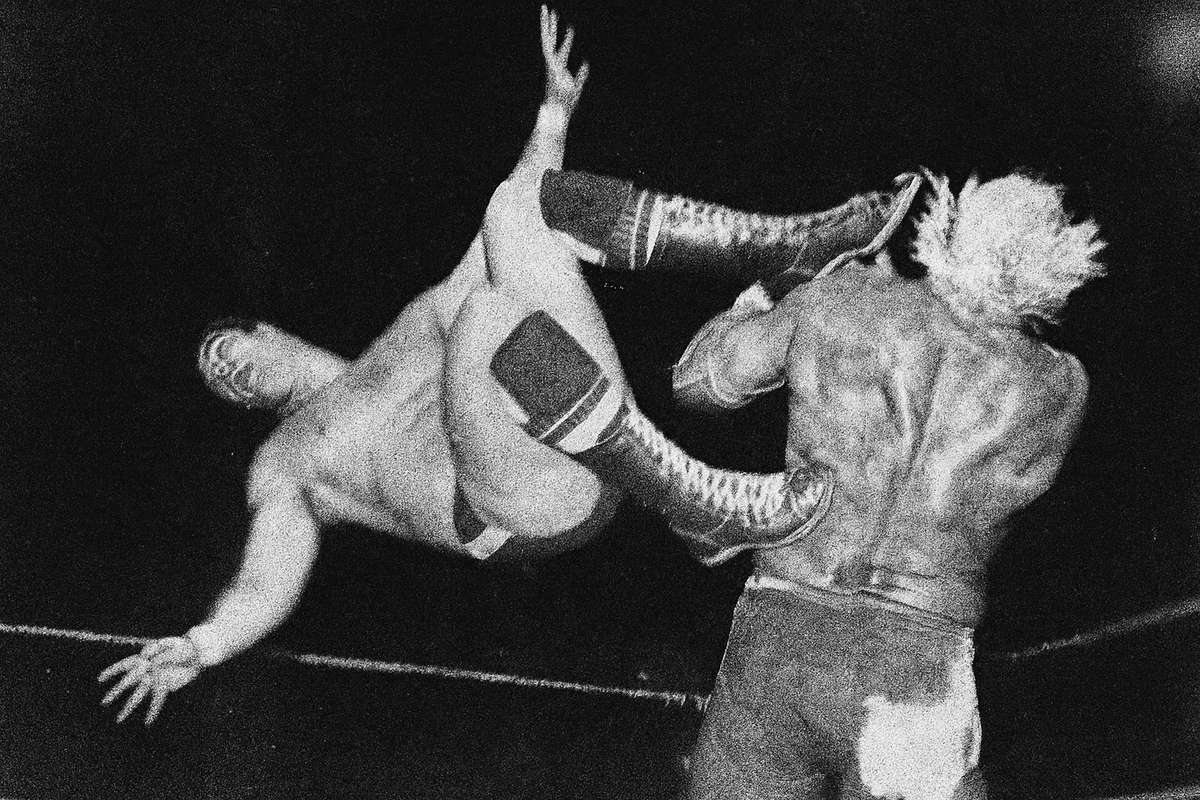
Superstar Billy Graham—bleach-blond, tie-dyed, the man who had redefined what a wrestling champion could look like—was losing control. Not just of a match, but of his era. Across the ring stood Dino Bravo, younger, hungry, and refusing to play the role Graham expected. When the magazine photographers captured Bravo sending Graham crashing backward, they weren't just documenting a bout. They were freezing the exact moment one generation of wrestling gave way to the next.
The March 1979 issue of Inside Wrestling understood what it was witnessing. Its feature story, "How Dino Bravo Drove Superstar Graham Out of the WWWF," wasn't hyperbole. It was reportage from the front lines of wrestling's identity crisis.
Historical Record
Featured Wrestlers: Dino Bravo, Superstar Billy Graham
Issue Date: March 1979
Archive Source: Inside Wrestling Magazine
Photography: Bill Apter
Venue: Madison Square Garden, New York
The WWWF at the Crossroads
By 1979, the World Wide Wrestling Federation stood at a generational threshold. Vince McMahon Sr.'s Northeast empire—anchored by Madison Square Garden and built on the shoulders of Bruno Sammartino—was watching its stars age out. Graham's physique-and-personality formula had electrified crowds throughout the mid-1970s, transforming what a heel champion could be. His promos borrowed from Muhammad Ali. His look borrowed from bodybuilding's golden age. He was professional wrestling's first true crossover aesthetic.
But aesthetics fade. By the time Bravo stepped into the Garden spotlight, Graham's championship reign had already ended, his body was breaking down, and the WWWF needed new blood. Bravo represented everything the territory required: athletic credibility, regional appeal, and the kind of clean-cut determination that could anchor a new decade.
What happened that night at Madison Square Garden wasn't just a match. It was a stress test of wrestling's mythology—and Inside Wrestling was there to document the exact moment the test failed.
When Ringside Photography Became Historical Record
Bill Apter's camera captured what words couldn't. The opening spread showed Bravo overpowering Graham in a test of strength, muscles straining, the visual language of dominance reversed. Another frame froze Graham mid-fall, his legendary control visibly slipping. These weren't promotional stills. They were evidence.
Inside Wrestling understood its assignment. The magazine didn't report wrestling; it mythologized it. Writers framed Bravo as walking "away a hero" while noting the crowd's confusion—some fans laughed at Bravo's audacity, others feared for his survival. The narrative wasn't subtle: Graham's "ring tactics" no longer worked. The psychology that had terrorized opponents for years was suddenly, visibly ineffective against a wrestler who refused to accept the script Graham had written for himself.
This was kayfabe journalism at its finest—blending worked outcomes with genuine emotional stakes, turning athletic theater into cultural narrative. The magazine placed Bravo's rise alongside names like Lou Thesz, Andre the Giant, and Dusty Rhodes, signaling that this wasn't just a victory. It was an arrival.
The Story Inside the Story
The feature focused on the clash between two very different wrestlers, framed in ways that gave fans a sense of witnessing history:
Each of these elements underscored that this was more than a single match—it was a chapter in wrestling's ongoing story of eras, champions, and shifting loyalties.
The Cultural Document
Inside Wrestling functioned as wrestling's Life Magazine—not just reporting events, but shaping how audiences understood them. Television showed you the match. The magazine told you what it meant. It extended the lifespan of each arena moment, gave fans narrative continuity between shows, and provided the interpretive framework that transformed athletic performances into ongoing sagas.
That editorial model is extinct. Modern wrestling coverage is instantaneous, comprehensive, and utterly disposable. These magazines, by contrast, were designed to be kept. Reread. Studied. They were physical artifacts that bridged the gap between what fans saw at the arena and what they needed to believe about wrestling's reality.
The March 1979 issue captures that tension perfectly. It presents Bravo's victory as both shocking and inevitable, Graham's fall as both tactical failure and symbolic necessity. It gives readers permission to witness change while honoring what came before.
Why This Issue Matters to Collectors
Apter's Photography
His ringside work from this era is considered definitive. These images don't exist in higher quality anywhere else—they are the visual record of WWWF history.
The Graham Transition
This issue documents the precise moment Graham's influence began its decline, months before he would leave the WWWF entirely. For historians tracking wrestling's stylistic evolution from the 1970s into the 1980s explosion, this is ground zero.
Pre-Digital Storytelling
The magazine's narrative approach—blending fan perspective, dramatic imagery, and pseudo-journalistic framing—represents a mode of wrestling coverage that vanished with the internet. Reading it now is like discovering how fans experienced wrestling before they had access to results, dirt sheets, or backstage gossip.
Vintage wrestling magazines occupy a unique position in sports memorabilia. They're not just collectibles—they're primary sources for an industry that historically destroyed its own archive. Television footage was taped over. House show results went unrecorded. But magazines like Inside Wrestling preserved the moment-to-moment texture of wrestling culture in the 1970s, when territories operated independently and storylines varied by region.
This isn't nostalgia. It's archaeology.
Final Word
The clash between Dino Bravo and Superstar Billy Graham at Madison Square Garden didn't change wrestling overnight. But it signaled the change that was coming—the shift from Graham's flamboyant individualism to the more structured, promotable heroism that would define the 1980s. Inside Wrestling recognized the moment's weight and gave it the photographic and narrative treatment it deserved.
Decades later, holding this issue means holding that recognition. It's not just about owning a magazine. It's about preserving the moment someone decided this particular night, this particular match, this particular shift in wrestling's gravity deserved to be remembered.
That's why these magazines matter. That's why they endure.
Access the Archive
For serious collectors, cultural historians, or anyone studying the evolution of American popular entertainment in the 1970s, the March 1979 issue of Inside Wrestling is essential primary material.
Browse Inside Wrestling Magazine Collection