
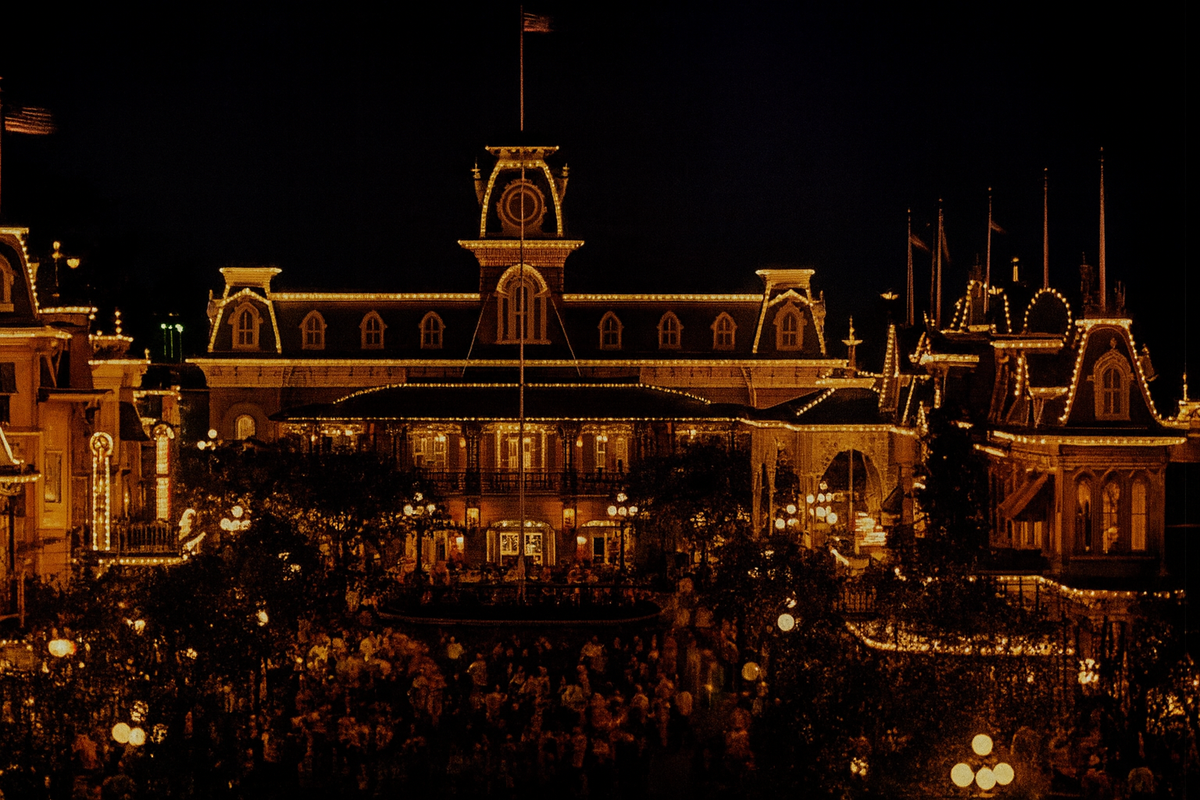
The Day America Saw the Magic Kingdom
Life Magazine's October 15, 1971 photographic chronicle of Walt Disney World—when swampland became empire
On October 15, 1971, millions of Americans opened their mailboxes to find something extraordinary waiting inside their weekly Life Magazine: the first sweeping photographic chronicle of Walt Disney World—a $400 million fantasy empire rising from central Florida swampland.
The photo-essay, "Disney Moves East," arrived at a peculiar moment in American life. While Vietnam protests echoed through city streets and economic uncertainty gripped the nation, Life offered its readers an escape route—not through denial, but through documentation of something audaciously optimistic. Here was proof that imagination, backed by unprecedented capital and control, could reshape reality itself.
For collectors and cultural historians today, this issue represents more than nostalgia. It captures the precise moment when American leisure transformed from simple entertainment into engineered experience.
Archive Details
Publication: Life Magazine
Issue Date: October 15, 1971
Feature: "Disney Moves East" photo-essay
Historical Context: Opening month of Walt Disney World
Archive Significance: First major photojournalistic documentation of the Magic Kingdom
Why Florida Had to Be Different
Walt Disney died in 1966 without seeing his Florida vision realized, but his frustration with Disneyland's surroundings shaped every acre of the Orlando project. Anaheim had taught him a bitter lesson: you could build a perfect kingdom, but you couldn't control what sprouted around it. Motels, gas stations, and tourist traps had encroached on Disneyland's borders, shattering the illusion the moment guests stepped outside.
The solution was radical in scale. Disney's team quietly assembled 27,400 acres—roughly 43 square miles—of central Florida real estate under dummy corporations. This wasn't just a theme park. It was a land grab that would rival small municipalities, giving Disney absolute control over every sightline, every approach, every moment of the guest experience from highway exit to hotel pillow.
Life's photographers captured this ambition from the air: vast stretches of sculpted lakes, the 18-story Cinderella Castle piercing the skyline, monorail tracks threading through the Contemporary Resort Hotel's concourse. The magazine understood it was documenting something unprecedented—not just a bigger Disneyland, but a complete world operating under its own logic.
The Power of Life's Lens
By 1971, Life Magazine had spent decades perfecting a specific kind of cultural authority. Its photographers didn't simply record events; they elevated them into shared national memory. The Disney World coverage deployed this power with precision.
The photo-essay moved readers through the Magic Kingdom with deliberate choreography. Aerial shots established scope and control. Ground-level images of Main Street U.S.A. triggered recognition—this was early 20th-century America as everyone wished it had been, scrubbed clean of poverty and conflict, preserved in permanent golden hour. Close-ups of children embracing costumed characters (Minnie, Donald, Pluto, Tigger) located the emotional center: this place existed to manufacture joy.
But Life also documented the machinery behind the magic. The Country Bear Jamboree's animatronic performers represented cutting-edge entertainment technology. The Mickey Mouse Revue showcased Disney's audio-animatronics prowess—mechanical precision creating the illusion of life. The Hall of Presidents merged patriotism with showmanship, suggesting Disney could honor American history while improving on its presentation.
The magazine gave readers more than information. It provided visual permission to believe in the fantasy, even as it revealed the corporate infrastructure making that fantasy possible.
What Life Documented in October 1971
The October 15 issue—which notably did not feature Disney World on its cover—nevertheless devoted significant cultural coverage to the Magic Kingdom's debut. Readers discovered:
Cinderella Castle
Deliberately designed to dwarf Disneyland's Sleeping Beauty Castle, establishing Florida's park as the superior iteration at 18 stories tall.
Contemporary Resort Hotel
Monorails gliding through the A-frame structure's core—an architectural statement that guests were entering a future that actually worked.
Main Street U.S.A.
Reconstructing turn-of-the-century small-town America with obsessive attention to detail and selective memory.
Audio-Animatronics
Country Bear Jamboree and Mickey Mouse Revue introduced audiences to entertainment where performers never tired, never missed a cue.
The Hall of Presidents
Weaponizing audio-animatronics for civic education, presenting all U.S. presidents in a show blending technology and patriotism.
Economic Impact
6,000 employees at opening, with projections of 10 million visitors in the first year—transforming central Florida's economy.
The magazine reported that Disney World opened with 6,000 employees and projected 10 million visitors in its first year. Life understood these weren't just statistics—they represented the transformation of central Florida's economy and the birth of Orlando as a tourism capital.
The coverage didn't ignore criticism entirely. Environmental concerns, traffic projections, and development worries received acknowledgment. But Life's lens ultimately framed Disney World as American ambition made concrete: the belief that sufficient capital, control, and vision could build a better world, even if that world was admittedly artificial.
The Empire Life Witnessed Being Born
Walt Disney's death in 1966 cast uncertainty over the Florida project. Could his team execute a vision this ambitious without him? The October 1971 opening provided the answer. Life's coverage didn't just document a theme park debut—it recorded the successful launch of a cultural empire that would reshape American tourism, redefine family vacation expectations, and prove that corporate-controlled fantasy could generate both profits and genuine emotion.
The magazine's photo-essay introduced millions to Disney World before they could visit themselves. For many Americans, these images were Disney World until they could afford the trip south. Life created the first shared visual vocabulary for discussing what Disney had built in Florida.
This issue isn't just collectible—it's foundational. It captured the moment imagination became infrastructure, when swampland became the most famous vacation destination on Earth.
Why This Issue Endures
More than fifty years after publication, the October 15, 1971 Life Magazine commands premium prices in the collectibles market.
Historical Timing
It documented Disney World during its opening month, before 800 million guests would pass through those gates over the next five decades.
Photographic Archive
These images captured the Magic Kingdom in its pristine, original state—attractions, costumes, and design elements that would later be modified or removed entirely.
Disneyana Significance
First-year Disney World material holds particular weight among collectors. This Life issue offers accessible entry into that category with undeniable authenticity.
Cultural Artifact
The magazine itself embodies 1971—the layout, the advertising, the editorial voice all reflect the moment when Disney World meant something different than it does today.
Generational Memory
For families who visited in those early years, this issue reconnects them to a specific past, before Disney World became simply assumed background noise of American culture.
Pre-Familiarity
Holding this magazine means holding the instant before familiarity set in—when the Magic Kingdom was still genuinely new, still a gamble, still something to be proven rather than taken for granted.
For Collectors and Cultural Historians
If you're building a collection around Disney history, mid-century American leisure culture, or the golden age of photojournalism, the October 15, 1971 Life Magazine represents essential documentation. It's not merely a magazine—it's the announcement that changed how Americans vacation, how corporations build experiences, and how fantasy could be engineered at scale.
Owning this issue means possessing the first draft of a story still being written.
Browse Life Magazine CollectionWhether you're completing a Disneyana collection, studying the evolution of American tourism, or preserving family history, original Life Magazines offer something increasingly rare: the chance to see history through the eyes of those who witnessed it first, before hindsight rewrote the narrative.