
The Captains of Invasion
How Life Magazine Introduced America to Eisenhower's D-Day Command
On a cold January morning in 1944, millions of Americans opened their mailboxes to find something more than a magazine. They found a blueprint for liberation.
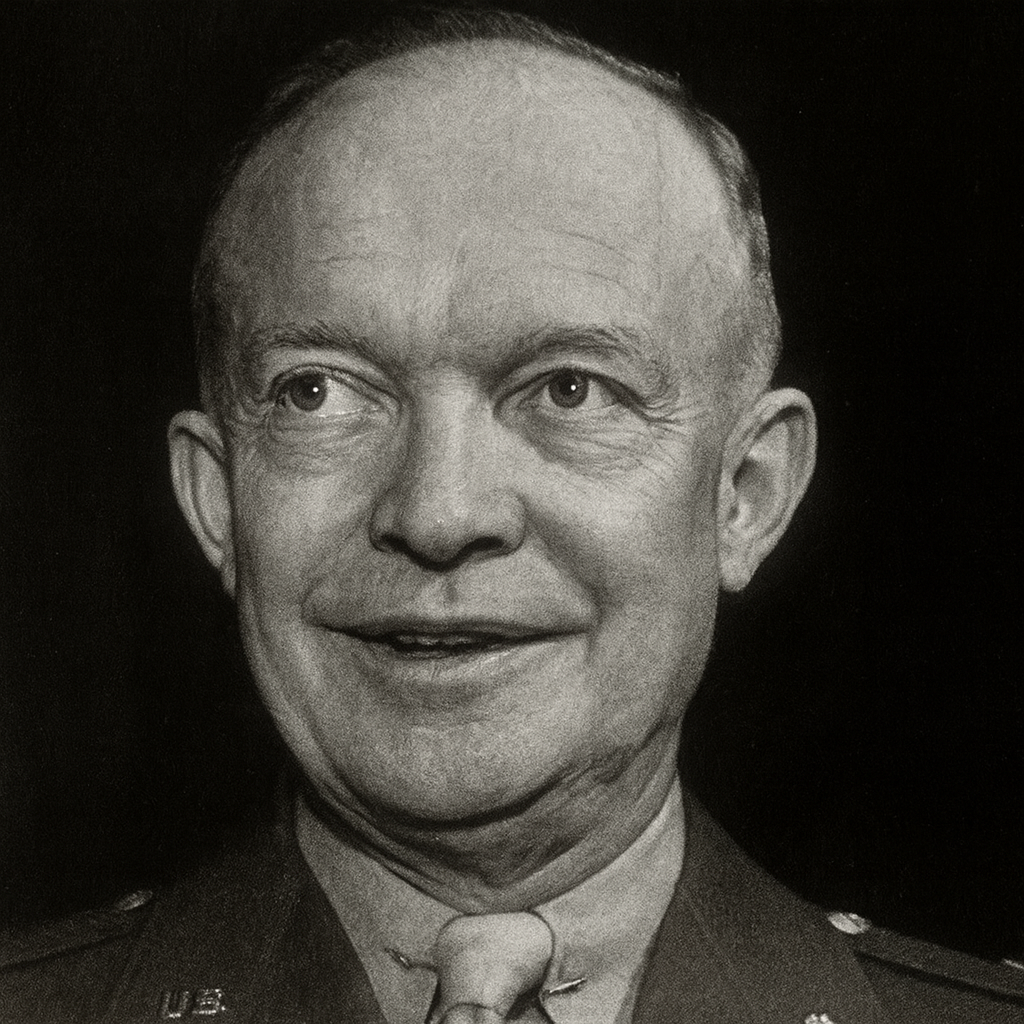
The January 10, 1944 issue of Life didn't announce the invasion of Europe—that would have violated wartime secrecy—but it did something almost as powerful. It introduced the American public to the men who would execute it. Under the title "They Lead the Attack on Europe," Life presented General Dwight D. Eisenhower and his Allied command team not as distant military figures, but as flesh-and-blood leaders about to stake everything on the beaches of Normandy.
For families with sons already overseas, or waiting for deployment orders, these portraits meant something. They were looking into the eyes of the men who held their children's lives in their hands.
The Strategic Moment
By January 1944, the war had reached an inflection point. Allied forces had driven Axis powers from North Africa and were grinding northward through Italy. On the Eastern Front, the Red Army was bleeding the Wehrmacht white in a brutal westward advance. But Nazi Germany still controlled France, the Low Countries, and a vast stretch of occupied Europe.
Joseph Stalin had spent two years demanding his Western allies open a second front to relieve pressure in the East. Now, finally, the machinery was in motion. In late December 1943, President Franklin D. Roosevelt announced that General Dwight D. Eisenhower would serve as Supreme Commander of the Allied Expeditionary Force in Europe.
Life's coverage arrived at precisely this hinge moment. The magazine didn't merely report Eisenhower's promotion—it mapped the entire Allied command structure, putting names and faces to the most complex military operation ever attempted. This wasn't journalism as usual. It was reassurance at scale.
Issue Details
Publication: Life Magazine
Issue Date: January 10, 1944
Featured Article: "They Lead the Attack on Europe"
Historical Context: Published five months before D-Day
Archive Source: Original Life Magazines Collection
The article accomplished three critical objectives: It gave anxious families at home actual faces to associate with the coming liberation. It demonstrated that unlike the fragmented Allied efforts of World War I, this invasion would operate under unified command. And it confirmed what many Americans already suspected—an assault on Fortress Europe was imminent.
Visual Authority: Life's Signature Approach
Life had built its reputation on photojournalism that transcended mere reporting. While newspapers offered words and radio provided voices, Life delivered visual evidence—images that carried weight precisely because they didn't sensationalize.
The invasion captains feature employed portrait photography arranged almost like a military org chart. Eisenhower's composed, steady gaze anchored the top of the layout. Below him appeared his deputy commanders, naval chiefs, and air force leaders, each introduced with crisp text explaining their role in the operation ahead.
The presentation was deliberately educational. Most American civilians had no framework for understanding how a multinational amphibious invasion would function. Life provided that framework visually, showing the linkages between ground forces, naval operations, and air superiority in a way that made strategic sense to non-military readers.
But the portraits also served a deeper psychological purpose. These were not propaganda images of square-jawed heroes. They were sober, high-contrast photographs that projected competence and gravity. Readers could study these faces—Eisenhower, Montgomery, Ramsay, Tedder, Spaatz—and draw their own conclusions about the caliber of leadership.
Life emphasized something else crucial: These men had already worked together. Many had collaborated during the North African campaign, building the trust and operational experience that would prove essential in France. This wasn't a team assembled overnight. It was a proven command structure being deployed at scale.
The Roster of Command
The article introduced Americans to the principal figures of the Allied invasion apparatus:
General Dwight D. Eisenhower – Supreme Allied Commander in the West, the man who would coordinate the largest seaborne invasion in history.
Air Chief Marshal Sir Arthur Tedder – Deputy Commander, previously Eisenhower's air deputy in Africa.
Admiral Sir Bertram Ramsay – Naval commander tasked with coordinating the massive invasion fleet.
General Sir Bernard Montgomery – Commander of British ground forces, already famous for defeating Rommel at El Alamein.
General Carl Spaatz and Lieutenant General Ira C. Eaker – Leaders of American strategic air forces.
Air Chief Marshal Sir Arthur Harris – Chief of Britain's strategic bombing campaign against German industrial targets.
Air Chief Marshal Sir Trafford Leigh-Mallory and Air Marshal John Henry D'Albiac – Commanders of Allied tactical air forces.
General Sir Henry Maitland Wilson and Lieutenant General Jacob Devers – Theater commanders in the Mediterranean.
Lieutenant General Mark Wayne Clark and General Sir Harold Alexander – Field commanders leading the Italian campaign.
Life even included an unusual editorial touch: quotes from German propaganda minister Joseph Goebbels acknowledging that Allied military strength posed a grave threat to the Reich. The subtext was clear—even the enemy recognized the power being assembled against them.
Why This Issue Endures
For collectors of vintage Life magazines, the January 10, 1944 issue represents something rare: a document that captures the exact moment before everything changed.
Historic Timing
Published just five months before D-Day, it exists in that narrow window between preparation and execution. The commanders profiled here were still planning, still training, still waiting for weather and tides. By June, they would be writing history.
Iconic Photography
These portraits of Eisenhower and his command team are among the most widely reproduced wartime images ever printed in American media. They defined how a generation understood military leadership.
Cultural Significance
Millions of Americans first met Dwight Eisenhower in these pages, nearly a decade before he would become President of the United States. This issue introduced a future head of state to a nation that didn't yet know it was looking at one.
Collector Demand
World War II issues of Life—particularly those tied to Pearl Harbor, D-Day, and V-E Day—command premium prices in the vintage magazine market. But the January 10, 1944 issue occupies a unique position: it's the invasion before the invasion, the planning stage before the execution.
Owning this issue means holding a tangible piece of that moment—the very magazine your grandparents might have studied while waiting for news from Europe, trying to understand who would lead their sons into battle.
The Persistence of Print
These magazines endure because they function as something more than journalism—they're time capsules sealed in paper and ink. The families who received this issue in 1944 didn't skim it casually. They studied every face, read every caption, tried to divine what these portraits might reveal about the invasion to come. Many saved their copies, tucking them away as artifacts of an extraordinary time.
In an era when digital news evaporates within hours, these printed issues remain as permanent witnesses to history. They can't be updated, corrected, or memory-holed. They exist exactly as they did eighty years ago, preserving not just facts but the texture of the moment—the paper quality, the printing techniques, the advertising that reveals what Americans were buying and worrying about in January 1944.
For collectors, that permanence is invaluable. These aren't reproductions or digital scans. They're the original objects that shaped how millions understood the world's most consequential conflict.
Collector Significance
Historic Timing
Released just months before D-Day, it represents the final buildup to the invasion of France.
Iconic Photography
The portraits of Eisenhower and his fellow commanders are some of the most recognized wartime images printed in the U.S.
Cultural Significance
Millions of Americans were introduced to Eisenhower here, years before he became U.S. President.
Collector Demand
World War II Life issues, particularly those tied to turning points like Pearl Harbor, D-Day, and V-E Day, are highly sought after.
Artifact Value
Owning this issue is like holding a moment of history in your hands, the very magazine your grandparents may have read while awaiting news from Europe.
Explore the Archive
Our collection houses thousands of original Life magazines spanning the 1930s through the 1970s. Within these pages, you can trace how culture, politics, war, and art unfolded in real time—not as history books reconstruct it, but as people experienced it in the moment.
Browse Life Magazine CollectionWhether you're a collector building a World War II archive, a historian researching the home front, or someone honoring family who lived through these years, these magazines offer something digital media never can: physical connection to the past.
The Legacy
The January 10, 1944 issue of Life Magazine stands as one of the most significant wartime publications of its era. "They Lead the Attack on Europe" gave Americans their first comprehensive look at Eisenhower and the Allied command structure preparing to liberate a continent.
Its photographs and reporting provided clarity during a moment of profound uncertainty, assuring readers that the invasion—still months away—would be led by experienced, capable hands. Today, the issue functions as both a powerful World War II artifact and a collectible treasure for anyone serious about understanding how Americans experienced the war from home.
To hold this issue is to hold the moment just before D-Day—a document of leadership, unity, and determination at the pivot point of the twentieth century. For anyone who values history not as abstract narrative but as lived experience, vintage Life magazines aren't simply reading material. They're evidence that the past actually happened, preserved in a form you can touch.