
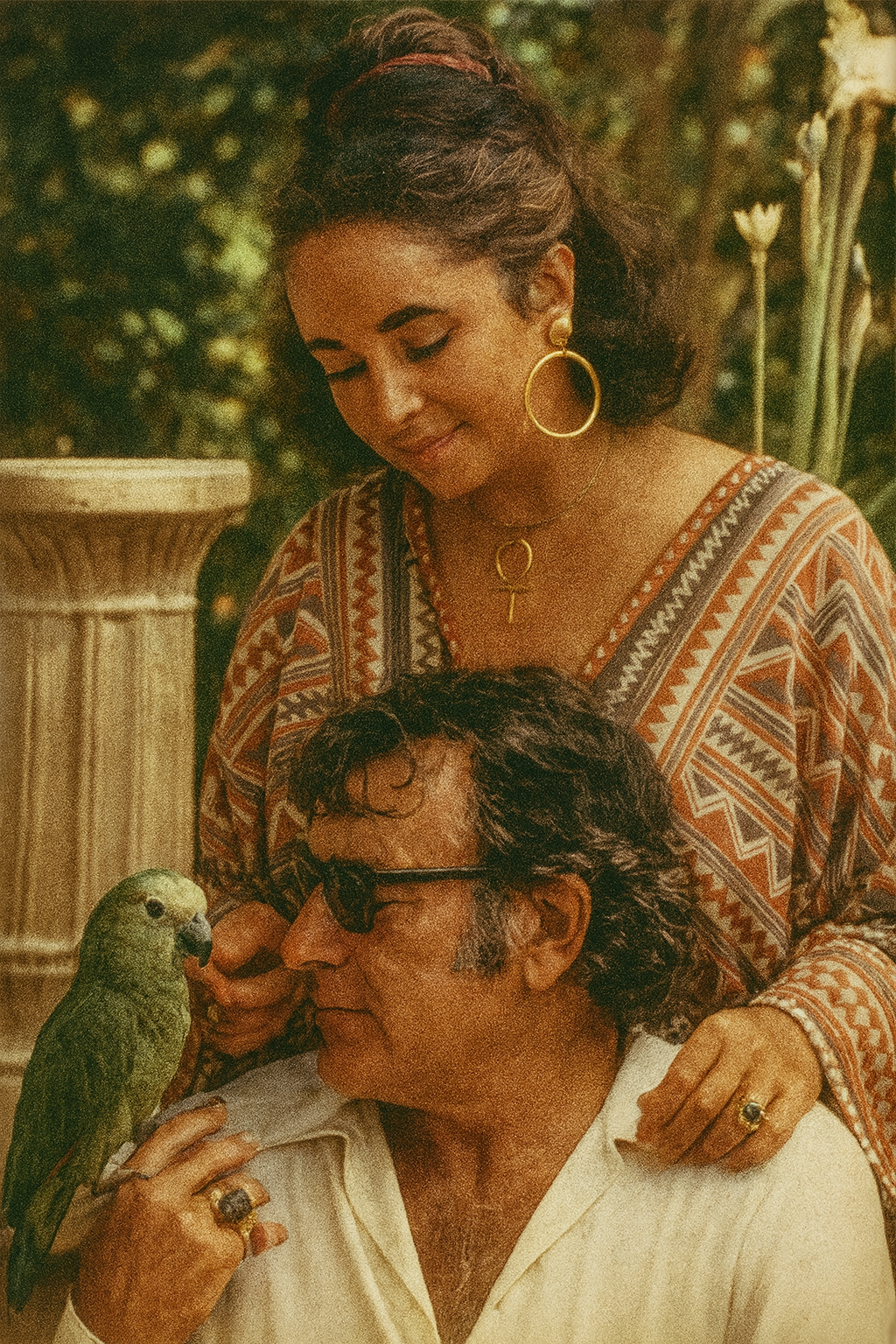
When Richard Burton Wrote His Own Fame
The 1971 Vogue That Changed Celebrity Journalism
The assignment was impossible. How do you write about being Richard Burton—married to Elizabeth Taylor, hounded by paparazzi, drowning in diamonds and scotch—without sounding like every other Hollywood profile ever written?
Burton's solution: write it himself.
When the October 15, 1971 issue of Vogue arrived on newsstands, readers expecting another sanitized celebrity puff piece found something radically different. There, beneath photographs of Taylor barefoot on a Mexican beach, was an essay written in Burton's own hand: "Dauntless Travelers: Mr. and Mrs. Richard Burton Spend a Perfectly Normal, Outrageous Day in Mexico." The prose crackled with his Welsh theater training—sardonic, self-lacerating, impossibly literate. For the first time, one of Hollywood's most watched couples was narrating their own mythology, and doing it in a fashion magazine.
This wasn't celebrity journalism. This was celebrity as literature.
Archive Details
The World That Made This Issue Possible
Autumn 1971 sat at a cultural crossroads. The countercultural explosion of the 1960s had shattered old certainties about gender, politics, and taste. Women's liberation was rewriting the rules. Cinema was abandoning studio gloss for gritty realism. And magazines were scrambling to find their place in this new landscape.
Vogue, under Grace Mirabella's recently established editorship, was pivoting hard. Gone was the untouchable haute couture of the Diana Vreeland era. In its place: practical glamour, real women, lives lived rather than merely posed. The Burton feature became a perfect test case—could high fashion marry raw intimacy? Could a magazine elevate celebrity without suffocating it in artifice?
Elizabeth Taylor and Richard Burton were the ideal subjects for this experiment. Their 1963 meeting on the Cleopatra set had detonated into the most scandalous romance of the decade. By 1971, they'd retreated to Puerto Vallarta, seeking privacy while living so extravagantly that privacy became impossible. Every yacht. Every emerald. Every drunken argument reported in three continents. They were simultaneously hiding from the world and performing for it—a contradiction Vogue understood instinctively.
What Burton's Byline Meant
Hollywood actors didn't write their own profiles in 1971. Studios wrote them. Publicists wrote them. Ghostwriters wrote them. Stars smiled for cameras and delivered pre-approved quotes. The machinery of fame required complicity, not authorship.
Burton broke the machine.
His essay delivered what studio handlers spent careers preventing: unvarnished perspective. He wrote about fame as absurdity, about breakfast becoming theater when you're married to the most photographed woman alive. He captured Taylor not as icon but as force—magnetic, impossible, exhausting. He described Puerto Vallarta as sanctuary constantly violated by the very attention they'd fled. And he did it all with the verbal precision of a Shakespearean actor who'd spent decades weaponizing language.
The photographs matched his tone. Taylor appeared not in couture but in raw moments—running on sand, locked in intense close-ups that emphasized emotional depth over jewelry. Children splashed in pools, grounding Hollywood royalty in domestic reality. These weren't fashion shoots. They were documentary evidence of lives lived at impossible scale.
Vogue's gamble paid off. By giving Burton control of the narrative, the magazine produced something unrepeatable: a celebrity profile that read like confession, comedy, and cultural criticism simultaneously.
Literary Precision
Burton's prose revealed his classical theater training—every sentence weaponized with wit and self-awareness.
Intimate Photography
Taylor captured barefoot, unguarded, in moments that felt stolen rather than staged.
Fame as Absurdity
Burton transformed the trials of celebrity into sardonic cultural commentary.
Sanctuary Violated
Puerto Vallarta positioned as refuge constantly invaded by the spectacle they created.
Why This Issue Became Collectable
Certain magazine issues transcend their moment and become artifacts. LIFE's coverage of D-Day. Rolling Stone's Hunter S. Thompson gonzo journalism. The October 15, 1971 Vogue earned its place in this category through sheer editorial audacity.
The Literary Artifact: Burton's essay stands as a rare example of a Hollywood star writing at full intellectual capacity. His classical education, his theater background, his genuine facility with language—all visible on the page. For collectors, this isn't just a celebrity profile. It's a primary source.
Taylor Unguarded: The photographs capture something fashion editorials rarely achieve—vulnerability alongside glamour. Taylor outside the studio system, outside the red carpet machinery, simply existing. These images command premium prices precisely because they feel stolen rather than staged.
The Editorial Pivot: This issue marks Vogue's transition from Vreeland's fantasy to Mirabella's modernity. Fashion historians recognize it as a hinge point, making the issue essential for anyone studying 20th century editorial strategy.
The Burton-Taylor Mythos: Their relationship remains one of the century's defining romances—operatic, self-destructive, endlessly fascinating. This issue captures them at a specific moment: famous beyond measurement, wealthy beyond reason, seeking normalcy while generating spectacle with every breath.
What Endures
The brilliance of Vogue's Burton feature lies in what it proved possible. A fashion magazine could publish genuine literature. Celebrity coverage could transcend gossip and become cultural commentary. Intimacy and spectacle could coexist on glossy paper.
The issue captured something beyond fashion—it documented how fame itself was changing. The old studio system was dying. Stars were becoming brands, then becoming humans again. Privacy was collapsing under media pressure. And magazines like Vogue were learning to navigate this new terrain by giving subjects their own voices.
Holding this issue today feels like holding a paradox: a perfectly constructed artifact about people trying to escape construction. Burton's prose fights the very machinery that made him famous, while simultaneously feeding it. Taylor's photographs reveal intimacy while maintaining mystique. The magazine elevated celebrity culture while critiquing it.
That's why it matters. That's why collectors seek it.
Collector Significance
Celebrity Authorship
One of the rarest examples of a Hollywood star writing their own profile—making this a literary artifact as much as a celebrity document.
Editorial Innovation
Marks Vogue's transition under Grace Mirabella from fantasy to intimate realism—a pivotal moment in fashion journalism history.
Photographic Intimacy
Features Elizabeth Taylor in unguarded moments that captured vulnerability alongside glamour—images that command premium collector value.
Cultural Mythology
Documents the Burton-Taylor relationship at its height—one of the 20th century's most operatic and endlessly fascinating romances.
For Collectors and Cultural Historians
Original copies of the October 15, 1971 Vogue survive in remarkable condition, preserved by readers who recognized they were holding something significant. These aren't simply magazines—they're windows into the moment when celebrity journalism learned to think.
Browse Vogue Magazine CollectionWhether you collect for investment, for research, or for the sheer pleasure of holding history, this issue delivers. It's Taylor and Burton at their most exposed. It's Vogue at its most daring. It's fashion journalism that transcended fashion.
It's the day Richard Burton wrote his own fame, and Vogue had the courage to publish it.