
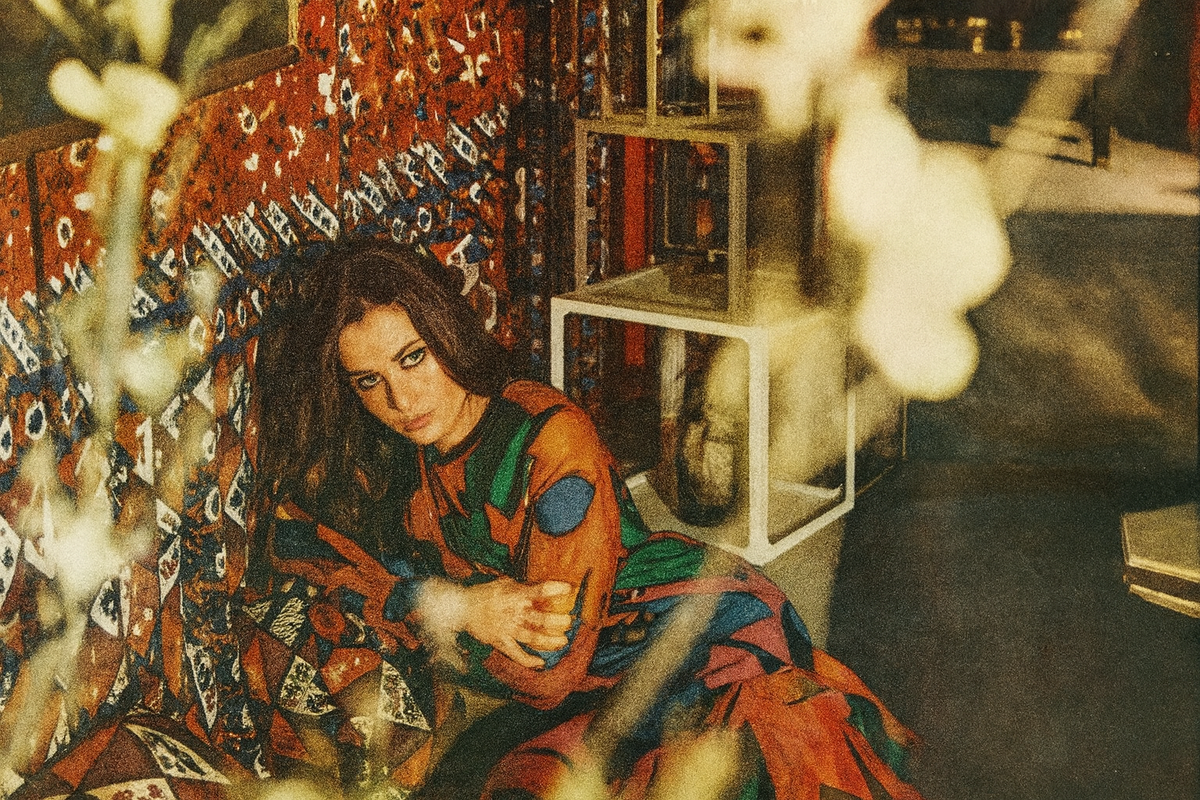
When Vogue Staged the Jet Set: Inside the Fürstenbergs' Manhattan Theater
How the January 15, 1972 issue captured European aristocracy performing a new kind of glamour on American soil
Open the January 15, 1972 issue of Vogue, and you won't find an apartment. You'll find a stage.
That month, photographer Horst turned his lens on the Manhattan residence of Prince and Princess Eduard Egon von Fürstenberg—and what emerged was not interior decoration but cultural theater. The photo-essay, titled "Superscenic Life," captured European aristocracy performing a new kind of glamour on American soil: mobile, maximalist, and utterly self-aware.
For American readers in 1972, this was instruction disguised as aspiration. The Fürstenbergs weren't just living—they were demonstrating how life itself could be curated as art.
The Backdrop: America in 1972
The context matters.
Vietnam dominated front pages. The women's liberation movement was dismantling old assumptions about marriage, careers, and independence. Youth culture celebrated freedom and eclecticism, erasing the line between inherited aristocracy and manufactured celebrity.
Into this churning moment, Vogue delivered the Fürstenbergs: young, rootless, polished. They commuted between Geneva, Sardinia, Fire Island, and Manhattan. Their apartment mixed modern art with antique silver, lacquered walls with velvet sofas. They embodied a new international identity—untethered to nation, fluent in the language of global style.
The message was clear: in the 1970s, you could design your own identity. You could live it theatrically.
Issue Details
Publication: Vogue Magazine
Issue Date: January 15, 1972
Featured Subjects: Prince and Princess Eduard Egon von Fürstenberg
Photographer: Horst P. Horst
Editor-in-Chief: Grace Mirabella
Feature Title: "Superscenic Life"
Vogue's Mission: Fantasy Grounded in Precision
By 1972, Vogue had long secured its position as the world's preeminent fashion magazine. But under Grace Mirabella's editorship, its ambitions stretched beyond hemlines. Where news magazines delivered war and politics, Vogue offered lifestyle as cultural commentary.
The Fürstenberg feature exemplified this. Horst's photographs were lush and deliberate. The text cataloged specifics: lacquered walls, Fabergé pieces, deep-pile velvet, paintings by Nicholas Krushenick and Ernest Trova. Readers weren't shown a room—they were taught how to see it.
This was Vogue's genius. Just as Life magazine once made distant wars immediate through imagery, Vogue made luxury tangible. Not just objects, but atmosphere. The gleam of lacquer. The weight of velvet. The sense that every surface was calibrated for a life lived at "full speed."
Horst's Eye: Interiors as Portraits
The photography in this issue carries authority that few editorial spreads achieve.
Horst framed the Fürstenbergs' rooms as active spaces—expressions of identity rather than passive backdrops. Velvet banquettes, antique tables, and art pieces became performers. The apartment was a set, and the couple were both directors and cast.
Fashion and environment collapsed into one. Diane von Fürstenberg appeared throughout—not yet famous for the wrap dress that would make her a household name by mid-decade, but already projecting the confidence of someone who understood that personal style and spatial design were inseparable.
Other magazines might profile a decorator or a celebrity. Vogue fused the two, adding cultural analysis. The result was irreplicable.
Five Elements That Define the Fürstenberg Vision
The Jet-Set Itinerary
Life flowed between New York, Geneva, Sardinia, and Fire Island. Geography became accessory. Mobility was identity.
Maximalist Surfaces
Velvet and lacquer dominated. Deep textures. Reflective finishes. Bold color. The aesthetic rejected minimalism entirely.
Objects as Props
Fabergé boxes, antique silver, coral pieces—displayed not as inherited treasures but as deliberate choices in an ongoing performance.
Art Without Hierarchy
Paintings by Nicholas Krushenick and Ernest Trova hung beside historic furnishings. The apartment collapsed past and present into a single, curated now.
Diane as Prototype
Photographed in her own space, she embodied what would become her brand: confidence, elegance, and the seamless integration of fashion into daily life.
Together, these elements built a narrative about identity in the 1970s. It could be designed. It could be performed. It could be lived as theater.
Why Print Endures
Like Life's wartime photography, Vogue's jet-set spreads survive because they transcend journalism. They're time capsules.
In an era of infinite digital imagery—when luxury is endlessly photographed and shared—these printed pages represent something different. Style that unfolded slowly. Deliberately. Permanently.
To own a vintage Vogue is to own lived cultural history.
Why Collectors Prize This Issue
Historical Pivot
Published at the decade's threshold, it captures the shift from the radical 1960s into the glamorous, globalized 1970s.
Diane Before the Dress
She appears here just before the 1974 wrap dress launch that would transform her into an icon. This issue catches her on history's cusp.
Horst's Interiors
Any issue featuring Horst's work holds special significance. His photography remains among the most studied of the 20th century.
Design Documentation
The interiors represent 1970s maximalism at its peak—now analyzed by historians of architecture and design as a distinct aesthetic moment.
Explore the Archive
If this issue intrigues you, hundreds of original Vogue magazines spanning the 1930s through the 1970s are available in our collection. Each decade offers its own cultural archaeology—tracing the evolution of fashion, lifestyle, and American aspiration as it was first documented.
Browse Vogue Magazine CollectionThe January 15, 1972 Vogue remains one of the era's most striking artifacts. Its "Superscenic Life" feature revealed more than an apartment—it revealed a philosophy. Life could be curated as art. Identity could be performed with intention.
Holding this issue today means stepping into lacquered rooms and velvet sofas, into a vision of jet-set glamour staged for permanence. Vogue's unmatched ability to merge fashion, lifestyle, and cultural commentary ensures those moments remain vivid on every page.
For anyone who values history, vintage Vogue magazines aren't style guides. They're living artifacts. Through them, the past speaks directly.