
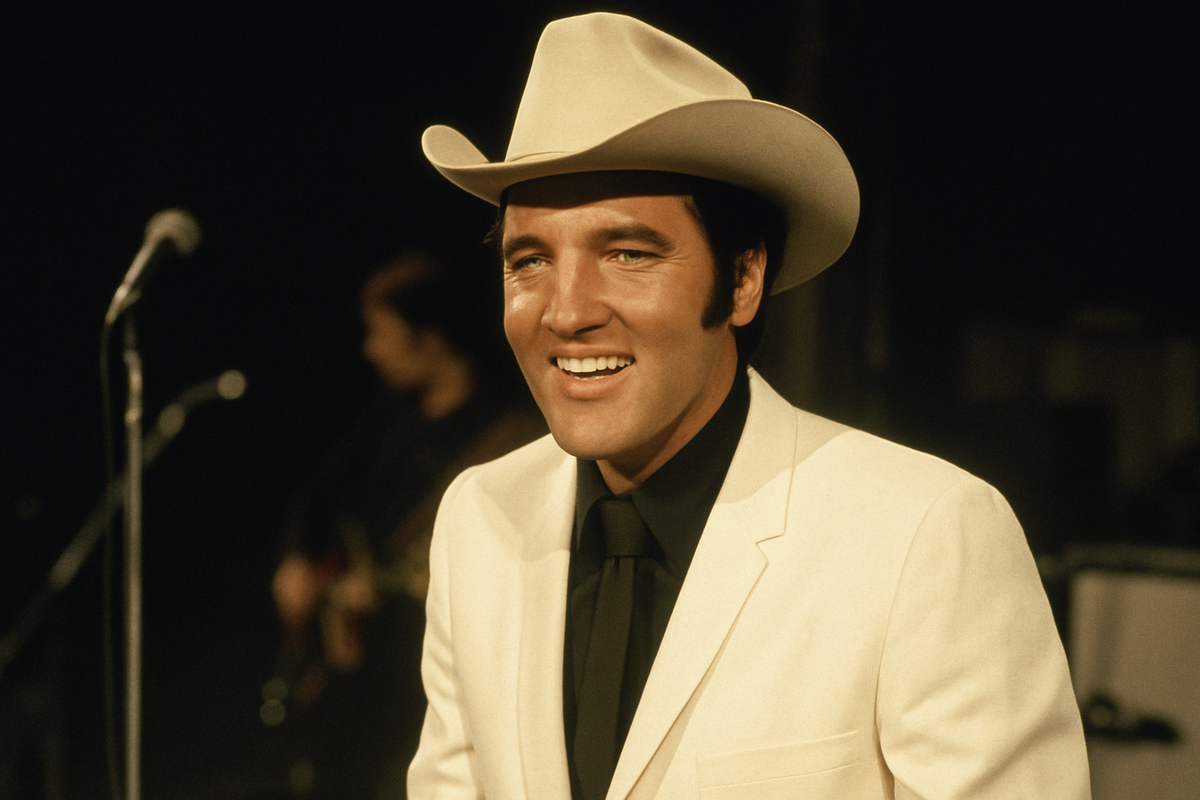
The King Returns: Inside Rolling Stone's July 12, 1969 Elvis Presley Issue
How a two-year-old magazine captured Elvis Presley at his most dangerous moment—the comeback that could have been a eulogy
On July 12, 1969, readers opened their copies of Rolling Stone to find Elvis Presley staring back at them—grinning, impossibly alive, dressed in a white suit and cowboy hat. For a magazine only two years old, still fighting for credibility against the establishment press, this wasn't just another celebrity profile. This was a bet on resurrection.
The timing was surgical. Weeks before Elvis would step onto the stage at Las Vegas's International Hotel for his first live concerts in nearly a decade, Rolling Stone published "You Won't Ask Elvis Anything Too Deep"—a feature that captured the man at his most dangerous moment: the comeback that could have been a eulogy.
Archive Details
Historical Figure: Elvis Presley
Issue Date: July 12, 1969
Archive Source: Rolling Stone Magazine
Featured Article: "You Won't Ask Elvis Anything Too Deep"
The Cultural Chasm of 1969
America in 1969 was burning and blooming simultaneously. Vietnam protests filled the streets. Woodstock was weeks away. The Beatles had just released Abbey Road. Bob Dylan, Jimi Hendrix, Janis Joplin, and The Doors owned the airwaves—voices of upheaval speaking to a generation that had moved past anything resembling 1950s innocence.
And Elvis? After a decade of forgettable films and soundtrack albums, he'd become a punchline—the greaser who sold out to Hollywood mediocrity. By the standards of 1969's rock cognoscenti, he was finished.
Then came the '68 Comeback Special. Dressed in black leather, stripped of the movie-star veneer, Elvis reminded America what it had forgotten: he hadn't just ridden rock and roll's first wave—he was the wave. That December broadcast reignited something primal. Rolling Stone's July issue arrived as the match struck tinder.
Rolling Stone's Gamble: Treating Elvis as an Artist
Here's what made this coverage radical: Rolling Stone didn't treat Elvis like a nostalgic artifact or a has-been deserving sympathy. They approached him the same way they approached Dylan or Hendrix—as a living artist whose choices mattered to the culture at large.
The article's title revealed everything: "You Won't Ask Elvis Anything Too Deep." It was both observation and indictment. Elvis could charm any room, deflect any probing question with that billion-dollar smile, and never reveal what churned beneath the surface. In 1969, when rock journalism demanded authenticity and political consciousness, the King remained an enigma—polite, guarded, frustratingly surface-level.
But Rolling Stone didn't punish him for it. Instead, they documented the duality: the showman's effortless charisma alongside the superstar's careful distance. The photographs captured Elvis in rehearsal—sharp suits, familiar swagger—but framed with Rolling Stone's signature immediacy, that raw energy of performance caught mid-motion.
The cover itself became iconic: Elvis in that white suit, cowboy hat tilted, grinning like he'd never left. Not the rebellious 1950s Elvis. Not the Hollywood Elvis. Something new—confident, ready, dangerous again.
What the Issue Revealed
The Guarded Superstar
While his peers gave drug-fueled interviews about consciousness and revolution, Elvis kept his cards close. Political opinions? Personal struggles? Spiritual questions? The King smiled and moved on.
Generational Tension
For younger readers raised on the counterculture, Elvis belonged to their parents' generation. Rolling Stone's coverage became a bridge, reframing him not as a relic but as a force still shaping the conversation.
The Comeback Energy
Every detail—the photographs, the descriptions of rehearsals, the anticipation—foreshadowed what was coming: those legendary Las Vegas performances that would define his final chapter.
The Human Beneath the Myth
Away from the stadium lights and screaming fans, glimpses of warmth and approachability. Not a distant god, but a man navigating his own reinvention.
The Legacy: A Time Capsule of American Identity
This issue endures because it captured something larger than Elvis. It documented how America in 1969 was wrestling with its past and future simultaneously—holding onto what defined it while hurtling toward something unrecognizable.
Rolling Stone understood that even in an era of Woodstock, anti-war protests, and psychedelic experimentation, Elvis Presley's story still mattered. Not as nostalgia, but as ongoing narrative. They placed him in the messy, conflicted reality of the late '60s and let readers decide what he meant.
That editorial instinct—the refusal to condescend, the commitment to complexity—is why Rolling Stone became the voice of a generation. And why this issue remains indispensable.
Why This Issue Became One of Rolling Stone's Most Collectible
Collectors hunt this issue for reasons that transcend simple nostalgia:
Historical Precision
Published in the razor-thin window between the '68 Comeback Special and the Las Vegas residency, it captures Elvis at his most vulnerable pivot point—the moment before vindication.
Rolling Stone's Emerging Authority
This was the magazine proving it could chronicle not just the new guard, but also reframe the architects of rock and roll itself. Early issues like this established Rolling Stone as the definitive voice of music journalism.
Cultural Bridge
It connects two eras—the parents who screamed for Elvis in 1956 and their children discovering him through a countercultural lens in 1969. Few magazine issues span such generational territory.
The Cover's Endurance
That white-suited, grinning Elvis became one of Rolling Stone's most recognizable early images—reproduced, referenced, and sought after for over five decades.
Copies in good condition command serious prices among vintage Rolling Stone collectors, Elvis completists, and archivists of American cultural history. It's not just memorabilia—it's a primary source document of a singular moment.
For Collectors and Cultural Historians
If you're building a collection of music journalism, 20th-century American culture, or Elvis Presley's career arc, the July 12, 1969 Rolling Stone is non-negotiable. This is the King in transition—before the jumpsuits, before the mythology calcified again, before Las Vegas became both triumph and trap.
It's the moment he reclaimed his throne, preserved in ink and paper.
Browse Rolling Stone Magazine CollectionFrom Elvis in 1969 to Dylan, Hendrix, Joplin, and the icons that followed—decades of music, politics, and cultural upheaval, each issue an authentic artifact waiting to be rediscovered.