
The Winter America's Confidence Froze
Time Magazine, December 3, 1973—When the Age of Plenty Ended
When Americans pulled the December 3, 1973 issue of Time Magazine from their mailboxes, they weren't opening another week's news. They were opening a verdict: the age of plenty was over.
The cover line said it plainly—"A Time of Learning to Live with Less." No euphemism. No soft landing. Just the cold diagnosis of a nation that had built itself on cheap oil, endless highways, and the unquestioned belief that abundance was a birthright. That belief died in the fall of 1973, and Time was there to write the obituary.
This wasn't reportage. It was a cultural reckoning.
October 1973: The Month the Lights Dimmed
The crisis arrived with shocking speed. In October, as Israeli and Arab forces clashed in the Yom Kippur War, the Arab members of OPEC announced an oil embargo against the United States and its allies. Retaliation for American support of Israel. Within weeks, crude oil prices quadrupled. By November, gas stations across the country were running dry.
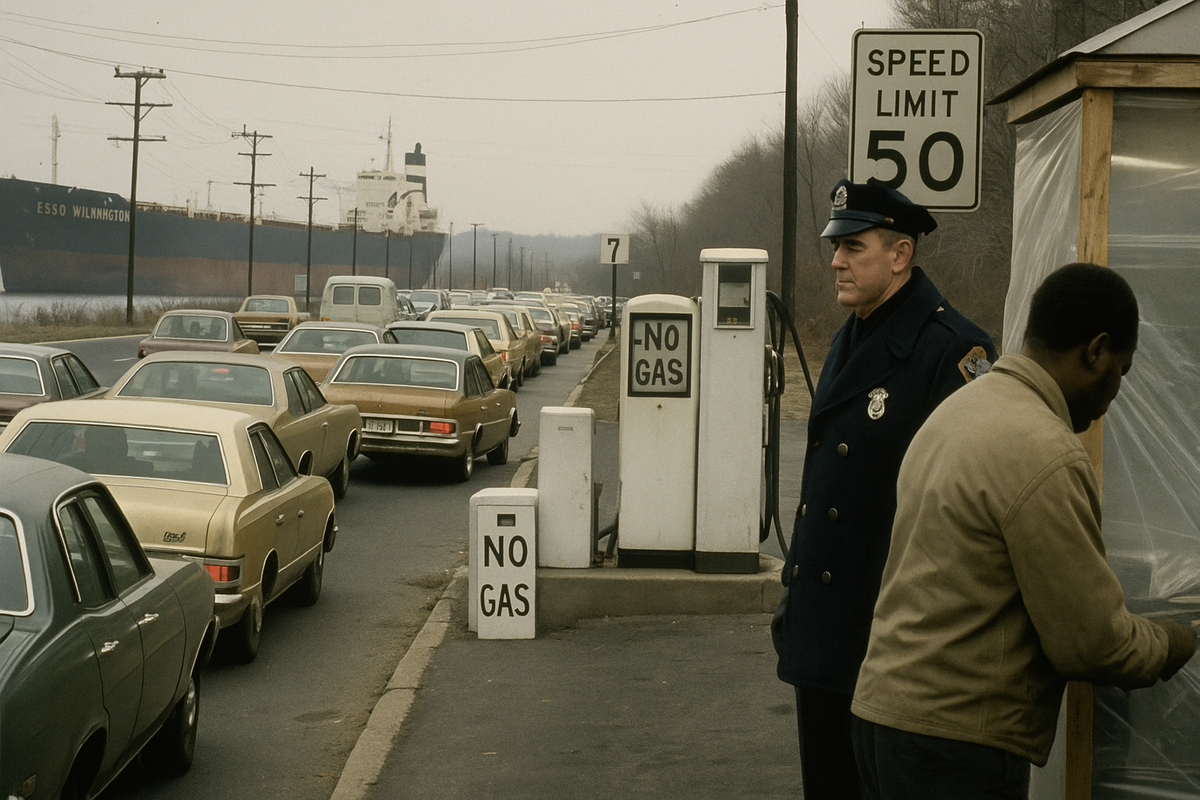
Drivers lined up before dawn. Governors instituted odd-even rationing based on license plate numbers. Fistfights broke out at the pump. For the first time since World War II, Americans confronted genuine scarcity—not as a wartime sacrifice, but as a geopolitical humiliation.
President Richard Nixon appeared on national television urging the country to lower thermostats, reduce highway speeds, and brace for "a time of sacrifice." The federal government imposed a national speed limit of 50 mph. Families wrapped their homes in plastic sheeting for the winter. Uncle Sam, once a symbol of prosperity, now pointed his finger and ordered austerity.
The cultural shock was profound. A generation raised on V8 engines, suburban sprawl, and climate-controlled comfort suddenly faced the limits of American power. The oil crisis didn't just reshape energy policy—it rewired the national psyche.
Issue Archive
Publication: Time Magazine
Issue Date: December 3, 1973
Cover Story: "A Time of Learning to Live with Less"
Historical Context: First major oil crisis of the modern era, OPEC embargo aftermath
Archive Source: Original 20th Century Magazine Collection
Time Captures the Moment
By 1973, Time had perfected the art of the weekly cultural snapshot. Its editors understood that great journalism wasn't just about reporting events—it was about diagnosing what those events meant. And the oil crisis wasn't a story about fuel shortages. It was a story about vulnerability.
The December 3 issue delivered that diagnosis with unflinching clarity. The cover itself was a visual punch: stark, satirical, stripped of heroism. Inside, the magazine paired sharp editorial commentary with images that defined the crisis—police enforcing the new speed limits on Massachusetts highways, families bundling in sweaters as thermostats dropped to 68 degrees, the supertanker Esso Wilmington carrying its Middle Eastern cargo across the Atlantic.
These weren't just illustrations. They were evidence. Time showed readers what the end of abundance looked like in real time.
The magazine didn't offer false optimism. It acknowledged the geopolitical shift underway: OPEC nations—small, once-dismissed—now held unprecedented leverage over the world's largest economies. The embargo revealed a new balance of power, and America was on the losing end.
The Crisis in Five Frames
The Gas Lines
Hours-long waits. Sold-out stations. Drivers leaving empty-handed. The American car, once a symbol of freedom, became a liability.
The Thermostat Wars
Nixon's call to lower home heating sparked a national ritual of sweater-clad patriotism. Comfort became a luxury.
The 50 MPH Limit
For the first time, the federal government imposed a nationwide speed restriction to conserve fuel. Police patrolled highways with new authority. The open road had speed bumps.
Economic Collapse
Oil prices spiked. Inflation soared. Wall Street tumbled. Factories slowed production. Recession and unemployment loomed.
The Power Shift: The embargo proved that control of energy meant control of economies. Small nations with oil reserves now dictated terms to superpowers.
Each detail carried the same message: adaptation wasn't optional. The era of American invincibility was finished.
A Time Capsule, Not a Relic
The December 3, 1973 Time endures because it's more than journalism—it's an artifact of national transformation. Every page reflects the fear, anger, and reluctant adaptation of a country learning that prosperity has limits.
For anyone seeking this issue today, you're not just acquiring an old magazine. You're acquiring evidence of the 1970s energy crisis—a primary source that shaped how Americans thought about cars, homes, foreign policy, and the mythology of endless growth.
Why This Issue Endures
Timing
This issue captured the first oil shock, the moment that defined the 1970s and reshaped energy policy for decades.
Imagery
The visuals—tankers at sea, police enforcing conservation, families improvising survival—are indelible documents of the crisis.
Language
The phrase "learning to live with less" became shorthand for an entire decade. Owning this issue means owning the moment that phrase entered the American lexicon.
Resonance
Half a century later, debates over energy, consumption, and climate remain unresolved. This magazine speaks directly to those debates.
Holding this issue isn't nostalgia. It's holding the moment America realized it was no longer insulated from the world.
Explore the Archive
From the energy crisis to Watergate, from Cold War diplomacy to the rise and fall of empires, the archive preserves the moments that defined the 20th century—in their original ink and paper.
Browse Time Magazine CollectionFinal Verdict
The December 3, 1973 issue of Time Magazine remains essential reading for anyone serious about understanding the 1970s. Its coverage of the oil embargo captured the exact moment when Americans first confronted scarcity as a permanent condition. The photographs, the reporting, the cultural commentary—all of it remains as sharp and relevant today as it was fifty years ago.
This is the issue where cheap energy died. Where "living with less" became a national mandate. And where Time, at the height of its editorial power, preserved that transformation for history.
Vintage Time magazines aren't reading material. They're primary sources. Through them, the past doesn't just speak—it testifies.