
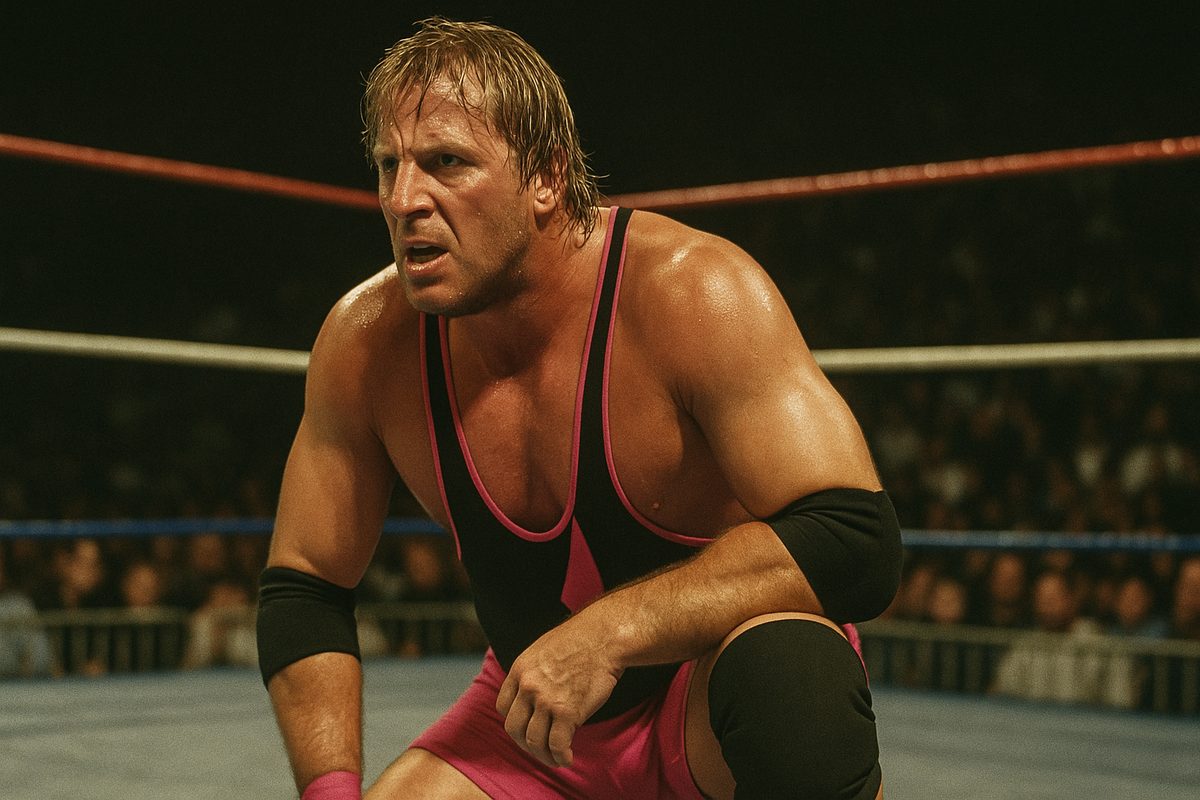
Owen Hart, Family Loyalty, and the Fight to Step Out of Bret's Shadow
How Pro Wrestling Illustrated's November 1997 feature captured a wrestler on the edge of greatness—and the family ties holding him back
The November 1997 issue of Pro Wrestling Illustrated didn't just profile a wrestler. It documented a man standing at the edge of his own greatness—and the family loyalty threatening to pull him back.
The feature's title said it all: "He's Earned the Right to Be Selfish!" For readers who'd watched Owen Hart deliver five-star matches while playing second fiddle to his legendary brother Bret, those seven words hit like a finishing move. This wasn't puff-piece coverage. It was Pro Wrestling Illustrated throwing down a challenge: Would Owen Hart finally break free from the Hart Foundation's shadow, or would history remember him only as the loyal younger brother?
Twenty-seven years later, that question still echoes.
Archive Details
Featured Athlete: Owen Hart
Publication: Pro Wrestling Illustrated, November 1997
Feature Title: "He's Earned the Right to Be Selfish!"
Historical Context: Published days before the Montreal Screwjob (November 9, 1997)
Championship Status: WWF Intercontinental Champion
The Storm Before the Screwjob
Fall 1997 was chaos in professional wrestling. The WWF was hemorrhaging viewers to WCW's Monday Nitro. Vince McMahon's answer? The Attitude Era—a radical pivot toward edgier content, anti-heroes, and storylines that blurred the line between performance and reality.
At the center of that storm: the Hart family.
Bret "The Hitman" Hart had transformed from all-American hero to anti-American villain, leading the Hart Foundation—a faction that included Owen, Jim "The Anvil" Neidhart, the British Bulldog Davey Boy Smith, and the unpredictable Brian Pillman. They feuded with Shawn Michaels. They battled "Stone Cold" Steve Austin. Week after week, they dominated WWF programming with matches that felt dangerous, personal, and real.
But Owen remained the enigma. He held the Intercontinental Championship—proof he could carry gold on his own. He'd defeated a young Rocky Maivia (soon to become The Rock). He'd gone toe-to-toe with the company's most volatile stars. Yet the narrative never changed: Owen was the dependable brother, the glue holding the family legacy together.
PWI saw what others wouldn't say out loud. Owen Hart had the talent to be a main-event singles star. The only thing stopping him was loyalty itself.
The Pavlov's Dog Problem
The magazine's most cutting observation came wrapped in a simple metaphor: Owen Hart had become Pavlov's dog, conditioned to respond to his family's needs even when it cost him his own success.
It was a brutal but accurate diagnosis. For years, Owen subordinated his ambitions to Bret's career trajectory. When the Hart Foundation needed him, he answered. When family drama erupted, he stood by his brother. The loyalty was admirable—and suffocating.
PWI's photographers captured this tension in images that still resonate. One shot showed Owen mid-match, face contorted with effort, veins bulging—a portrait of someone fighting not just his opponent but his own identity. Another frame caught him after a loss to Bob "Spark Plugg" Holly, jaw set, eyes burning with the kind of determination that suggested this wouldn't last. The captions didn't soften the message: Owen Hart was too talented to remain anyone's second.
Dok Hendrix, the WWF broadcaster whose commentary shaped how fans understood the product, pushed this narrative further. His analysis suggested Owen possessed everything needed to thrive as a singles competitor—technical brilliance, charisma, ring psychology—if only he'd permit himself to step out alone.
The readers got the message. So did Owen's peers. The only question was whether Owen himself would act on it.
When Wrestling Magazines Were Cultural Documents
Pro Wrestling Illustrated occupied a unique space in 1990s media. While WWF and WCW programming sold storylines with all the subtlety of a steel chair to the skull, PWI operated differently. It blended kayfabe storytelling with genuine analysis, creating a hybrid journalism that acknowledged wrestling's theatrical nature while treating its athletes as serious performers.
The magazine's design matched its editorial ambition. Unlike mainstream sports publications, PWI covers were bold, colorful, immediate—dynamic in-ring shots that captured wrestling's theatrical intensity. Inside, the layouts paired action photography with commentary that dissected not just matches but careers, legacies, and the business itself.
The Owen Hart feature exemplified this approach. Close-up shots of Owen grimacing through pain. Wide-angle captures of him executing his signature moves with technical perfection. And throughout, the editorial voice asking the question fans were afraid to: What happens to a wrestler who chooses family over fortune?
For collectors and historians, these magazines serve the same function Life Magazine provided during World War II—not just entertainment, but context, perspective, and a permanent record of how people understood the moment as it unfolded.
The Tragedy of Perfect Timing
The November 1997 issue of Pro Wrestling Illustrated hit newsstands mere days before the Montreal Screwjob shattered the Hart family's relationship with the WWF. On November 9, 1997, Vince McMahon orchestrated Bret Hart's controversial departure in a match against Shawn Michaels that ended in real-life betrayal. Bret left for WCW. The Hart Foundation dissolved. And Owen remained in the WWF, his path forward suddenly, terrifyingly open.
PWI had documented the exact moment when Owen stood at the crossroads. What the magazine couldn't have known was how little time remained.
Two years later, in May 1999, Owen Hart died in a tragic accident during a WWF pay-per-view event. He was 34 years old. His career, which had promised so much and delivered genuine excellence, ended before he could fully answer the question PWI had posed: Could Owen Hart become the star he deserved to be?
That's why this issue matters beyond typical wrestling nostalgia. It captured Owen not as a tragic figure, but as an athlete in full possession of his powers, standing at the threshold of individual greatness. The photographs don't show someone who needed rescuing—they show a competitor who'd earned the right to compete on his own terms.
The article's title wasn't wishful thinking. It was recognition of something already true.
The Magazine's Narrative Architecture
The central tension between Owen's family obligations and his individual potential as a main-event star.
His role in one of wrestling's most controversial stables, battling Shawn Michaels and Steve Austin.
Documentation of Owen's victories over rising stars like Rocky Maivia and his championship-caliber performances.
PWI's cutting analysis of how conditioned loyalty had become a career limitation.
Broadcaster analysis reinforcing that Owen possessed all the tools for singles stardom.
Visual documentation of Owen's intensity, technical skill, and determination to break through.
Why This Issue Endures
Historical Timing
Published days before the Montreal Screwjob, this issue captured the Hart family drama at its peak—before everything changed.
Owen Hart's Legacy
With Owen's tragic passing in 1999, features documenting his talent and potential carry profound emotional and historical weight.
Primary Source Value
Real-time analysis from 1997, not retrospective commentary colored by tragedy—showing how insiders viewed Owen's career trajectory.
Photographic Archive
Striking action photography and intimate portraits that captured Owen at the height of his powers.
Editorial Courage
PWI's willingness to challenge the status quo and advocate for Owen's individual success.
Attitude Era Documentation
A window into wrestling's most transformative period, when the industry was being radically reimagined.
Where Wrestling History Lives
While streaming services have made classic matches accessible, they can't replicate what magazines like Pro Wrestling Illustrated provided: the analysis, the context, the sense of how fans and insiders understood these performers in real time. Television archives show you what happened. Magazine archives show you what it meant.
From the Golden Age of the 1980s through the Attitude Era's chaos, PWI chronicled professional wrestling with a seriousness and depth that honored both the sport's athleticism and its theatrical artistry. The publications remain essential reading for anyone seeking to understand how wrestling culture evolved, how stars were made, and how family legacies could become both blessing and burden.
Explore the Archive
Original Pro Wrestling Illustrated magazines from the 1980s through the Attitude Era offer unparalleled access to wrestling history as it was first documented—complete with analysis, photography, and editorial perspectives unavailable anywhere else.
Browse PWI Magazine CollectionThe November 1997 Pro Wrestling Illustrated asked a question Owen Hart never fully got to answer. But the magazine preserved something more valuable than hypotheticals—it documented the moment when one of wrestling's most gifted performers stood ready to claim his place in history.
That's the power of original wrestling journalism. It doesn't just report what happened. It captures what could have been, what should have been, and what fans recognized even when the business itself couldn't see clearly.
Owen Hart earned the right to be selfish. This magazine proves it.