
Ernest Green, Student Leadership, and the Continuing Legacy of the Little Rock Nine
How Ebony Magazine documented the journey from federal troops to campus activism
The hate mail followed Ernest Green 700 miles north.
In the spring of 1961, the young man who had walked through screaming mobs into Little Rock Central High School—protected by the 101st Airborne—now sat in a Michigan State University dormitory, opening envelopes that proved a bitter truth: racism wasn't a Southern problem. It was an American one.
When readers opened the May 1961 issue of Ebony Magazine, they found something rare in American journalism: an unflinching portrait of what happened after the cameras left. Ernest Green had become the first African American to graduate from Central High in 1958, a milestone that made international headlines. But Ebony's feature—"Little Rock Hero Makes Good Up North"—revealed a more complex story. The battle hadn't ended. It had simply changed addresses.
Archive Details
Historical Figure: Ernest Green, Little Rock Nine member and Michigan State University NAACP chapter president
Issue Date: May 1961
Archive Source: Ebony Magazine
Cover Feature: Mrs. William Billups, New York model
From Federal Troops to Student President
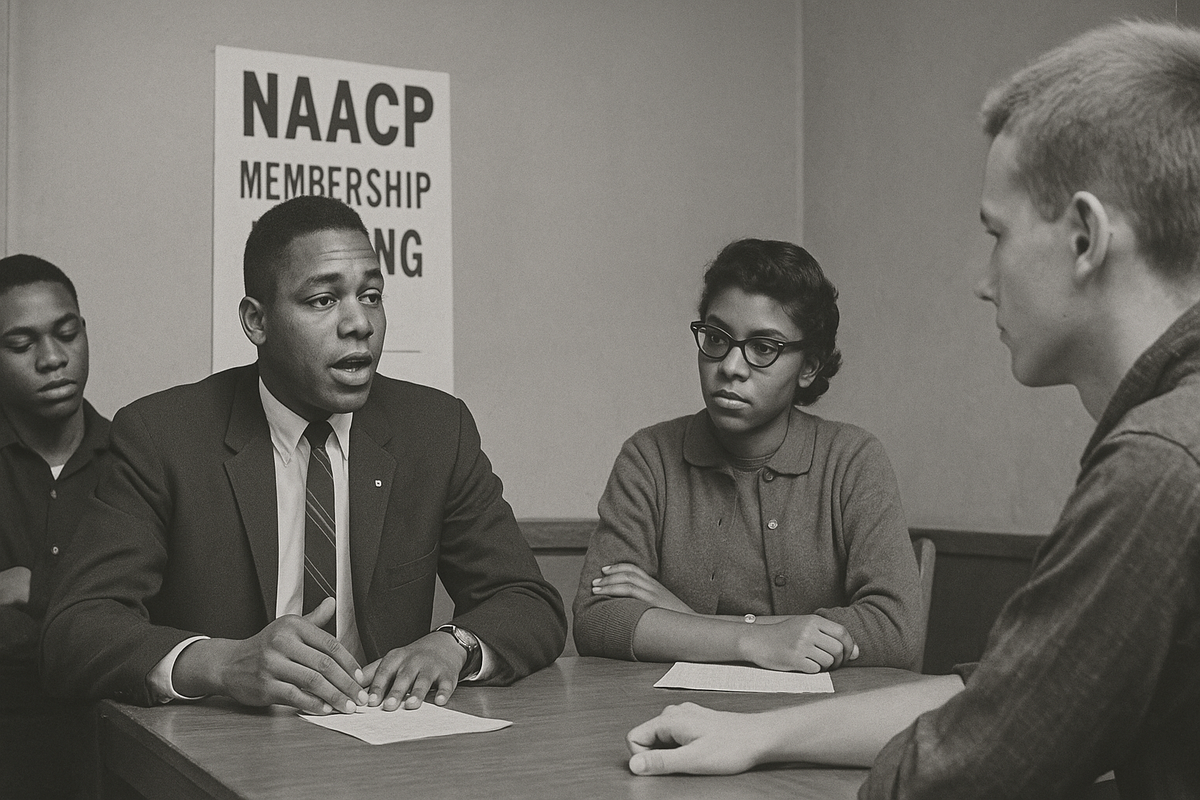
By 1961, Green had emerged as president of Michigan State's NAACP chapter, transforming a sleepy campus organization into a force that increased membership tenfold. His leadership embodied a critical shift in the Civil Rights Movement: the front lines were no longer just Southern lunch counters and bus stations. They were Northern universities, student unions, and campus theaters.
Under Green's direction, MSU students staged "A Man Called Nigger," a provocative theatrical production tracing African American history from slavery through the 1954 Supreme Court decision. The title alone announced a refusal to sanitize or soften the movement's message for white comfort.
Meanwhile, Green maintained a solid "B" average, attended interracial dances in East Lansing, and organized sit-in demonstrations where restaurant owners delivered the same rejection Northern liberals claimed didn't exist: "We don't serve no niggers here."
Why Ebony Told the Story Differently
Founded by John H. Johnson in 1945, Ebony had built its reputation on a simple but revolutionary premise: document Black life with the same depth, dignity, and complexity that white publications reserved for white subjects.
The May 1961 feature exemplified this mission. Where mainstream coverage of the Little Rock Nine had focused narrowly on crisis and spectacle—federal troops, Governor Faubus, mob violence—Ebony's photographers captured Green comparing notes with white classmates, studying by lamplight, strategizing at NAACP meetings, navigating the ordinary complications of campus life.
The message embedded in every photograph: Ernest Green was not a symbol. He was a person. A student. A leader. And his story was still unfolding.
Eight Historical Facts Preserved in This Issue
The Legacy Six Decades Later
Ernest Green's path from Little Rock to Michigan State to the Carter administration illustrates a pattern that defined the Civil Rights Movement: young people stepped forward, endured public scrutiny and private threats, and built careers devoted to expanding justice.
Ebony Magazine ensured those contributions weren't erased or forgotten. For millions of readers in 1961, this feature validated their own struggles, documented progress that mainstream media ignored, and amplified voices the broader culture tried to silence.
More than sixty years later, the May 1961 issue remains a testament to the courage required not just to break barriers, but to keep moving forward after the initial breakthrough.
If you're researching the Little Rock Nine, studying the Civil Rights Movement's expansion beyond the South, or preserving family history from this era, vintage Ebony magazines offer irreplaceable insight.
Collector Significance
For historians, educators, and collectors of African American heritage, the May 1961 issue represents a critical artifact.
Civil rights–era Ebony magazines command serious collector interest because they function as primary sources—not retrospective analysis, but real-time documentation of the movement as it happened. This issue connects directly to the Little Rock Nine, one of the most significant moments in American history, while simultaneously revealing a lesser-known chapter: the nationalization of student activism.
The photography alone justifies acquisition. These aren't posed publicity shots. They're candid records of Ernest Green navigating integrated classrooms, organizing protests, and living the daily reality of being a pioneer who couldn't afford to fail.
The cover features Mrs. William Billups, a New York model, representing Ebony's tradition of celebrating Black beauty and achievement. But inside, Green's story delivers something more urgent: proof that the work of desegregation extended far beyond opening schoolhouse doors.
Explore the Original Archives
Whether you're a collector, educator, or someone honoring the memory of relatives who lived through this period, these magazines deliver more than stories. They deliver heritage in its original form—unfiltered, unrevised, and unforgettable.
Browse Ebony Magazine CollectionThe May 1961 issue of Ebony Magazine stands as essential documentation of how the Civil Rights Movement evolved from courtroom victories to campus organizing, from Southern crisis to national commitment. Ernest Green's leadership at Michigan State proved that the teenagers who integrated Little Rock Central High weren't just making history—they were preparing to lead it.