
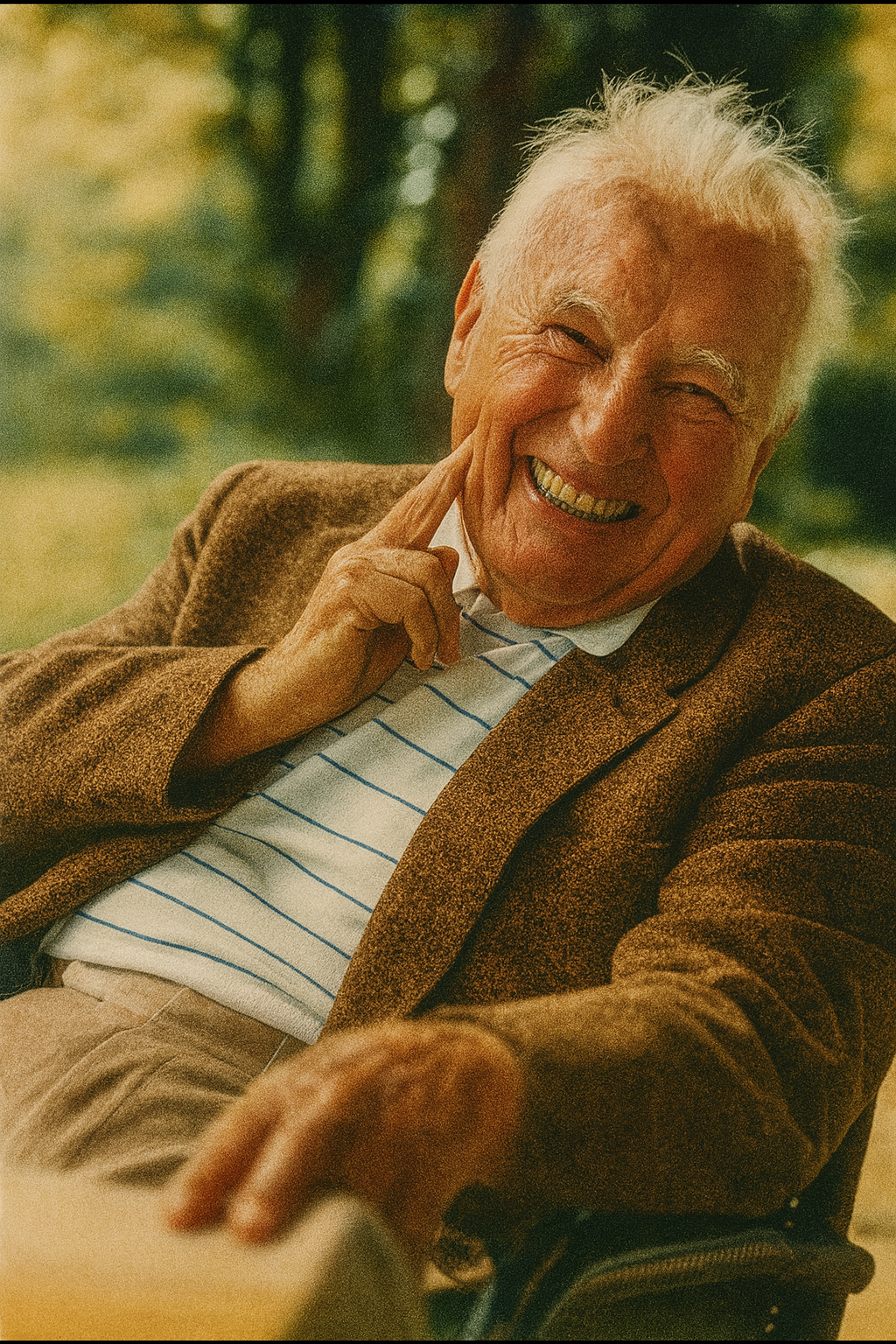
The Man Who Walked Back Into History
Charlie Chaplin's 1972 American Reckoning, as Documented by Vogue
Twenty years is long enough to bury a man's reputation. Long enough for a country to forget why it drove him out. Long enough, perhaps, for forgiveness.
When Charlie Chaplin stepped onto American soil in April 1972, he was eighty-three years old. The nation that had once called him un-American now waited to give him a standing ovation. And when Vogue magazine published its April 1st issue that spring, tucked between fashion spreads and beauty editorials, readers found something unexpected: the documentation of a cultural wound finally closing.
The feature was titled "Triumph for a Title of Triumphs." It appeared in Vogue's "People Are Talking About" section—not as gossip, but as consecration. This was Chaplin's return from exile, and Vogue understood what it meant: not just the homecoming of a film star, but the restoration of an artist America had tried to erase.
The Exile
The story begins in 1952. McCarthy-era paranoia had turned suspicion into policy, and Chaplin—with his leftist sympathies, his refusal to become an American citizen, his unapologetic critiques of capitalism in films like Modern Times—became a target. Accused of moral "un-American" behavior, he was denied re-entry to the United States after a trip abroad.
He didn't fight it. Instead, he settled in Switzerland with his wife, Oona O'Neill, and their children. For two decades, Chaplin lived on Lake Geneva, creating films like A King in New York while America remained the country that had both elevated and rejected him.
But exile is a patient teacher. And by 1972, the lesson was complete.
The Political Thaw
The early 1970s were years of reckoning. Vietnam had shattered American confidence. Nixon was opening diplomatic channels with China and the Soviet Union, thawing the Cold War's frozen certainties. The cultural revolutions of the 1960s had rewritten the rules on authority, identity, and dissent.
In this climate, younger Americans saw Chaplin differently. Not as a communist sympathizer, but as the genius behind The Tramp. Not as a moral threat, but as the creator of City Lights, Modern Times, and The Great Dictator—films that married comedy with conscience, laughter with critique.
His return wasn't just personal. It was symbolic. A reconciliation between the country that had cast him out and the artist who had shaped its imagination.
Vogue as Witness
By 1972, Vogue had evolved far beyond fashion. The magazine had become a curator of cultural memory, blending haute couture with politics, art with social commentary. Its decision to feature Chaplin wasn't merely topical—it was strategic. Vogue understood that style and substance were inseparable, that an artist's triumph belonged in the same pages as spring collections.
The feature described Chaplin at eighty-three, still living on Lake Geneva with Oona and five of their eight children, still in "the prime of success." It chronicled his exile, his resilience, his unexpected return to receive honors—culminating in the emotional "Salute to Chaplin" gala at Lincoln Center.
The photography was deliberate. One image showed Chaplin from behind, walking away in a coat—a haunting echo of The Tramp, the silhouette that had defined an era. The prose emphasized not scandal but survival. Chaplin's own words anchored the piece: "I get over being angry. I let my movies do the talking."
Where other publications might have framed the story through controversy, Vogue chose mythology. This wasn't a celebrity profile. It was a meditation on endurance.
Archive Metadata
Historical Figure: Charlie Chaplin (1889–1977)
Issue Date: April 1, 1972
Archive Source: Vogue Magazine, "People Are Talking About" Section
Feature Title: "Triumph for a Title of Triumphs"
Cultural Context: Chaplin's first U.S. return since 1952 McCarthy-era exile
Spring Beauty and Cultural Renewal
The April 1972 cover promised spring—blossoms, freshness, rebirth. Inside, fashion pages spoke of reinvention. The editorial juxtaposition was intentional. Just as designers presented new collections, Chaplin embodied renewal. Exile had ended. America had changed. And Vogue positioned his return as part of the season's larger story: that beauty and resilience were, and always had been, inseparable.
The magazine demonstrated something profound: that an artist's triumph mattered as much as the cut of a dress or the shade of a lipstick. That culture wasn't background—it was the fabric itself.
What the Feature Revealed
Exile and Return
After two decades abroad, Chaplin re-entered America to applause—a complete reversal of his 1952 rejection.
Family Life in Switzerland
The feature humanized him through family life, showing the husband and father behind the icon.
Lincoln Center Ovation
His reception at the "Salute to Chaplin" gala symbolized cultural forgiveness, a nation acknowledging its mistake.
Comedy as Social Critique
Films like Modern Times and The Great Dictator proved comedy could carry social conscience.
Survival Through Art
Chaplin's philosophy of letting his movies "do the talking" became a testament to artistic resilience.
The Tramp's Silhouette
Photography linked past and present: The Tramp's iconic silhouette hadn't faded, it had endured.
Cultural Timing
His return coincided with America's own rethinking of authority and history in the post-Vietnam era.
Vindication Against McCarthyism
Without naming McCarthy directly, the article framed Chaplin's comeback as vindication over political persecution.
Vogue called attention to what made Chaplin irreplaceable—his ability to merge intellect with entertainment. Above all, he was celebrated for creating art that made people laugh and think simultaneously—a legacy of laughter and pathos that transcended politics.
Why Collectors Covet This Issue
Historical Timing
Published in the very month of Chaplin's U.S. return, this issue captures cultural reconciliation in real time. It's not retrospective; it's documentary.
Crossover Appeal
Film historians need it. Cultural scholars cite it. Fashion collectors hunt it. Few issues command this breadth of interest.
Vogue Prestige
Unlike newspaper clippings that yellow and crumble, Vogue treated Chaplin's story with archival care. The photography, the prose, the editorial design—all conspired to make his return permanent.
Cultural Significance
This isn't a fashion magazine documenting a film star. It's the record of one of the 20th century's most important cultural redemptions, preserved by one of its most influential publications.
Owning the April 1972 issue means holding the applause of Lincoln Center in physical form. It's an artifact of art, exile, and triumph.
Why Vintage Vogue Endures
Like Life magazine's wartime issues, Vogue from the 1970s survives as more than glossy entertainment. These magazines are time capsules. Their pages preserve the energy, optimism, and contradictions of their moment.
In a digital age where stories vanish in the scroll, where history feels disposable, these publications offer something increasingly rare: permanence. To flip through an original Vogue from 1972 is to feel the weight of history, fashion, and culture pressed together. It's visceral. It's irreplaceable.
Explore the Archive
Thousands of original Vogue magazines await—from the 1930s through the 1970s. Trace entire decades as they unfolded: cinema, style, politics, art.
Browse Vogue Magazine CollectionThe Standing Ovation, Preserved
The April 1, 1972 issue of Vogue remains one of the most significant cultural artifacts of its era. Its coverage of Charlie Chaplin's return wasn't merely a profile—it was a meditation on resilience, artistry, and redemption.
Holding this issue today means holding a standing ovation in your hands. It's the moment when the world chose to remember not the scandal, but the genius. Thanks to Vogue's instinct for blending photography, narrative, and cultural analysis, Chaplin's triumph lives not only as cinema history but as a survival story that still resonates five decades later.
For anyone who values history, vintage Vogue magazines aren't fashion documents. They're witnesses. And they carry with them the laughter, struggles, and triumphs of their time.