
The Fur Coat That Changed Everything
Walt Frazier, Jet Magazine, and the Birth of Black Athletic Royalty
April 4, 1974. A man in a fur coat stares from the cover of a magazine small enough to fit in your pocket. But this isn't fashion—it's a manifesto. Walt "Clyde" Frazier, two-time NBA champion and the most stylish man in professional sports, has just been crowned something no Black athlete had been called so explicitly in mainstream media: a sex symbol.
The issue you're looking at isn't sports journalism. It's cultural archaeology.
When Jet Magazine ran "Walt Frazier: His Sex Image and His Lifestyle," it wasn't documenting a basketball player. It was certifying a new archetype of Black masculinity in America—one that controlled its own narrative, wore mink bedspreads without apology, and refused to separate athletic excellence from cultural power.
Fifty years later, this single issue remains one of the most significant artifacts of 1970s Black celebrity culture. Here's why it matters.
The Moment When Sports Became Culture
By 1974, the ground had shifted. Legal segregation was dead. The Black Power movement had rewritten the rules of visibility. And a generation of African American athletes—Muhammad Ali, Kareem Abdul-Jabbar, Arthur Ashe—were no longer content to be just performers in white-owned arenas. They were intellectuals, activists, and icons.
Walt Frazier occupied a different lane entirely.
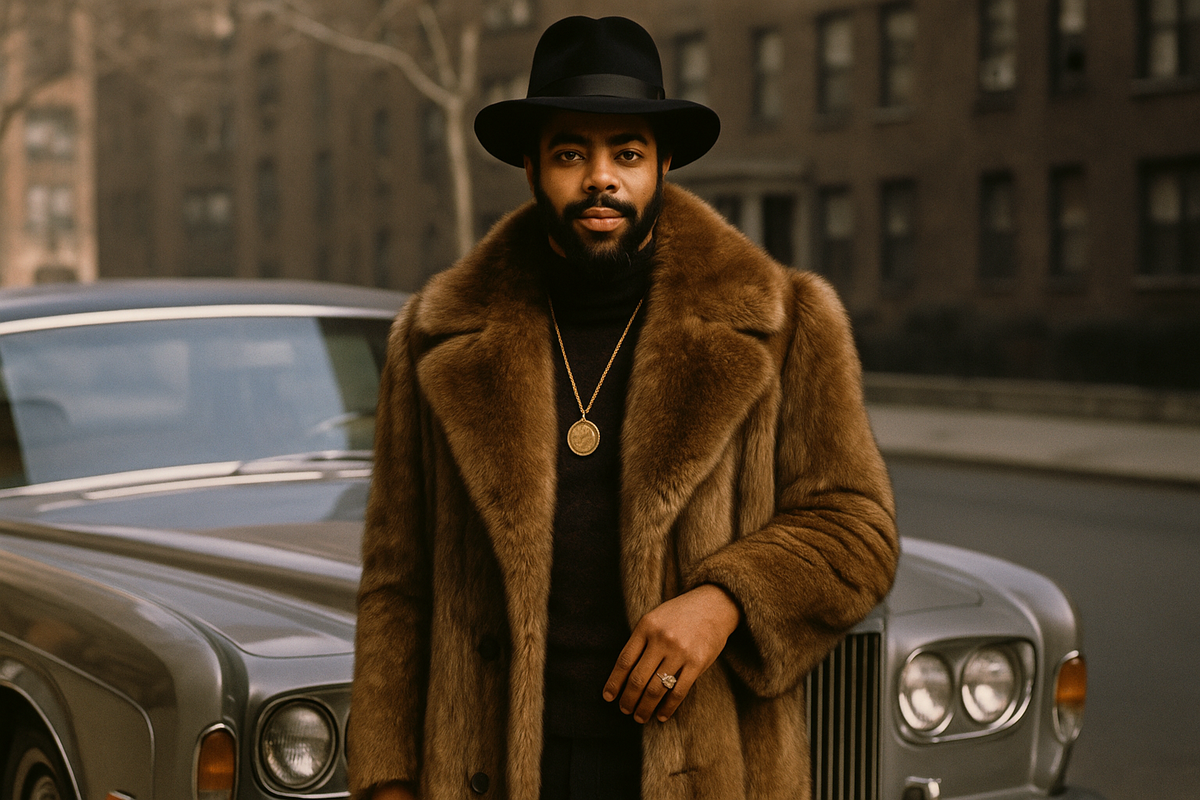
While Ali fought the government and Abdul-Jabbar studied philosophy, Frazier perfected the art of presence. His nickname "Clyde"—borrowed from Warren Beatty's stylish bank robber in Bonnie and Clyde—said everything. He robbed opponents on the court with his defense. Off the court, he stole the spotlight with custom suits, wide-brimmed hats, and a Rolls Royce parked outside Madison Square Garden.
He had led the New York Knicks to championships in 1970 and 1973. His basketball résumé was unimpeachable. But Jet didn't put him on the cover to talk about pick-and-rolls. They put him there because Frazier had cracked a code: he had become desirable on his own terms, in a country that had spent centuries defining Black masculinity as either threatening or subservient.
This was new ground. And Jet knew its readers understood the stakes.
Archive Documentation
Historical Figure: Walt "Clyde" Frazier, New York Knicks Point Guard
Issue Date: April 4, 1974
Archive Source: Jet Magazine
Cover Story: "Walt Frazier: His Sex Image and His Lifestyle"
Cultural Context: Published between Frazier's 1970 and 1973 NBA Championship wins, during the peak of his cultural influence
What Jet Saw That Sports Illustrated Missed
Mainstream sports media in 1974 treated athletes like statistics machines. Box scores. Game recaps. Occasional profiles that focused on work ethic or "natural talent." Black athletes, when covered at all, were praised for physicality but rarely for intellect, style, or sexual appeal.
Jet Magazine operated under different rules.
Founded in 1951 by John H. Johnson, Jet was the chronicle of Black American life—compact, portable, and unflinching. It covered lynchings and legislative victories, celebrity weddings and beauty pageants, all in a format designed to be read in barbershops, beauty salons, and living rooms across the country. If something mattered to Black America, Jet documented it.
The April 4, 1974 issue exemplified this mission. The Frazier profile wasn't fluff—it was ethnography. Jet cataloged:
The Material Evidence of Success: His penthouse apartment. His closets stacked with 30 pairs of shoes and dozens of custom suits. The mink bedspread that became legendary. The Rolls Royce that announced his arrival. This wasn't ostentatious for its own sake—it was proof that Black excellence could be rewarded in America, visibly and luxuriously.
The Split Identity: Frazier described himself in dual terms—"Walt," the quiet, cautious man who valued privacy and fatherhood, and "Clyde," the public figure who performed glamour and confidence. Jet understood this wasn't vanity. It was survival. Black men in the spotlight had always needed to code-switch. Frazier had simply made the switch into an art form.
The Sex Symbol Question: The article's subtitle acknowledged what others whispered—Frazier's appeal to women, his charm, his carefully managed romantic life. But Jet framed it with nuance. This wasn't tabloid leering. It was an examination of how a Black man could be publicly sexual without falling into stereotype or scandal. Frazier admitted he was careful, deliberate, aware of the cameras always watching.
The Father Beneath the Fur: Despite the playboy coverage, Jet made sure readers knew about Walt Jr., Frazier's young son, and his devotion to fatherhood. The juxtaposition was intentional—fame and flash, yes, but also responsibility and love.
This layered portrait did something radical: it refused to simplify. Frazier could be a champion, a style icon, a sex symbol, and a devoted father simultaneously. Jet gave its readers permission to see Black men as complex.
The Image That Defined a Decade
Look at that cover again. The fur coat cascading to his knees. The wide-brimmed hat tilted just so. The expression—calm, knowing, utterly in control. It's not a basketball pose. It's a power pose.
Jet's covers were small, but they were tactical. On newsstands from Harlem to Houston, that image stopped traffic. It said: This is what success looks like now. And it's ours.
The photography itself was a statement. Jet didn't hire photographers who shot athletes like workers. They hired photographers who understood lighting, composition, and iconography—who knew how to make someone look like they belonged in a museum as much as in a game.
That's why this cover endures. It's not documentation. It's portraiture.
Inside the Article: Five Themes That Still Resonate
The Dual Identity
Frazier described himself as "Walt," the quiet private man, and "Clyde," the flamboyant public figure. The split mirrored the tension many Black men felt between private reality and public performance.
The Luxury Life
The article detailed his Rolls Royce, mink bedspreads, custom wardrobe, and penthouse apartment. For readers, this was a glimpse into the possibilities of Black success in a new era.
The Sex Symbol
Jet acknowledged his reputation with women, noting how he balanced charm with self-awareness. Frazier admitted he was careful not to get caught up in gossip or lose control of his image.
The Family Man
Despite the playboy coverage, Frazier emphasized his role as a father to his son, Walt Jr., showing that beneath the public image was a man grounded in responsibility.
Through his style, demeanor, and visibility, Frazier symbolized the 1970s fusion of sports, fashion, and Black pride. The article wasn't just entertainment—it was a blueprint for how Black excellence could be performed, celebrated, and protected.
Why Collectors Chase This Issue
Historical Precision
Published during Frazier's prime, between his two championship runs, it captures him at maximum cultural impact.
Cover Iconography
That photograph is one of Jet's most arresting. Fashion historians, basketball archivists, and Black memorabilia collectors all want it.
Cultural Crossover
This issue sits at the intersection of sports history, fashion history, and African American cultural studies. It's relevant to multiple collecting communities.
Scarcity
Fifty years of attrition have made well-preserved copies increasingly difficult to find.
Owning this issue means possessing an original witness to a specific moment—when Black athletic stardom stopped apologizing and started styling.
The Legacy of the Pocket-Sized Archive
We live in an age of infinite digital content. Everything is photographed, posted, and forgotten by sunrise. That impermanence makes physical archives more valuable, not less.
Jet Magazine understood something profound: if you don't document your own history, someone else will—and they'll get it wrong. For five decades, Jet served as the authorized chronicle of Black achievement, struggle, and joy in America. Its pages captured what the mainstream press ignored or misunderstood.
That's why these magazines aren't just collectibles. They're primary sources. They're evidence. They're the receipts.
When you hold the April 4, 1974 issue, you're not reading about history. You're holding it.
Explore the Archive
If the story of Walt Frazier and Jet's fearless cultural documentation resonates with you, this is just one chapter in a much larger narrative.
From the 1950s through the 1990s, Jet covered civil rights battles, entertainment royalty, sports legends, and the everyday brilliance of Black American life. Whether you're building a collection focused on basketball history, 1970s fashion and culture, or African American media, every issue offers direct access to voices and images that shaped the nation.
Browse Jet Magazine CollectionThe Man in the Fur Coat Still Speaks
Walt "Clyde" Frazier didn't just play basketball. He staged a performance of Black excellence so compelling that fifty years later, we're still studying the script. The April 4, 1974 issue of Jet Magazine captured that performance at its peak—not as gossip, not as sports trivia, but as cultural history in real time.
For anyone serious about understanding how Black athletes transformed American culture in the 1970s, this issue is essential. For anyone who believes that style is substance, that visibility is power, and that archives are acts of resistance—this is where you start.
The man in the fur coat is still waiting on that newsstand. The question is whether you're ready to meet him.