
The Last Photographs: Life Magazine and the Missionaries Who Died for Faith
January 30, 1956 — When photojournalism captured the human cost of conviction
On a January morning in 1956, millions of Americans sat down to breakfast and opened their copies of Life Magazine to find five widows staring back at them.
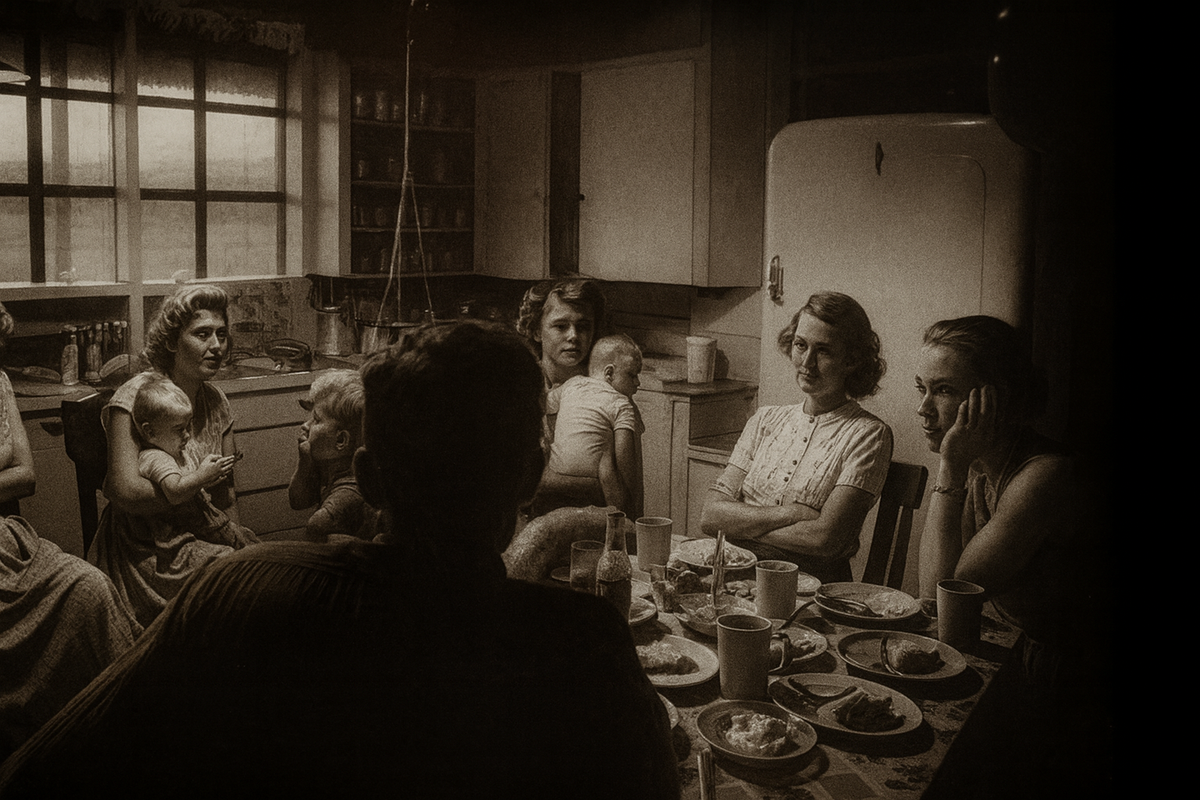
The women were caught in a moment of raw grief—seated in a dim kitchen, children on their laps, faces blank with shock. They had just learned that their husbands were dead, speared on a sandbar deep in the Ecuadorian jungle. But this was no accident, no plane crash, no disease. These men had walked knowingly into danger, Bibles in hand, convinced they were meant to reach one of the most isolated and hostile tribes on earth.
The January 30, 1956 issue of Life would become one of the magazine's most enduring publications—not because it sensationalized violence, but because it did something far more unsettling. It showed Americans what faith looked like when it demanded everything.
Historical Archive
Publication: Life Magazine
Issue Date: January 30, 1956
Cover Feature: Five missionary widows—Marlene McCully, Elisabeth Elliot, Marjorie Saint, Olive Fleming, and Barbara Youderian
Story: "Go Ye and Preach the Gospel: Five Do and Die"
Historical Figures: Jim Elliot, Nate Saint, Ed McCully, Roger Youderian, Peter Fleming
Location: Palm Beach, Curaray River, Ecuador
The Mission to Palm Beach
Jim Elliot, Nate Saint, Ed McCully, Roger Youderian, and Peter Fleming were not reckless. They were methodical. For months, they had flown over Huaorani territory in Saint's yellow Piper, lowering gifts on a rope—machetes, kettles, bright ribbons. They documented every flight, every response, every sign that contact might be possible.
The Huaorani (called "Aucas" by outsiders, a Quechua word meaning "savage") had never been photographed. They had never allowed sustained contact with the outside world. Ecuadorian settlers avoided their territory. Oil workers told stories of spearings. The missionaries knew the risks, but they also believed they had seen something others hadn't: curiosity.
In their diaries, the men recorded moments of hope. A woman and child appeared on the riverbank. A young man accepted a machete, smiled, gestured. The missionaries named the spot Palm Beach and built a treehouse lookout nearby. On January 8, 1956, they radioed that three Huaorani had come to meet them. The men were elated.
That was the last transmission.
What the Magazine Recovered
When the search party found the bodies days later, they also found Nate Saint's camera, submerged in the Curaray River. The film inside was water-damaged but salvageable. What emerged were the final photographs the missionaries took—images of first contact, of smiling Huaorani holding gifts, of a moment when everything still seemed possible.
Life's editors understood what they had. This was not simply a story to be reported; it was a story to be felt. They built the feature around three pillars: the recovered photographs, diary excerpts written days before the killings, and portraits of the widows in the immediate aftermath of loss.
The effect was devastating. Readers did not encounter distant tragedy—they met the families. They read the men's own words, hopeful and devout. They saw the last images captured before violence erupted.
One diary entry, written days before the attack, would be quoted for decades: "This is a great day for the advance of the Gospel of Christ in Ecuador." Another reflected on the cost of the mission: "He is no fool who gives what he cannot keep to gain what he cannot lose."
The magazine's title spread—"Go Ye and Preach the Gospel: Five Do and Die"—ran across multiple pages, interweaving maps of Ecuador, portraits of the missionaries with their families, and those final, haunting photographs from Saint's camera.
The Power of the Cover
Life did not put the missionaries on the cover. It put their widows there.
Marlene McCully, Elisabeth Elliot, Marjorie Saint, Olive Fleming, and Barbara Youderian appeared in a single frame—a kitchen scene, children clinging to them, grief carved into their faces. It was the moment they received the news, captured by a photographer who understood that this image would define the story.
The editorial choice was bold. In an era when magazine covers featured movie stars, politicians, and moments of triumph, Life offered something starker: the human cost of conviction. The widows were not abstractions. They were young mothers, suddenly alone, left to reckon with a faith that had taken everything.
Inside, the magazine traced the arc of the mission with forensic care. Readers saw the gifts lowered from the plane—machetes tied with ribbon, bright kettles meant to signal peace. They saw maps marking Shell Mera, the missionary outpost, and Palm Beach, the site of the killings. They saw the Huaorani for the first time in print—women with wooden earplugs, men holding the missionaries' gifts, faces unguarded and curious.
One photograph in particular became iconic: a Huaorani woman named Delilah, standing on the riverbank, holding a kettle festooned with ribbons. It was one of the last peaceful images before everything went wrong.
The Recovered Camera
Nate Saint's Piper plane camera, pulled from the Curaray River, contained water-damaged film that captured the missionaries' final peaceful contact with the Huaorani.
Diary Excerpts
Life published passages written days before the killings, including the now-famous line: "This is a great day for the advance of the Gospel of Christ in Ecuador."
First Contact Images
The magazine featured the first-ever photographs of the Huaorani people, including images of gift exchanges and smiling encounters at Palm Beach.
The Widows' Kitchen
The iconic cover image captured five young mothers in the moment they learned their husbands were dead—a photograph that defined the human cost of faith-driven conviction.
Faith, Family, and Cold War America
The story resonated because it struck at the center of mid-century American identity. This was 1956—a moment of Cold War anxiety, technological optimism, and intense religious engagement. Missionary work was not fringe activity; it was a visible expression of national purpose. Americans saw global engagement through two lenses: geopolitical and spiritual. The missionaries in Ecuador embodied both.
For families reading Life over breakfast, the story was personal. These were not distant martyrs. They were young men who looked like neighbors, who had wives and children, who had made a choice that most readers could not fathom but deeply respected.
Life framed the deaths not as failure but as unfinished work. The magazine emphasized that the missionaries' sacrifice was part of a larger story—one that would continue. And it did. Within years, some of the widows, including Elisabeth Elliot, would return to Ecuador and establish peaceful contact with the Huaorani. The tribe that killed their husbands would eventually welcome them.
Why This Issue Endures
In the decades since, the January 30, 1956 issue has become one of the most collectible publications in Life's history. It sits alongside coverage of World War II, the Kennedy assassination, and the moon landing—moments that defined the 20th century.
But unlike those events, this story operates on a more intimate scale. It is not about nations or technology. It is about individuals confronting the limits of faith, culture, and human understanding. The photographs are not triumphant. The ending is not resolved. The questions it raises—about sacrifice, contact, and the collision of worlds—remain open.
For collectors, the issue represents something tangible: a moment when photojournalism achieved its highest purpose. Life did not simply document events. It created a narrative so powerful that it shaped American religious culture for generations. Books, films, and missionary movements flowed from this single publication.
The magazine's approach—combining recovered images, personal diaries, and portraits of grief—set a standard for how tragedy could be told with dignity and depth. It proved that journalism could honor complexity without eroding emotion.
Collector Significance
Historical Weight
One of the most famous moments in modern missionary history, documented at the height of Life's photojournalistic power.
Iconic Imagery
The cover of the five widows and the recovered photographs from Nate Saint's camera remain among Life's most memorable images.
Cultural Impact
This issue shaped American religious culture for decades, inspiring books, films, and missionary movements that continue today.
Market Demand
Like milestone issues covering World War II, the Kennedy assassination, or the moon landing, this magazine is prized as a tangible artifact of 20th-century history.
The Artifact
Holding the January 30, 1956 issue today is an encounter with mid-century America's understanding of faith, sacrifice, and the wider world. The cover of the widows remains one of the most iconic images Life ever published. The recovered photographs from Nate Saint's camera are still haunting. The diary entries, reprinted in full, capture the men's conviction in their own words.
This is not merely a magazine. It is a historical document—a window into how Americans processed tragedy, how photojournalism could shape collective memory, and how faith, at its most extreme, demanded everything.
For collectors of vintage Life magazines, this issue is essential. It represents the magazine at the height of its cultural power, telling a story that could not be told anywhere else, in any other way.
Explore the Archive
Discover thousands of original Life issues, including this landmark January 30, 1956 edition.
Browse Life Magazine CollectionFrom the 1930s through the 1970s, Life documented the defining moments of modern history—war, politics, art, and sacrifice—with unmatched authority.