
The Night Marilyn Died: How Ladies' Home Journal Gave America Its First Eyewitness Account
Eunice Murray's 1973 testimony transformed Hollywood tragedy into American cultural history
On an August night in 1962, Eunice Murray walked past Marilyn Monroe's locked bedroom door and felt the cold weight of dread. By November 1973, when she finally broke her silence in the pages of Ladies' Home Journal, that dread had calcified into one of the century's most analyzed mysteries.
What readers discovered in that issue wasn't tabloid speculation or Norman Mailer's recent fever-dream theorizing. It was something rarer: testimony from the woman who was actually there.
Archive Details
Historical Figure: Marilyn Monroe (via Eunice Murray)
Issue Date: November 1973
Archive Source: Ladies' Home Journal
Feature Article: "I Was There the Night Marilyn Monroe Died" by George Carpozi Jr.
Cover Subject: Caroline Kennedy at age 16
Why This Magazine Mattered
Between Monroe's death and Murray's 1973 interview stretched eleven years of conspiracy theories, unauthorized biographies, and a growing cult of obsession around Hollywood's most tragic icon. Norman Mailer's Marilyn, published earlier that year, had thrown gasoline on the fire by suggesting Monroe's death might have been something darker than the coroner's "probable suicide" ruling.
Ladies' Home Journal offered a counterweight. George Carpozi Jr.'s exclusive interview with Murray—"I Was There the Night Marilyn Monroe Died"—represented the first sustained, firsthand account from inside 12305 Fifth Helena Drive on the night of August 4–5, 1962.
For the magazine's readership, this wasn't gossip. It was cultural archaeology.
By 1973, Ladies' Home Journal commanded circulation in the millions as one of America's "Big Four" women's magazines. Its readers were middle-class women navigating a decade of profound transformation: second-wave feminism, shifting domestic expectations, and an emerging vocabulary around mental health. Monroe's story—beauty weaponized, loneliness masked, dependency medicalized—spoke directly to anxieties women were only beginning to articulate in public.
The magazine understood this. By running Murray's testimony alongside holiday craft projects and Caroline Kennedy's coming-of-age portrait, the Journal made a deliberate editorial statement: women's lives contain multitudes. Domesticity and tragedy. Glamour and isolation. Recipes and reckoning.
The Women's Movement Context
Murray's dual role as caregiver and working woman highlighted the invisible labor performed in households across America, resonating with readers challenging traditional roles.
Celebrity as Cautionary Tale
Monroe's trajectory—beauty, tragedy, fame—became a lens for examining how Hollywood and media treated women in the public eye.
Mental Health Awareness
Monroe's struggles with depression, insomnia, and prescription drug dependency mirrored issues many women experienced but rarely discussed openly.
Cultural Memory
The Journal positioned itself as a platform where personal testimony intersected with national conversation about identity and loss.
What Eunice Murray Revealed
Murray's account stripped away mythology and returned Monroe to flesh. She described her role not as mere housekeeper but as constant companion—witness to Monroe's insomnia, her phone marathons with analysts and lovers, her pharmaceutical tightrope walk between sleep and waking.
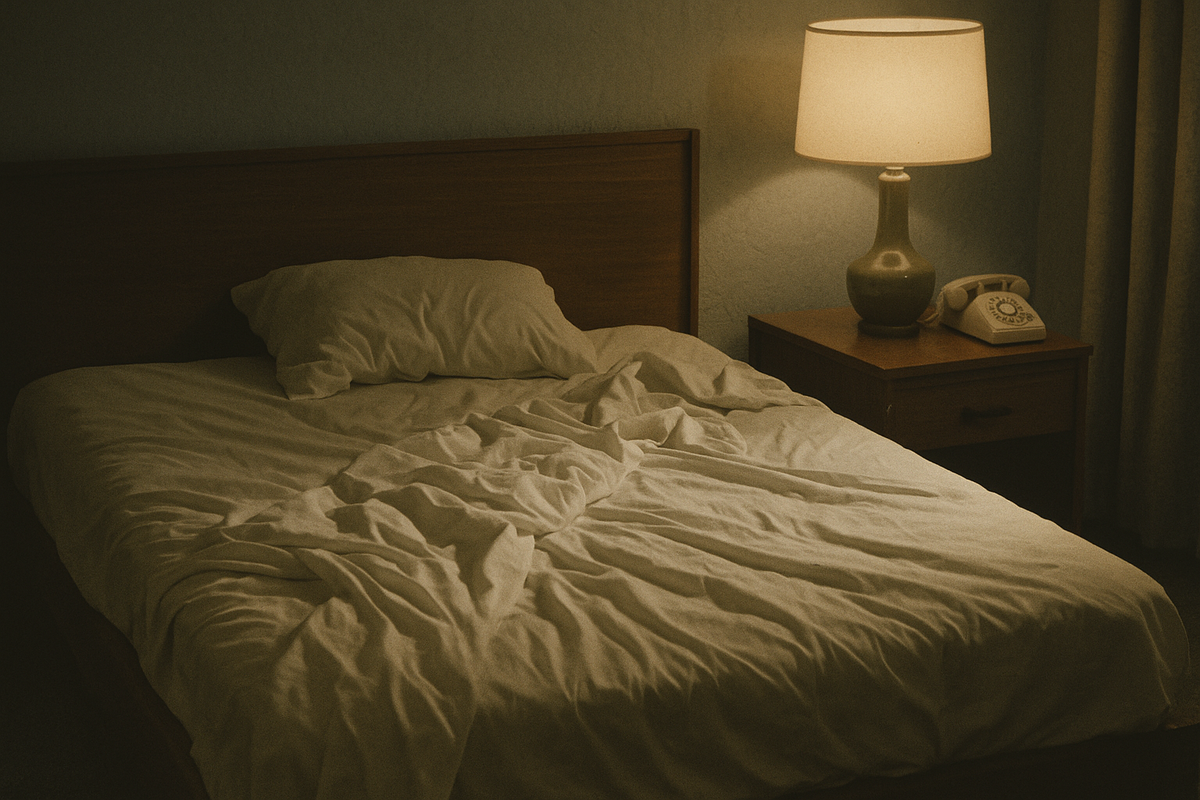
The night itself unfolded in Murray's telling with the mundane horror of slow realization. Monroe had taken calls. She'd locked her bedroom door. When Murray checked on her around 3 a.m. and received no response, she looked through the window and saw what she would never forget: "Marilyn lying on the left side of her bed, face down, body straight."
The hours that followed dissolved into chaos—frantic calls to Dr. Ralph Greenson, Monroe's psychiatrist, and Dr. Hyman Engelberg, her internist. The timing of those calls, the sequence of discovery, the prescriptions scattered on the nightstand: Murray's testimony provided concrete details that would fuel decades of analysis and contradiction.
But what made the Journal article significant wasn't its resolution of mysteries—it resolved nothing. What it offered was proximity. Murray's voice carried the weight of someone who'd held the mundane logistics of Monroe's life in her hands: the locked door, the unanswered phone, the barbiturates that promised sleep but delivered oblivion.
The Magazine as Cultural Document
The November 1973 cover told its own story. Caroline Kennedy at sixteen, rendered in soft pastels, gazed out with Kennedy poise and privilege—youth untouched by the tragedies that had already claimed her father and uncle. Inside, Monroe's ghost haunted the pages between advertisements for cake mix and mascara.
This collision of images wasn't accidental. Ladies' Home Journal had mastered the art of editorial juxtaposition, understanding that its readers contained multitudes: homemakers and news consumers, mothers and citizens, women shaped by both recipe cards and political assassinations.
The layout reinforced this duality. Bold red pull quotes from Murray's testimony anchored the design. Photographs showed Murray herself, holding a Monroe biography, her face carrying the complicated expression of someone who'd become a footnote to history. The visual storytelling balanced journalistic gravity with the magazine's signature accessibility—serious content packaged for mass consumption.
What emerged was a snapshot of American women's media at a pivot point. The Journal no longer treated its readers as inhabitants of a purely domestic sphere. By 1973, the magazine's often-repeated tagline—"Never underestimate the power of a woman"—had evolved from aspirational slogan to editorial mandate.
Why Collectors Prize This Issue
In the vintage magazine market, certain issues achieve premium status through convergence: cultural significance meeting historical timing meeting visual impact. The November 1973 Ladies' Home Journal checks every box.
Monroe content remains perpetually collectible. Anything connecting directly to her death—particularly primary source material—commands attention from collectors who view these artifacts as investments in cultural memory. Murray's eyewitness account qualifies as exactly that: a primary source, published in a mainstream venue, providing details unavailable elsewhere.
The Kennedy cover adds value. Caroline at sixteen, captured between childhood and the public life she would inherit, represents a vanished moment in American dynastic mythology. Kennedy-related covers consistently attract collectors of political ephemera and presidential history.
But the real magic lies in the collision. To hold this issue is to hold November 1973 in your hands: Watergate unraveling, Vietnam ending, feminism ascending, and two women—one dead, one ascending—representing different visions of American femininity. Monroe's tragedy and Caroline's promise, bound together in newsprint and advertisements.
Condition determines collectibility. Complete issues with intact covers, minimal spine wear, and preserved advertising sections command the highest prices. These magazines weren't designed as heirlooms; most were read and discarded. Survival itself confers value.
Collector Significance
Primary Source Material
Eunice Murray's firsthand testimony represents irreplaceable historical documentation of Monroe's final night, making this issue essential for researchers and serious collectors.
Dual Historical Value
The pairing of Monroe's death testimony with Caroline Kennedy's coming-of-age portrait creates a unique convergence of Hollywood tragedy and American political dynasty.
Cultural Intersection
Published at the height of second-wave feminism, this issue captures a pivotal moment in women's media when domestic content merged with serious cultural commentary.
Visual Documentation
Original layout with red pull quotes, Murray photographs, and period advertisements provides authentic context unavailable in digital reproductions or excerpts.
The Archive Beckons
The November 1973 issue represents a single data point in Ladies' Home Journal's decades-long chronicle of American women's lives. From its 1883 founding through its evolution into a mid-century cultural force, the Journal documented shifting expectations, emerging voices, and the perpetual negotiation between tradition and transformation.
Each issue functions as primary source material—not just articles, but advertisements, fashion spreads, advice columns, and reader letters that collectively map the changing terrain of American domesticity, aspiration, and identity.
Browse Ladies' Home Journal Magazine CollectionCoda
Eunice Murray died in 1994, having spent thirty-two years answering questions about a single night. Her 1973 interview in Ladies' Home Journal stands as her most detailed public accounting—flawed, contested, but undeniably present.
What the magazine understood, and what makes this issue enduringly significant, is that Monroe's death wasn't just Hollywood tragedy. It was American tragedy, reflecting national anxieties about beauty, fame, mental health, and the cost women pay for public consumption. By giving Murray's testimony a platform alongside Caroline Kennedy's portrait and Thanksgiving centerpiece tutorials, the Journal acknowledged what its readers already knew: women's lives encompass everything. The beautiful and the broken. The aspirational and the cautionary. The locked bedroom door and the holiday table set for family.
The magazine is a time capsule. Open it carefully.