
Fame, Family, and Balance: How Black Stars Made Time for Their Children in the 1980s
Inside the October 26, 1987 issue of Jet Magazine—when celebrity parenting became documented proof
October 26, 1987. A reader slides a pocket-sized magazine from a newsstand rack—red logo blazing, Lisa Bonet's face staring back in a Hillman College T-shirt. Inside, wedged between civil rights updates and entertainment news, sits a feature that does something radical: it proves Black celebrity parents show up for their children.
Not as gossip. As documentation.
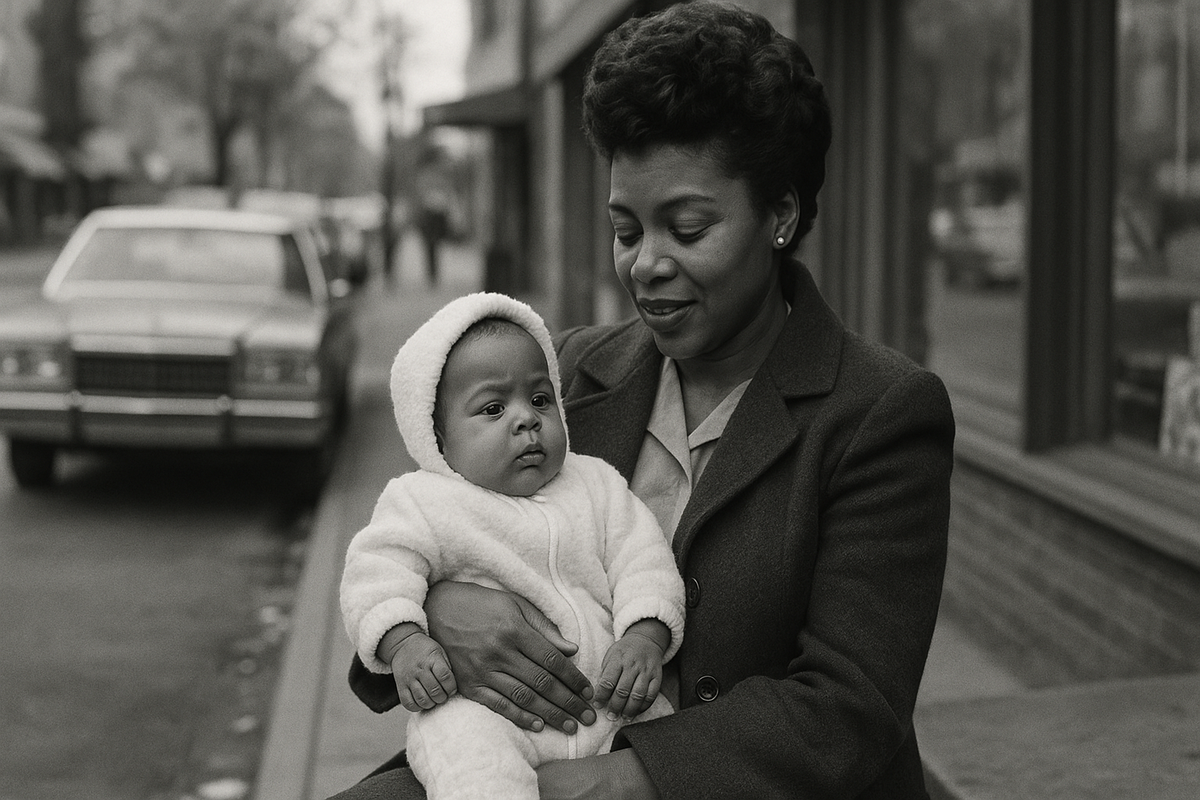
"How Stars Make Time For Their Children" wasn't fluff. It was evidence. At a moment when national media questioned the "crisis" of Black family structure, Jet Magazine published photographs of Louis Gossett Jr. at school events with his sons. Dionne Warwick flanked by David and Damon at her Hollywood Walk of Fame ceremony. Danny Glover helping daughter Mandisa with homework. Phylicia Rashad carrying infant Condola to rehearsals. Nancy Wilson backstage with Sheryl and Samantha between tour dates.
These weren't posed PR shots. They were receipts.
Archive Details
Publication: Jet Magazine
Issue Date: October 26, 1987
Cover Subject: Lisa Bonet (A Different World)
Featured Article: "How Stars Make Time For Their Children"
Historical Context: Published during the peak of The Cosby Show era and the launch of A Different World
The Magazine That Refused to Look Away
By 1987, Jet had spent 36 years operating as the visual archive of Black American life. While mainstream publications ignored African American families or flattened them into stereotypes, Jet's editors made a different choice: show the fullness. Weddings and funerals. Graduations and awards. Tragedy and triumph. And yes—famous parents doing the unglamorous work of parenting.
The October 26 issue arrived during a cultural peak. The Cosby Show had shattered television ratings by depicting an upper-middle-class Black family without apology. A Different World, the spinoff that sent Denise Huxtable (played by cover star Lisa Bonet) to fictional Hillman College, had just premiered weeks earlier. Black television was winning. But off-screen, the war on drugs was ravaging communities, economic inequality was widening, and political rhetoric often painted Black families as broken.
Jet didn't argue with the narrative. It simply published counter-evidence every week.
What the Feature Actually Showed
The article delivered specific, unglamorous moments:
Louis Gossett Jr., four years removed from his Oscar win for An Officer and a Gentleman, attended school assemblies and parent-teacher conferences. The photographs showed him not in tuxedos, but in the audience—present.
Dionne Warwick received her star on the Hollywood Walk of Fame with her sons beside her. The image captured what mainstream celebrity coverage rarely acknowledged: that Black entertainers built multi-generational legacies, and children witnessed their parents' achievements firsthand.
Danny Glover, then shooting Lethal Weapon and becoming a household name, structured his film schedule around his daughter Mandisa's school calendar. Jet quoted him directly about adjusting work for parenting—radical transparency for a male action star in 1987.
Phylicia Rashad, playing Clair Huxtable on The Cosby Show, brought infant daughter Condola to tapings and rehearsals. The feature made explicit what the show portrayed implicitly: professional Black women didn't abandon motherhood to succeed—they integrated it.
Nancy Wilson, the jazz and R&B legend, toured with her daughters when possible and canceled dates when impossible. The message was blunt: children came first, even when record labels preferred otherwise.
This wasn't a puff piece celebrating "supermoms" or "dedicated dads." It was journalism that documented how real people with demanding careers made daily choices about presence, sacrifice, and priority.
Why Pocket-Sized Mattered
Jet's compact 5" × 3¾" format wasn't accidental—it was strategic. You could slide it into a purse, a back pocket, a lunch bag. It traveled. And because it traveled, it reached barber shops, beauty salons, break rooms, and kitchen tables across Black America. The magazine's physical intimacy matched its editorial intimacy.
That October 26 cover—Lisa Bonet in a Hillman College shirt—signaled everything. Hillman wasn't real, but the pride it represented was. HBCUs (Historically Black Colleges and Universities) were thriving, and A Different World would spend six seasons celebrating that world on primetime television. Jet understood the symbolism and gave it premium placement.
Inside, the family feature worked because Jet had earned decades of trust. Readers knew the magazine wouldn't sensationalize or distort. If Jet said Louis Gossett Jr. showed up for his sons, he showed up. If Dionne Warwick rearranged tour dates for family dinners, she did. The credibility was absolute.
The Deeper Archive
This single issue exists within a larger continuum. From 1951 forward, Jet documented African American life with a consistency no other publication matched. Emmett Till's funeral. Rosa Parks' arrest. Martin Luther King Jr.'s assassination. Muhammad Ali's boxing bans. Jesse Jackson's presidential campaigns. Michael Jackson's Thriller era. Each week, the magazine arrived as both newspaper and scrapbook, recording history as it happened.
The family features weren't outliers—they were essential coverage. Jet recognized that civil rights victories, business achievements, and entertainment breakthroughs all rested on the foundation of family structure. To ignore Black parenting was to ignore the engine of Black progress.
By the 1980s, as political rhetoric increasingly blamed Black poverty on "family breakdown," Jet kept publishing evidence that Black families were intact, adaptive, and deeply committed to children's success. The October 26, 1987 issue is one example. Hundreds more exist across five decades of publication.
Cultural Timestamp
Published at the intersection of The Cosby Show's dominance and A Different World's launch, capturing Black television at a creative and commercial peak.
Counter-Narrative
Primary source documentation that contradicts decades of media distortion about Black family life and parental commitment.
Celebrity Legacy
Early documentation of parenting practices by figures who remain culturally significant—biographical depth rarely preserved elsewhere.
Material Rarity
Weekly digest format meant most issues were discarded after reading. Well-preserved 1987 copies are increasingly scarce.
The Endurance of Print
Digital archives can't replicate the experience of holding an original Jet issue. The paper quality, the advertisement layouts, the subscription cards still tucked inside—these details encode information about production, distribution, and readership that scans erase.
More importantly, original issues remain immune to retroactive editing. In an era of revisionist history and algorithmic content curation, physical magazines from the 20th century are fixed records. What Jet published in 1987 stays published. No one can memory-hole the evidence.
For families, these magazines often serve as genealogical documents. A grandparent's church in the community news section. A cousin's wedding announcement. A local business owner's obituary. Jet covered Black life at every level, which means many African American families appear somewhere in its 58-year archive.
Owning the October 26, 1987 issue means owning proof that Lisa Bonet was a cultural icon, that Black television was reshaping American entertainment, and that Black celebrities prioritized their children even when fame demanded otherwise.
Why This Issue Matters to Collectors
Cultural Timestamp
Published at the intersection of The Cosby Show's dominance and A Different World's launch, it captures Black television at a creative and commercial peak. Lisa Bonet on the cover marks the moment before she left the spinoff—a brief window of possibility before industry tensions surfaced.
Counter-Narrative Documentation
As a primary source, it contradicts decades of media distortion about Black family life. Historians researching 1980s African American culture need this issue, not summaries of it.
Celebrity Legacy
The figures profiled—Warwick, Glover, Rashad, Gossett Jr., Wilson—remain culturally significant. Early documentation of their parenting adds biographical depth rarely preserved elsewhere.
Material Rarity
Jet was a weekly digest, read until pages loosened and covers creased. Subscribers discarded issues after a month. Well-preserved copies from 1987 are increasingly scarce, particularly with intact spines and vibrant cover color.
Photographic Record
Jet's images weren't stock photos—they were commissioned or contributed by families directly. Many photographs in this issue exist nowhere else in the public record.
Archival Preservation
This isn't nostalgia collecting. It's archival preservation with market value attached—evidence that survives as physical testimony to cultural truth.
Where History Lives
Thousands of original Jet issues spanning 1951 to 2009 remain accessible through dedicated archival collections.
Whether you're researching civil rights history, studying African American media, tracing family heritage, or building a serious collection of 20th-century publications, Jet magazines are irreplaceable primary sources. Each issue functions as a time capsule—politics, fashion, sports, music, obituaries, and family life, all documented in real time.
The archive isn't just for scholars. It's for anyone who understands that history isn't neutral, and representation wasn't guaranteed. Jet fought to exist every week for nearly six decades. The issues survived. Now they're available to the people who need them most.
The Record Stands
The October 26, 1987 issue of Jet Magazine did something simple and radical: it showed famous Black parents making time for their children, and it published the evidence.
No qualifiers. No excuses. Just documentation.
In 1987, that mattered. In 2026, as digital media fragments and archives disappear, it matters even more. Original issues of Jet aren't collectibles because they're old—they're collectibles because they're true.
And truth, once printed, stays printed.
Explore the Archive
Browse thousands of original Jet Magazine issues from 1951 to 2009. Each one is a primary source, a time capsule, and a piece of American history.
Browse Jet Magazine Collection