
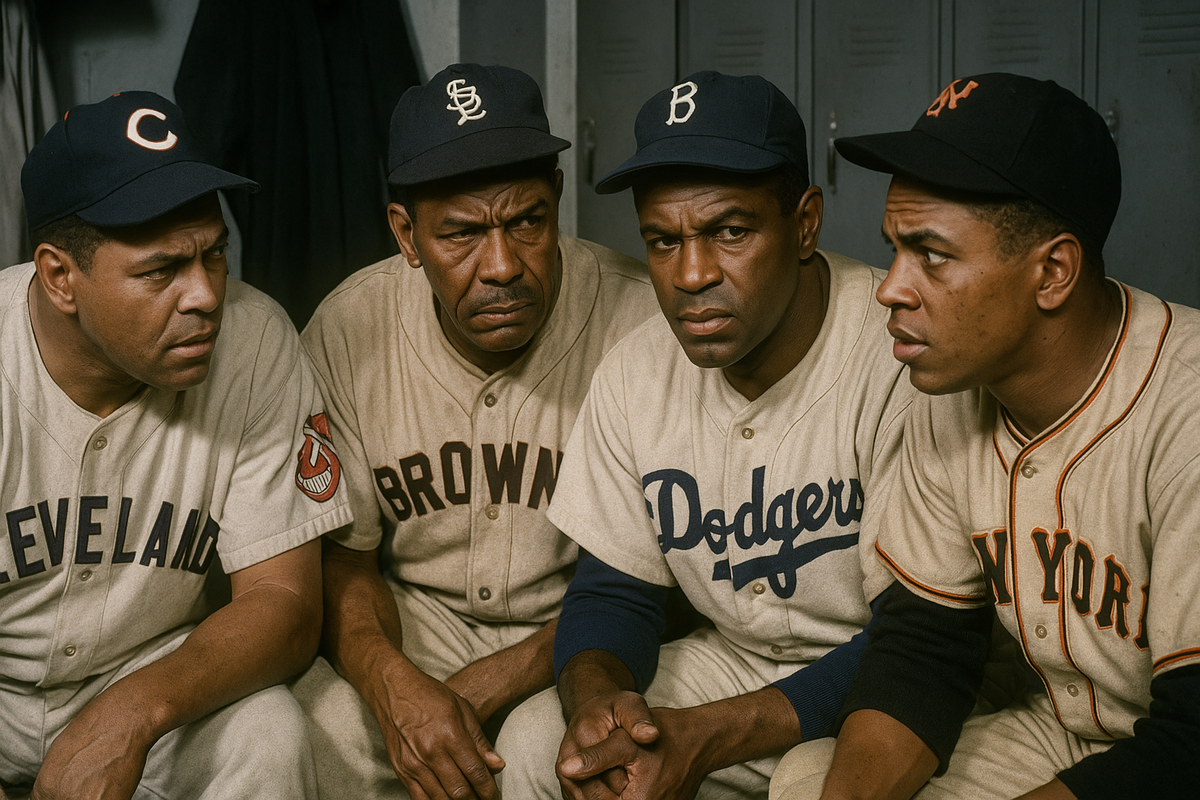
When America's Baseball Heroes Turned on Each Other
Inside the October 9, 1952 Jet Magazine exposé that revealed the hidden feuds, rivalries, and human cost of breaking baseball's color barrier
The October 9, 1952 issue of Jet Magazine landed on newsstands with a promise most publications wouldn't dare keep: the truth about what happened when the cameras stopped rolling.
While white sportswriters were busy mythologizing Jackie Robinson and his fellow barrier-breakers, Jet did something radical—it reported on them as men. Flawed, proud, exhausted men who were cracking under pressures no athlete had ever faced. The cover story, "Why Negro Baseball Stars Feud," exposed the fractures running through Black baseball's most celebrated names: Satchel Paige needling Larry Doby. Jackie Robinson clashing with Roy Campanella over money. Willie Mays catching heat from veterans who resented his instant stardom.
These weren't petty squabbles. They were the inevitable result of an impossible equation: take a handful of Black athletes, give them the weight of representing an entire race, place them under the scrutiny of a hostile nation, then force them to compete for the scraps of recognition a segregated league allowed.
Jet understood what mainstream America refused to acknowledge—that integration was a pressure cooker, and even legends could boil over.
Archive Details
Publication: Jet Magazine
Issue Date: October 9, 1952
Featured Story: "Why Negro Baseball Stars Feud"
Cover Subjects: Jackie Robinson & Roy Campanella
Historical Context: Five years after baseball's integration, published during the height of early Civil Rights tension
The Weight of Being First
By 1952, the mythology was already calcifying. Jackie Robinson: the stoic pioneer. Larry Doby: the quiet trailblazer of the American League. Roy Campanella: the steady anchor behind the plate. Willie Mays: the prodigy who made the impossible look effortless. Satchel Paige: the ageless showman who proved Negro League stars belonged in the majors.
But Jet knew its readers deserved more than hagiography. These men had carried impossible burdens since the moment they put on major league uniforms. Robinson endured death threats, beanballs aimed at his skull, and the suffocating requirement to never fight back. Doby integrated the American League just months after Robinson, facing the same hatred with a fraction of the media support. Paige, already a legend in his forties, had to prove his dominance all over again to skeptics who dismissed the Negro Leagues as inferior. Campanella and Mays, arriving in Brooklyn and New York respectively, became instant symbols whether they wanted the role or not.
The pressure didn't just come from white America. Black communities invested these men with the hopes of millions. Every strikeout, every error, every perceived slight against white teammates became evidence in the ongoing trial over whether integration had been worth the cost.
Is it any wonder they sometimes turned on each other?
What Jet Revealed
The magazine's reporting was surgical in its specificity. This wasn't vague gossip—Jet named names and detailed confrontations:
Satchel Paige vs. Larry Doby: Paige, never one to miss a chance for a verbal jab, teased Doby relentlessly about hats and mustaches. What started as clubhouse banter curdled into genuine animosity, the kind that lingered whenever Cleveland faced Kansas City.
Larry Doby vs. Artie Wilson: A dispute over five dollars for a party nearly erupted into violence. Five dollars. The sum sounds absurd until you remember these men were navigating locker rooms where white teammates made double their salary, where every slight—real or imagined—carried the sting of deeper injustices.
Jackie Robinson vs. Roy Campanella: Their feud over barnstorming money exposed fault lines that went beyond dollars. Robinson, the activist and agitator, clashed with Campanella's more accommodating approach to race relations. The money dispute became a proxy war over how Black athletes should conduct themselves in integrated baseball.
Roy Campanella vs. Willie Mays: Campanella "rode" the rookie Mays mercilessly, hazing him with the kind of veteran cruelty that might have been dismissed as normal in an all-white clubhouse but carried different weight when Black players were already under constant scrutiny. Mays, brilliant and young, absorbed the resentment of men who'd fought longer for less recognition.
These stories matter because they strip away the sanitized narrative of integration as a triumph march. Integration was messy. It was competitive. It forced men who should have been allies to fight over limited space in the spotlight.
Why Jet Was the Only Publication That Could Tell This Story
In 1952, mainstream sports journalism operated under an unspoken rule: Black athletes were either saints or problems. Jet rejected both caricatures.
Founded in 1951 by John H. Johnson, Jet was compact—pocket-sized at roughly 5x7 inches—affordable at 15 cents, and unapologetically focused on Black American life. It covered what white publications ignored: the Emmett Till lynching, the Montgomery Bus Boycott, celebrity scandals, and yes, the feuds between Black baseball stars.
The October 9, 1952 issue's cover was a masterwork of visual storytelling. Jackie Robinson and Roy Campanella, two Brooklyn Dodgers titans, stared out from bold red and black graphics. The cover line promised conflict, and the article delivered. This was journalism that trusted its audience to handle complexity—to understand that heroes could be petty, that trailblazers could clash, that the fight for equality didn't erase human ego.
No white publication would have touched this story. It required an editor who understood that humanizing Black athletes—showing their flaws alongside their triumphs—was an act of respect, not betrayal.
The Human Cost of Heroism
What makes Jet's reporting so valuable seven decades later is its refusal to flatten these men into symbols.
Satchel Paige, whose wit was legendary, sometimes wielded humor like a weapon, cutting teammates when he meant to joke. Larry Doby, carrying the burden of being second (always second, never first), dealt with resentment from white opponents and occasional friction with fellow Black players who expected automatic solidarity. Roy Campanella, one of the game's greatest catchers, found himself at odds with younger stars whose natural talent made his hard-won achievements look quaint. Jackie Robinson, already a civil rights icon, struggled with teammates over fairness and recognition, discovering that shared race didn't guarantee shared priorities.
These weren't character flaws. They were symptoms of an impossible situation. Integration didn't give Black players a level playing field—it gave them a minefield and told them to smile while crossing it.
Editorial Courage
While mainstream media sanitized Black achievement, Jet reported the full story—glory and conflict, triumph and tension.
Historical Proximity
Published just five years after Robinson shattered the color barrier, capturing raw, unresolved tensions before time smoothed them into folklore.
Visual Impact
The Robinson-Campanella cover is an iconic image of mid-century sports journalism, bold in design and unflinching in promise.
Cultural Necessity
Preserved stories that mainstream media dismissed, serving as the magazine of record for Black America during the Civil Rights era.
Jet's Uncompromising Legacy
The decision to publish "Why Negro Baseball Stars Feud" required editorial nerve. In 1952, the white press was still debating whether integration had been a mistake. Black publications faced pressure to present only positive images of African American achievement. Jet chose truth over propaganda.
That choice made Jet indispensable. For two decades, it served as the magazine of record for Black America, covering everything from the Freedom Riders to the Muhammad Ali draft case to the assassination of Martin Luther King Jr. Its pages preserved stories that mainstream media dismissed or distorted.
The October 9, 1952 issue exemplifies that mission. It told readers that Robinson, Campanella, Paige, Doby, and Mays were extraordinary—but also that they were men, navigating an America that demanded perfection while denying equality. That complexity is what makes the reporting valuable. It refused to let heroes become hollow symbols.
The Collector's Perspective
Historical Proximity
Published just five years after Robinson's debut, this issue captured the raw emotions of baseball's integration era before folklore replaced fact.
Cultural Insight
Unlike contemporary publications that sanitized Black achievement, Jet reported candidly on Black athletes as people, not just performers.
Iconic Cover
Featuring Robinson and Campanella in bold red and black graphics, the cover is a striking piece of sports history and visual journalism.
Scarcity & Condition
Early Jet issues are increasingly difficult to locate. The magazine's affordability and pocket format meant copies were read, passed around, and discarded—survival rate was low.
For archivists and collectors of African American cultural history, the October 9, 1952 Jet Magazine represents a critical primary source—a window into a moment when America's pastime became a battleground for dignity, respect, and the right to be fully human.
The Article That Refused to Look Away
Seven decades later, "Why Negro Baseball Stars Feud" remains one of Jet's most revealing pieces of sports journalism. It insisted that readers confront an uncomfortable truth: breaking barriers didn't make men immune to ego, jealousy, or exhaustion. It didn't make them less heroic—it made them real.
These feuds weren't footnotes to integration. They were evidence of its cost. Every conflict documented in those pages reflected the impossible standards placed on Black athletes, the competition for limited recognition, and the strain of representing millions while trying to simply play baseball.
For collectors, historians, and anyone interested in how America actually integrated—not the myth, but the messy, complicated reality—this issue is essential. It's a reminder that history isn't made by saints. It's made by human beings, doing their best under conditions designed to break them.
And somehow, despite everything, they didn't break. They feuded, they fought, they clashed—and they kept playing. That might be the most heroic part of the story.
Explore the Complete Archive
Whether your interest is baseball, the integration era, or the evolution of Black media, issues like this offer something invaluable: a direct line to the past, unfiltered and unforgettable.
Browse Jet Magazine Collection