
The Magazine That Made Democracy Visible
When Jet Carried the Mississippi Freedom Democratic Party Into Black America
On August 27, 1964, a pocket-sized magazine became a weapon.
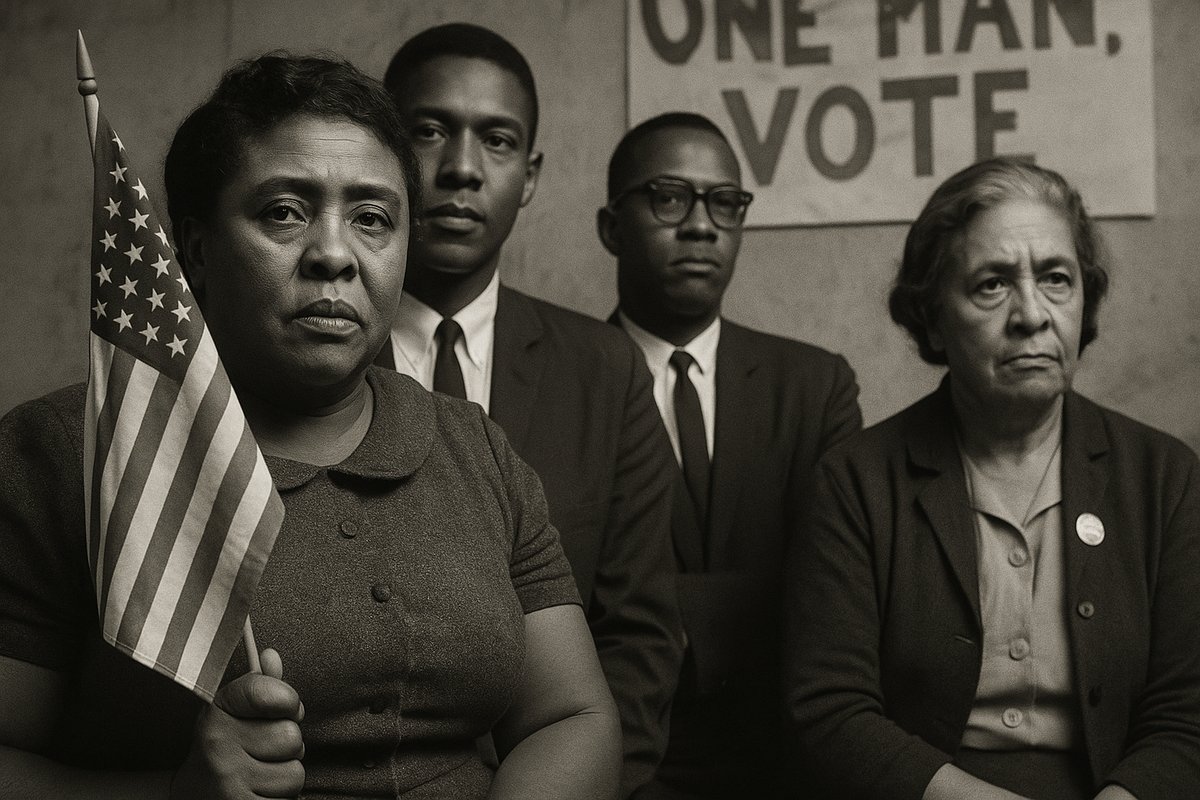
That week, African Americans across the country opened their copies of Jet and found something no mainstream outlet dared to show them: their own power, documented in real time. While CBS and The New York Times were still deciding how to frame the "Negro question," Jet had already put Fannie Lou Hamer on its cover—bruised, defiant, holding an American flag like she owned it.
Because she did.
This wasn't coverage. This was a manifesto. The August 27, 1964 issue of Jet Magazine didn't just report on the Mississippi Freedom Democratic Party's challenge at the Democratic National Convention. It amplified a seismic shift in American politics: the moment grassroots Black voters stopped asking for a seat at the table and started building their own.
For collectors, historians, and anyone who understands that democracy was never given but taken, this issue is a primary source from the front lines.
Archive Details
Historical Figures: Fannie Lou Hamer, Ella Baker, Aaron Henry, Victoria Gray, Charles Evers
Issue Date: August 27, 1964
Archive Source: Jet Magazine, Johnson Publishing Company
Historical Context: Democratic National Convention, Atlantic City • Freedom Summer Campaign
Freedom Summer: When the Ballot Became a Battlefield
By the summer of 1964, Mississippi had perfected the art of disenfranchisement. Despite comprising nearly half the state's population, Black citizens were erased from voter rolls through poll taxes, rigged literacy tests, and the ever-present threat of violence. In some counties, the number of registered Black voters was zero.
Not low. Zero.
Civil rights organizers responded with Freedom Summer, a mass mobilization to register Black voters and expose the machinery of suppression. Out of this campaign came the Mississippi Freedom Democratic Party (MFDP)—a parallel political structure led by Fannie Lou Hamer, Ella Baker, Aaron Henry, Victoria Gray, and Charles Evers.
Their strategy was audacious: challenge the legitimacy of Mississippi's all-white Democratic delegation at the party's national convention in Atlantic City. The argument was simple and devastating. How could a delegation represent Mississippi when it systematically excluded half its citizens?
Jet understood what was at stake. While other outlets treated the MFDP as a regional curiosity, Jet framed it as what it was: a test of whether American democracy meant anything at all.
The Power of the Pocket-Sized Press
By 1964, Jet had already become the most influential Black newsweekly in America. Its format—small enough to slip into a purse or jacket pocket—made it easy to carry into beauty salons, barbershops, church basements, and living rooms. Its covers commanded attention on newsstands nationwide.
The August 27 issue was engineered to be unforgettable.
Fannie Lou Hamer and Ella Baker stared out from the cover—two women who had transformed sharecropping and community organizing into political insurgency. Hamer, who had been beaten nearly to death in a Mississippi jail just one year earlier for attempting to register, now stood as vice chair of the MFDP. Her presence on that cover was a declaration: ordinary people could challenge the most entrenched power structures in America.
Inside, Jet's reporting was unfiltered. No euphemisms. No "both sides." Just hard-hitting documentation of what was happening in Atlantic City, rendered in plainspoken language and striking photography. This was Black journalism for Black readers, written with the urgency of a movement that couldn't afford to wait for white institutions to catch up.
The magazine gave its audience something crucial: proof that their struggle mattered nationally, not just locally.
Atlantic City: The Showdown
Jet's coverage of the convention was granular and electric.
The MFDP rented a 100-room hotel in Atlantic City—a logistical feat that signaled they weren't there to observe. They were there to fight. The delegation, led by Aaron Henry and anchored by leaders like Hamer, prepared for a full-scale challenge to the credentials of Mississippi's official delegation.
Their case was built on radical transparency. The MFDP had staged three statewide mock elections, allowing 80,000 disenfranchised Black Mississippians to cast symbolic ballots. These weren't theatrical gestures. They were proof of demand—evidence that Black citizens wanted the vote and deserved it.
The demand was straightforward: replace the lily-white Mississippi delegation with the integrated Freedom Party delegates.
Jet captured the rallies, the chants of "One Man, One Vote," the speeches that refused to soften the truth. The magazine showed its readers that the denial of the ballot was the denial of citizenship itself.
Even if the MFDP wasn't seated, Jet noted, the campaign had already shifted the national conversation. Northern Democrats hesitated to back Mississippi's segregationists. The Black vote was emerging as a decisive force in national politics—not someday, but now.
Convention Strategy
The MFDP rented a 100-room hotel in Atlantic City, preparing for a full-scale credentials challenge to Mississippi's all-white delegation.
Mock Elections
Three statewide elections gave 80,000 disenfranchised citizens practice voting—demonstrating both demand and capability.
Grassroots Leadership
Aaron Henry led the delegation, with Fannie Lou Hamer representing the courage of ordinary citizens risking everything for democracy.
National Impact
The campaign forced Northern Democrats to confront segregation and elevated the Black vote as a decisive national force.
Why This Cover Mattered
The image of Fannie Lou Hamer holding an American flag was more than photography. It was reclamation.
The flag—so often wielded as a symbol to exclude Black citizens—was now held by a woman who had been beaten for asserting her right to vote. The visual argument was unmistakable: democracy belonged to those willing to fight for it.
Jet's format amplified this message. Unlike Life or Time, which filtered civil rights coverage through the presumptions of white editors, Jet spoke directly to Black America. It combined hard news with stories of culture, entertainment, and daily life, shaping how Black communities understood their collective power.
In 1964, when many white-owned papers ignored the MFDP or buried it in back sections, Jet ensured that its readers knew these grassroots leaders by name, face, and cause.
The Archive as Evidence
Jet's coverage of the MFDP endures because it represents more than journalism. It's a time capsule of courage—every page reflecting the urgency of a movement that demanded America live up to its founding promises.
These pages remain urgent today. They remind us that democracy is not inherited. It is fought for, generation after generation.
Why Collectors Seek This Issue
Historical Timing
Published during the Democratic National Convention, it captures the MFDP's challenge as it unfolded—not in retrospect, but in the heat of the moment.
Iconic Leadership
Fannie Lou Hamer and Ella Baker on the cover represent two of the most important female leaders of the civil rights movement, yet both were often marginalized in mainstream narratives.
Grassroots Emphasis
Unlike issues focused on national figures, this one centers ordinary citizens and community organizers who reshaped politics from the ground up.
Enduring Relevance
At a time when voting rights remain contested, this issue documents how the ballot was won through sacrifice, organizing, and relentless struggle.
For collectors, historians, and families preserving heritage, this is a primary source that continues to speak.
Explore the Collection
Thousands of original Jet magazines are available in our collection, spanning the 1950s through the 1970s. You can trace entire decades of African American culture, politics, and leadership as they were documented in real time.
Browse Jet Magazine CollectionWhether you're a collector, a student of history, or someone honoring the memory of family who lived through this era, these magazines are living artifacts. They preserve voices, images, and stories that remain essential to understanding America.