
When a Bedtime Story Became a Battle
The 1959 New Yorker That Captured America's Coming Rebellion
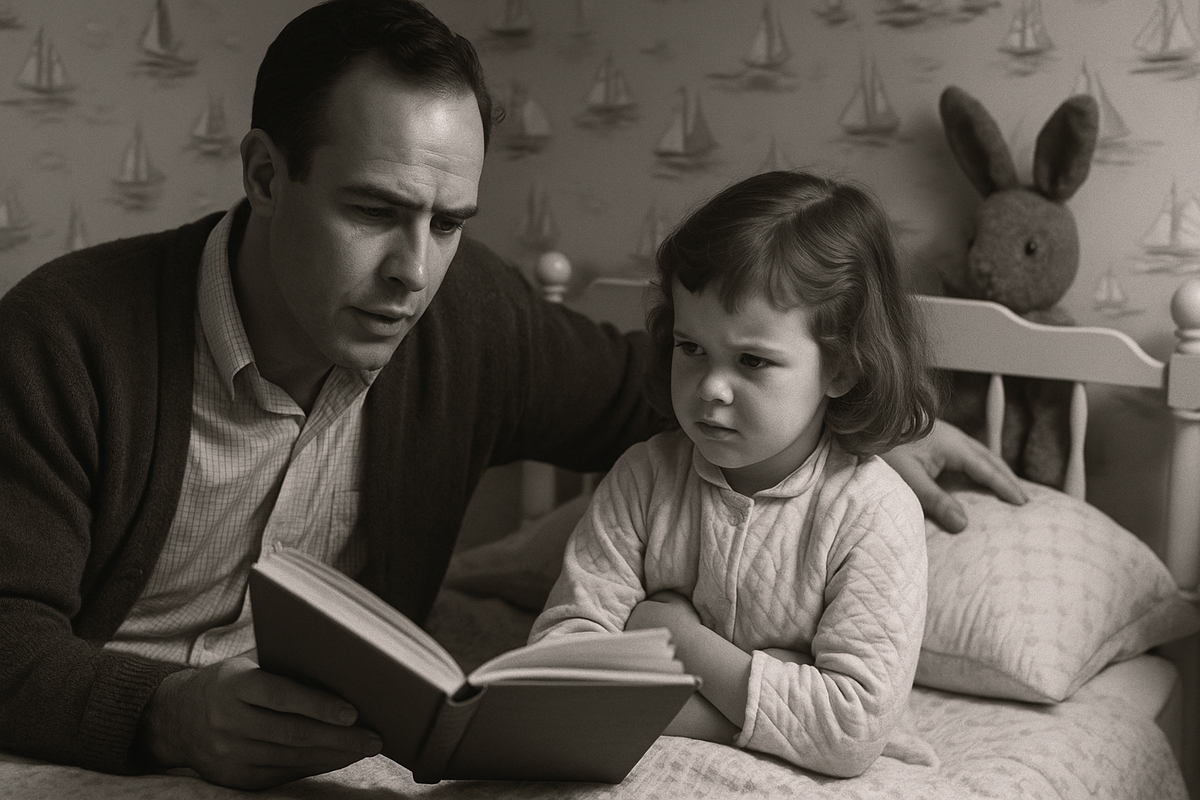
A father tells his daughter a fairy tale. She doesn't like the ending. He insists anyway.
This wasn't a power struggle in some anonymous American suburb—it was literature. And when John Updike's "Should Wizard Hit Mommy?" appeared in the June 13, 1959 issue of The New Yorker, readers holding their copies beside summer iced teas had no idea they were witnessing the preview of a generational war.
The cover promised serenity: sailboats gliding across a bright summer sea, the kind of image that whispered leisure, prosperity, control. But inside, Updike had planted a small bomb in the form of a woodland fable. The explosion would take a decade to fully detonate.
The Suburban Calm Before the Storm
Nineteen fifty-nine was prosperity with an asterisk. The baby boom was in full swing, television sets glowed in living rooms across the nation, and suburban conformity had become the unspoken religion of the American middle class. The Cold War hung overhead like a second sky—ever-present, rarely discussed at dinner tables where obedience and tradition still ruled.
The New Yorker had evolved far beyond its origins as a humor magazine. By the late 1950s, it had become the most prestigious launchpad in American letters—a place where fiction wasn't decoration but dissection. J.D. Salinger had already used its pages to expose the phoniness beneath polite society. Philip Roth was sharpening his knives. And Updike, still a rising voice, had chosen the most intimate battlefield imaginable: the space between a parent's authority and a child's emerging autonomy.
The magazine knew what it was doing. Sophistication and subversion, wrapped in the same elegant package.
Editorial Archive
Featured Story: "Should Wizard Hit Mommy?" by John Updike
Issue Date: June 13, 1959
Publication: The New Yorker
Cultural Context: Postwar suburban America, pre-1960s upheaval
A Fable That Wouldn't Behave
In Updike's story, Jack—the father—spins nightly tales for his daughter Jo. The ritual should be simple: father narrates, child listens, sleep follows. But Jo has developed opinions. When Jack's story about Roger Skunk ends with the creature's mother insisting he keep his foul smell rather than the roses the wizard gave him, Jo rebels. She wants the wizard to hit the mother. She wants the ending rewritten.
Jack refuses.
What follows isn't violence or melodrama—it's something more unsettling. A quiet standoff between generations, between the way things have always been done and the way a child thinks they should be. The bedtime story becomes a referendum on authority itself.
Updike wasn't writing about skunks and wizards. He was writing about 1959 America, where the next generation was beginning to ask a question their parents found uncomfortable: Why must it be this way?
The Hidden Architecture of Rebellion
Authority Under Interrogation
Jack's insistence on his version of the story mirrors the postwar generation's demand for conformity. But Jo's protest—small, persistent, unresolved—foreshadows the coming decade's refusal to comply.
The Mother as Enforcer
Roger Skunk's mother doesn't negotiate. She demands obedience, embodying the rigid family structures that defined 1950s domesticity. But Updike refuses to make her a villain. She's tradition personified, which makes Jo's resistance more complicated, more real.
The Fairy Tale as Trojan Horse
By packaging his generational critique inside a children's story, Updike created a nested structure: a father tells a fable to his daughter, while Updike tells a fable about that father to New Yorker readers. The magazine's sophisticated audience would have recognized the move—allegory disguised as innocence.
The Unresolved Ending
Updike doesn't give readers closure. Jo's frustration lingers. Jack's authority holds, but barely. The story ends with tension intact, which in 1959 felt like prophecy.
The Cover's Elegant Lie
That sailboat cover—serene, leisurely, aspirational—wasn't naïve design. The New Yorker specialized in this kind of visual irony. The magazine understood that its readership wanted beauty and discomfort, sophistication and truth. The sailboats promised escape, but Updike's fiction delivered confrontation.
This was the magazine's genius: it could sell you a vision of American elegance while simultaneously dissecting what that elegance cost. The cover said summer vacation. The fiction said your children are watching, and they're taking notes.
The Magazine as Time Capsule
Each page of this issue—the cartoons, the poetry, the advertisements for theater productions and imported liquors—captures an American moment with ethnographic precision. This wasn't journalism trying to document culture. This was culture documenting itself in real time, unaware of what was coming.
For those who study how societies talk to themselves, these magazines are primary sources. For collectors, they're tangible proof that the best magazines aren't products—they're monuments.
Why This Issue Endures
Early Updike at Full Power
This wasn't juvenilia. Updike's voice was already formed—precise, unsentimental, attuned to the small violences of domestic life. Readers who acquire this issue hold one of the foundation stones of a career that would define American literary realism for decades.
The Last Quiet Year
By 1960, the civil rights movement would accelerate. By 1963, the counterculture would emerge. By 1968, the generational war Jo hinted at would be front-page news. This issue captures the moment before the break—when rebellion was still confined to bedtime stories.
Design as Cultural Document
The sailboat cover isn't just pretty. It's evidence of how mid-century America presented itself: controlled, leisured, untroubled. That The New Yorker could pair this image with Updike's uncomfortable fiction reveals the sophisticated duplicity of the era's cultural discourse.
Artifact Over Ephemera
Unlike disposable magazines of its time, The New Yorker was built to last. Its paper stock, its binding, its archival quality—these weren't accidents. The magazine understood it was creating a record, not just content.
Explore the Complete Archive
Discover original New Yorker magazines spanning from the 1920s to the present day. Each issue is a primary source for scholars and a tangible piece of cultural history for collectors.
Browse The New Yorker Magazine CollectionThe Story That Keeps Asking Questions
The June 13, 1959 New Yorker didn't just publish a story about parental authority—it marked the beginning of that authority's long, slow erosion. Updike's "Should Wizard Hit Mommy?" remains uncomfortable precisely because it refuses resolution. Jo's question hangs in the air, unanswered.
Should the wizard have hit the mommy? Should children obey without understanding? Should tradition survive simply because it's tradition?
In 1959, these were bedtime story questions. By 1969, they were revolution.
The magazine sits there still, sailboats on the cover, rebellion in the pages, waiting for readers who understand that the most important cultural shifts often begin in the smallest rooms—between a parent and a child, in the minutes before sleep, when a story refuses to end the way it's supposed to.