
The Man Who Broke the Bank of England
Inside Forbes's Account of History's Most Brazen Currency Bet
On September 16, 1992, the British pound sterling collapsed. The Bank of England, one of the world's most powerful financial institutions, burned through billions in a desperate attempt to defend its currency. By nightfall, Britain had crashed out of the European Exchange Rate Mechanism, the pound had plummeted 10%, and the government's economic credibility lay in ruins.
Across the Atlantic, George Soros had just executed the most profitable trade in financial history.
When the November 9, 1992 issue of Forbes Magazine hit newsstands, it didn't simply report what had happened. It dissected how one hedge fund manager had outmaneuvered an entire central bank—and walked away with $1 billion in a single month. The cover story documented not just a spectacular windfall, but a seismic shift in global power: the day private capital proved it could overwhelm sovereign governments.
For anyone who understands markets, this issue remains a landmark. It's the contemporaneous record of Black Wednesday, captured while the financial establishment was still reeling.
The Perfect Storm That Made Black Wednesday Inevitable
The crisis had been building for years. When the Berlin Wall fell in 1989, reunified Germany faced staggering costs to absorb the bankrupt East. The Bundesbank responded with aggressive monetary tightening, raising interest rates to choke off inflation.
But Germany's solution became Europe's crisis. Britain and Italy, bound to the deutsche mark through the Exchange Rate Mechanism's fixed exchange rates, found themselves trapped. Their economies were weakening. Their currencies, pegged at levels designed for a different era, had become dangerously overvalued.
By the summer of 1992, the contradictions were glaring. Speculators worldwide began circling. And at the front of the pack was George Soros.
Archive Details
Historical Figure: George Soros, Quantum Fund
Issue Date: Forbes Magazine, November 9, 1992
Cover Story: "How the Market Overwhelmed the Central Banks"
Archive Source: Original Magazines Collection
The Anatomy of a Billion-Dollar Assault
Forbes didn't just chronicle Soros's profits—it revealed his method. This wasn't reckless gambling. It was surgical.
Soros and his Quantum Fund analyzed the macroeconomic fundamentals and reached a stark conclusion: the pound sterling and Italian lira couldn't hold. He shorted an estimated $10 billion or more in currency, while simultaneously positioning in European equities, bonds, and interest rate markets to profit from every ripple effect of the coming collapse.
When the Bank of England raised interest rates in a last-ditch defense of the pound, it backfired spectacularly. Rather than stabilizing the currency, the move telegraphed panic. Speculators doubled down.
Soros later described the Italian lira's devaluation as feeling like "finally taking a test after months of preparation." It was the assessment of a strategist who had done his homework.
On Black Wednesday, the dam broke. Britain withdrew from the ERM. The pound crashed. And Soros's Quantum Fund cleared $1.5 billion in profits in a single month—cementing his reputation as "the man who broke the Bank of England."
Why Forbes Got the Story Right
Forbes distinguished itself by refusing to treat Black Wednesday as merely a currency crisis. The magazine understood it as a structural transformation in global capitalism.
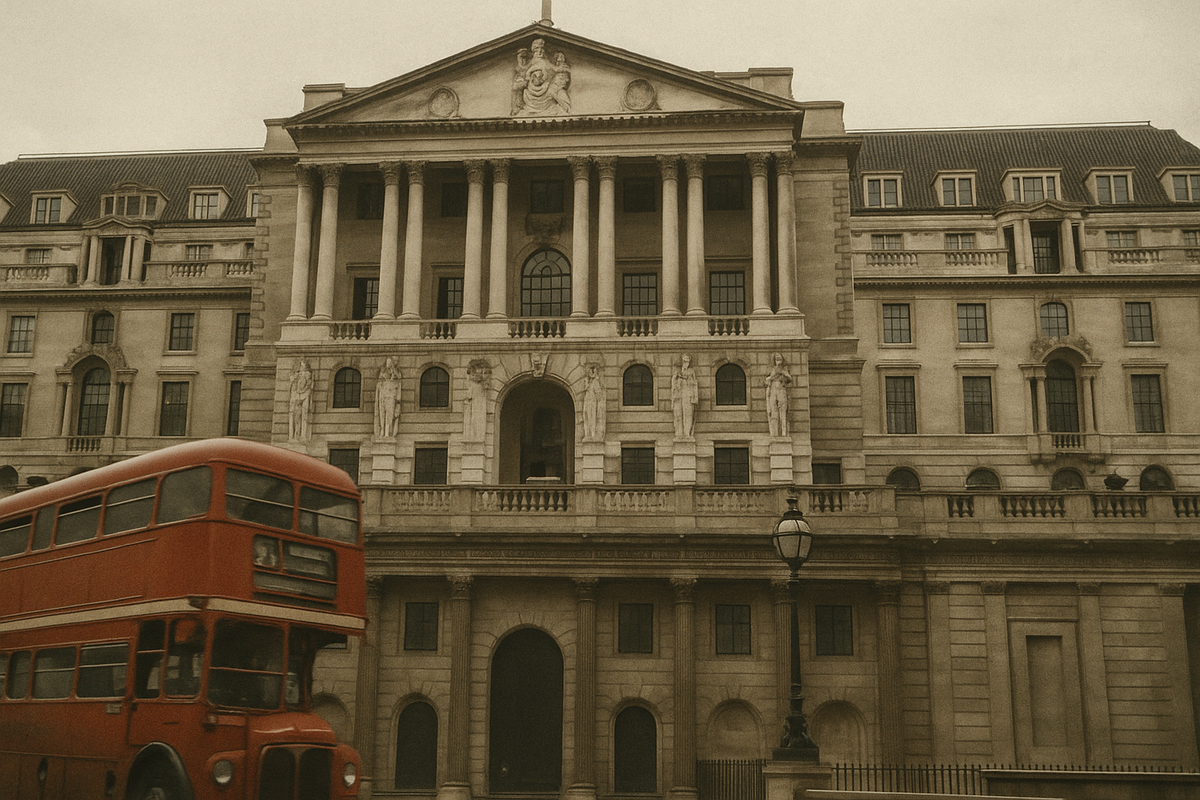
The issue featured a portrait of Soros—not as a villain, but as a disciplined analyst. It showed the Bank of England's neoclassical façade with a London bus in front, captioned with a pointed reminder: in former times, central banks could crush speculators. Times were changing.
Forbes connected the European turmoil to broader financial instability, including Japan's banking sector struggles and the emerging dominance of hedge funds. Where newspapers covered the immediate chaos, Forbes positioned the event within a larger narrative about the future of markets and power.
The magazine's analysis was unsparing: the ERM, designed to stabilize European currencies ahead of monetary union, had instead become a trap that magnified economic imbalances. Without tighter political and economic integration, fixed exchange rates were a vulnerability waiting to be exploited.
Central banks had been exposed as fallible. Private capital had won.
The Legacy Captured in Print
This issue matters because it documented a turning point while it was still unfolding. Forbes captured:
The Trade Itself
Soros's diversified assault combining currency shorts, equity positions, and bond plays that transformed risk into systematic profit.
Institutional Failure
How the Bank of England and even the Bundesbank proved vulnerable to coordinated speculation.
A New Era
Forbes argued persuasively that Black Wednesday wasn't an anomaly—it was the opening act of a world where private capital would increasingly dictate terms to governments.
Primary Source Material
For readers in 1992, this was revelation. For historians today, it's an irreplaceable contemporary account.
For readers in 1992, this was revelation. For historians today, it's primary source material.
The Forbes Difference
Forbes built its reputation on explaining wealth, power, and strategy in unflinching terms. This issue exemplifies why: it didn't just cover quarterly earnings or breaking news. It analyzed what those events meant for the future of global leadership.
That's why serious readers of business history return to Forbes archives. The magazine documented not just who won and lost, but why the game was changing.
Why Collectors Prize This Issue
Landmark Event: This was the issue that told the world how Soros earned $1 billion in a single month—forever linking his name to Black Wednesday.
Cultural Snapshot: Captures the early 1990s at an inflection point—the Cold War ended, globalization accelerating, and private capital ascending over public institutions.
Collector Demand: Issues featuring landmark economic events and legendary financiers like Soros, Warren Buffett, or Bill Gates consistently rank among the most sought-after vintage Forbes magazines.
Historical Significance: Owning this issue means holding the contemporaneous account of the day markets humbled governments—a reminder that financial power sometimes matters more than sovereign authority.
For Collectors and Historians
If you're researching the Black Wednesday trade or the evolution of hedge fund power, the November 9, 1992 Forbes is essential. It combines sharp contemporary analysis with historic context—and it captures a moment when the balance of economic power shifted permanently.
From the rise of Bill Gates and Warren Buffett to the collapse of oil empires and the emergence of Silicon Valley, Forbes chronicled the pivotal moments when fortunes were made and lost. Each issue is a time capsule of wealth, power, and the forces that shaped the modern economy.
Browse Forbes Magazine Collection