
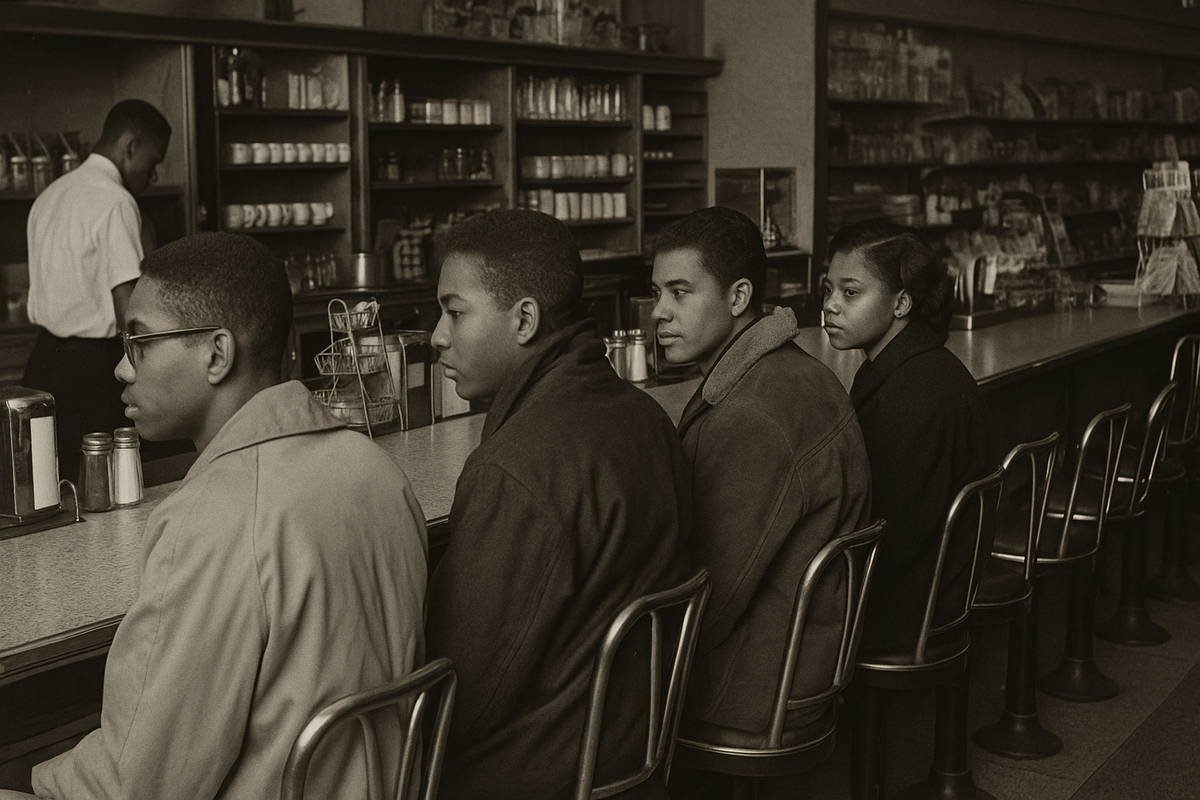
Greensboro, Woolworth's, and the Birth of a New Civil Rights Era
How Ebony Magazine's January 1961 issue captured the sit-in movement that rewrote the rules of American protest
Four college students walked into a Woolworth's in Greensboro, North Carolina on February 1, 1960, sat down at a whites-only lunch counter, and refused to move. Within eight weeks, their quiet defiance had ignited protests in 112 Southern cities. By the time Ebony Magazine documented the upheaval in its January 1961 issue, the entire architecture of civil rights activism had been rewritten—not by lawyers or politicians, but by students who decided that waiting was over.
The article "Negro Progress in 1960" wasn't just journalism. It was a manifesto wrapped in a magazine.
Archive Details
Publication: Ebony Magazine
Issue Date: January 1961
Featured Article: "Negro Progress in 1960"
Publisher: John H. Johnson
Historical Context: Documenting the sit-in movement just months after Greensboro
When Grassroots Action Collided With National Politics
For decades, the civil rights movement had advanced through courtrooms and compromise—incremental, legal, symbolic. Then 1960 arrived, and patience evaporated.
The Greensboro Four—Ezell Blair Jr., David Richmond, Franklin McCain, and Joseph McNeil—were North Carolina A&T students. They weren't protest veterans. They were teenagers tired of being told to wait their turn for citizenship. Their sit-in at Woolworth's lunch counter became the opening salvo in what Ebony called a "new era of militant action"—militant not in violence, but in unshakable resolve.
The tactic spread like wildfire. Nashville. Atlanta. Richmond. Houston. By year's end, sit-ins had become the defining strategy of a generation that refused to beg for equality when they could demand it.
But 1960 wasn't just about lunch counters. The year delivered the first federal civil rights legislation since Reconstruction, aimed at protecting voting rights. Though limited in scope, it represented momentum. State and local governments followed: Arizona outlawed racial discrimination, Kentucky established a Human Rights Commission, and Kansas City passed ordinances against segregation in hotels and restaurants.
Then came November. John F. Kennedy won the presidency, his narrow victory owing much to the surging power of the Black vote. Grassroots courage had collided with national politics, and the impact would reverberate for decades.
Ebony's Front-Row Seat to History
Founded by John H. Johnson in 1945, Ebony had grown into something unprecedented: a mass-circulation magazine that refused to choose between celebration and confrontation. It profiled entertainers and entrepreneurs alongside activists and politicians. It ran fashion spreads and civil rights exposés in the same issue, insisting that Black America deserved to see itself in full—glamorous, dignified, and uncompromising.
"Negro Progress in 1960" exemplified this editorial philosophy. The reporting was direct, unsentimental, and urgent. But it was the photography that turned the article into historical testimony.
Greensboro students at the counter—young men in pressed shirts and ties, sitting in silent resistance while the world watched.
A Nashville demonstrator beaten and arrested—his bloodied face exposing the price of nonviolent protest.
A Richmond student clutching an American flag as police dragged her away—arrested for demanding the citizenship she was supposed to already have.
Atlanta activists studying behind bars—women arrested during sit-ins, turning their jail cell into a freedom school.
Roy Wilkins leading a Woolworth's picket line in New York City—the NAACP's Executive Secretary bringing Northern solidarity to Southern struggle.
Howard University students kneeling before the U.S. Capitol—praying during a 37-day filibuster over civil rights legislation, faith and protest inseparable.
Mainstream media often framed such demonstrations as disruptions to order. Ebony framed them as the moral reckoning they were.
The Cover and the Cause
The January 1961 cover featured Jacy Desouza, a Brazilian-born model, radiant and elegant in a fashion spread. At first glance, this seemed disconnected from the weight inside—the arrests, the legislation, the bloodshed. But John H. Johnson understood something his competitors missed: Black America would not be reduced to a single story. His readers could admire Desouza's glamour on one page and witness student courage on the next. Ebony alone offered that breadth—beauty and resistance, aspiration and struggle, all in one magazine.
This wasn't contradiction. It was wholeness.
What This Issue Captured
By documenting this upheaval just months after it began, Ebony created a firsthand record of a movement in motion—raw, unfiltered, and preserved before history could sanitize it.
Why Ebony Still Matters
Ebony succeeded because it rejected the either-or framework forced on Black media. It didn't choose between politics and culture, between activism and aspiration. It covered everything—beauty, education, sports, entertainment, family life, and the fight for justice—because its readers lived all of it simultaneously.
The January 1961 issue is a perfect distillation of this vision: glamour on the cover, revolution in the pages. It shaped cultural pride, inspired activism, and created an archive that still speaks across generations.
The Collector Significance
Historical Proximity
Published just months after the Greensboro sit-ins, this issue captures the movement in motion—raw, unfiltered, before history could sanitize it.
Iconic Photography
The images of students at lunch counters and demonstrators under arrest are now among the most reproduced of the civil rights era.
Primary Source Value
This magazine didn't just report history—it helped shape how Americans understood it, making it both journalism and archival document.
Market Demand
Vintage Ebony issues covering protests, legislative milestones, and civil rights figures command particular interest among archivists and private collectors.
Start Your Collection
From the 1940s through the 1970s, each issue of Ebony chronicles African American life—civil rights battles and cultural milestones, athletes and entertainers, local struggles and global achievements.
Browse Ebony Magazine CollectionWhether you're a seasoned collector, a historian, or someone preserving family heritage, these magazines are more than reading material—they're documents of transformation.