
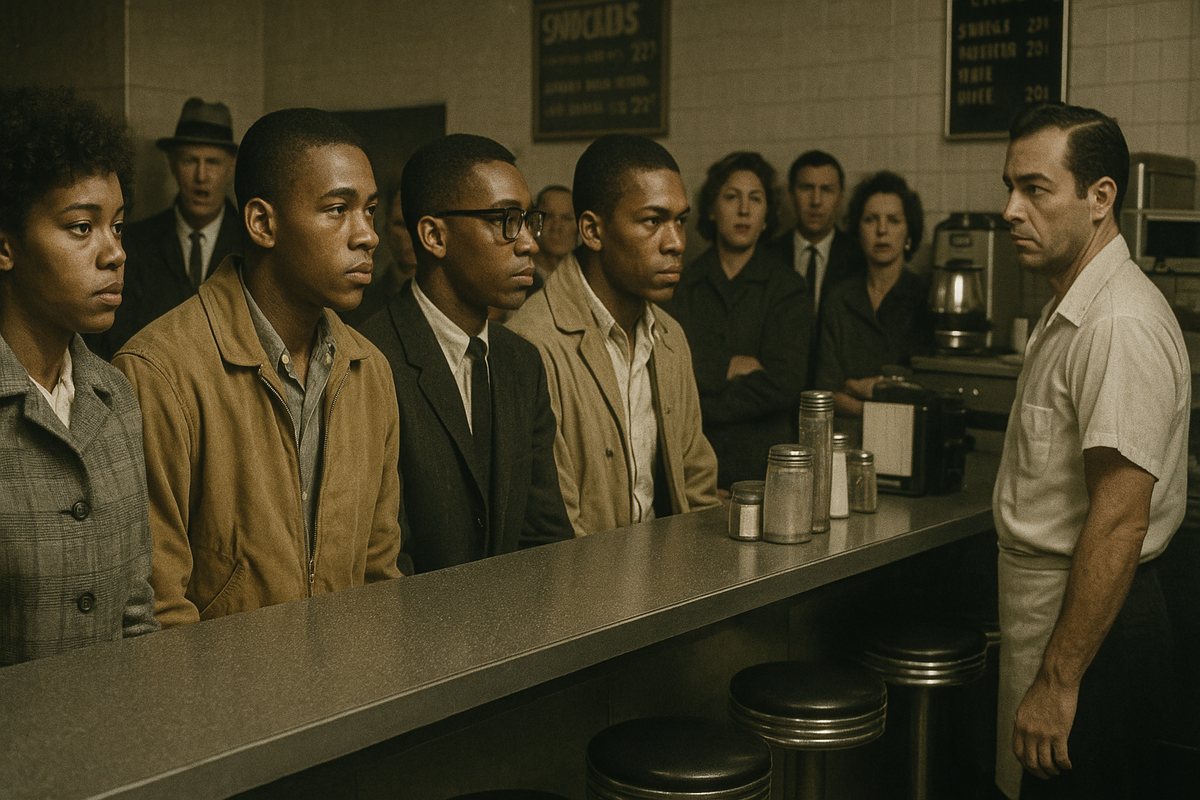
The Magazine That Documented Revolution, One Hamburger at a Time
How Jet's March 17, 1960 issue captured the sit-in movement at ground zero—and why it remains indispensable to understanding civil rights history
On March 17, 1960, a pocket-sized magazine hit newsstands across America carrying a story the mainstream press was trying to ignore. Inside Jet's pages, beneath a cover featuring scholarship student Patricia White's hopeful smile, was an article that would become a primary source document of the civil rights movement: "Why Violence Fails to Stop Student Protest."
The headline wasn't hyperbole. It was a war dispatch.
Just weeks earlier, four students from North Carolina A&T—Joseph McNeil, Franklin McCain, Ezell Blair Jr., and David Richmond—had walked into a Greensboro Woolworth's and sat down at the whites-only lunch counter. Their quiet act of defiance detonated a chain reaction across the South. By the time Jet went to press, the sit-in movement had become an unstoppable force, and segregationists were responding with brass knuckles and baseball bats.
Jet's photographers captured what others wouldn't: Christine Stovall, 22 years old, her head bloodied by white attackers in Montgomery. White vigilantes patrolling Alabama streets with bats concealed in paper bags. Students sitting in silent dignity while mobs screamed inches from their faces.
This wasn't protest coverage. It was combat journalism from the front lines of American apartheid.
Archive Details
Publication: Jet Magazine
Issue Date: March 17, 1960
Cover Story: Patricia White, scholarship student
Feature Article: "Why Violence Fails to Stop Student Protest"
Historical Context: Early documentation of the 1960 sit-in movement
When a Hamburger Meant Everything
The students weren't staging sit-ins because they were hungry. They were claiming citizenship one lunch counter at a time, insisting that the simple act of ordering a hamburger or a cup of coffee was a democratic right, not a white privilege. Every denied meal was a denied humanity. Every arrest was proof that Jim Crow's days were numbered.
What made the sit-ins revolutionary wasn't just their moral clarity—it was their strategy. Rooted in the nonviolent philosophy of Dr. Martin Luther King Jr. and drawing inspiration from Gandhi's resistance in India, these young activists absorbed blows without throwing them. They let the brutality of segregation expose itself on camera, in print, and in the court of public opinion.
The photographs Jet published told the story in brutal clarity. In Montgomery—the same city where Rosa Parks had sparked the bus boycott just five years earlier—students now faced baseball bat-wielding segregationists on the streets. In Rock Hill, South Carolina, the Ku Klux Klan resurfaced, trying to terrorize activists back into submission. But Jet's reporting documented a truth that terrified white supremacists: violence wasn't working. Every baton strike, every epithet, every jailing only strengthened the students' resolve and expanded the movement.
Youth Seizes the Movement
For the first time in the modern civil rights struggle, students—not clergy, not established leaders—were setting the agenda. Teenagers and college students were walking into segregated spaces with nothing but courage and conviction, forcing a reckoning that their elders had been preparing for years. The sit-ins represented a generational shift, a declaration that waiting for equality was no longer acceptable.
Jet understood this immediately. The juxtaposition of Patricia White on the cover—a young Texas student who had earned a scholarship to Spelman College—with the violence documented inside wasn't accidental. It was quintessential Jet: showing Black youth as both achievers and warriors, dreamers and revolutionaries.
Why Jet Mattered Then—and Now
While white-owned newspapers buried sit-in coverage on back pages or ignored it entirely, Jet made it the story. The magazine's pocket-sized format meant it could be passed hand-to-hand in barbershops, church basements, and college dorm rooms. Its bold covers demanded attention on newsstands. And inside, Jet offered what no other national publication could: the unfiltered story of Black America, told with unflinching honesty and unmistakable pride.
For African American families in 1960, Jet wasn't just a news digest—it was proof they weren't alone. When a mother in Detroit saw Christine Stovall's photograph, she saw her own daughter's courage. When a father in Atlanta read about the Greensboro Four, he saw his son's future. Jet created a national community of witness, making every reader a stakeholder in the movement's success.
This is why Jet's civil rights coverage remains indispensable to historians. The magazine didn't just report events—it preserved names, faces, and details that mainstream media erased. It documented who was there, who bled, who stood firm when standing meant risking everything.
Key Themes in This Historic Issue
Violence as Fuel
Jet's article documented how attacks on students only intensified national outrage and increased participation in sit-ins across the South.
Symbolism of the Hamburger
The protests transcended food—they symbolized equality and citizenship. Denying a hamburger meant denying humanity itself.
Christine Stovall's Courage
At 22, Stovall endured a head wound in Montgomery, a chilling reminder of the risks women faced on the front lines of civil rights.
White Resistance
From baseball bats to Confederate flags, segregationists fought to maintain Jim Crow, but their brutality was increasingly broadcast to the world.
Youth as Catalysts
Unlike earlier phases led by clergy and older activists, the sit-ins highlighted students as the driving force of change.
Nonviolent Strategy
Drawing from Dr. King and Gandhi, students absorbed violence without retaliation, exposing segregation's brutality to global audiences.
The Collector's Perspective: Why This Issue Matters
Historical Timing
This issue captures the sit-in movement at its inception, before it became one of the defining tactics of the 1960s. This is ground zero.
Rare Documentation
Jet published names and images that major newspapers ignored or minimized, making these issues irreplaceable primary sources for researchers and educators.
Cultural Duality
The Patricia White cover story and the sit-in violence coverage together illustrate the dual reality of Black youth in 1960—simultaneously celebrated for achievement and endangered for demanding equality.
Archival Integrity
These aren't reprints or digital scans. Original issues are physical artifacts, printed on the same presses and read by the same hands that shaped history.
For serious collectors, this issue represents more than ephemera. It's a fragment of the movement itself—the same pages that students carried to planning meetings, that parents read with pride and fear, that church leaders studied to understand the revolution unfolding in their congregations.
The Archive Speaks Across Generations
Today, as new generations confront racial injustice in American streets and institutions, these Jet issues serve as both record and reminder. The students who sat at those lunch counters understood something profound: history isn't made by those who wait for permission. It's made by those willing to sit down so others can stand up.
The March 17, 1960 issue of Jet Magazine documented the moment when hamburgers and coffee became instruments of revolution, when youth courage shattered the myth that segregation was permanent, and when a pocket-sized magazine proved that telling the truth matters more than playing it safe.
Explore the Full Archive
Jet's coverage of the civil rights movement spans hundreds of issues, each offering unique insights into the struggle for equality. Discover coverage of the Montgomery Bus Boycott, the March on Washington, the Freedom Rides, and profiles of Rosa Parks, Thurgood Marshall, Malcolm X, and countless others whose names belong to history.
Browse Jet Magazine CollectionEvery issue is a window into how African Americans lived, fought, and triumphed during the most transformative decades of the 20th century. These aren't just collectibles—they're primary sources, family heirlooms, and teaching tools for understanding where we've been and how far we still have to go.