
The Night Rock Journalism Was Born
Inside Rolling Stone's First Issue and the Hendrix-Clapton Showdown That Defined a Generation
On November 9, 1967, Jann Wenner placed a stack of freshly printed magazines on a San Francisco newsstand. The cover bore John Lennon's face—not as a Beatle, but as a soldier in anti-war satire. Inside, a young critic named Jon Landau had written something dangerous: a piece that dared to ask whether Eric Clapton, already deified by British blues purists, might actually be less important than a wild-eyed showman from Seattle who set guitars on fire.
This was Rolling Stone's first issue. And with it, rock criticism—the idea that popular music deserved the same scrutiny as literature or film—was born.
The Duel That Defined a Generation
Landau's essay, "Hendrix and Clapton," arrived at a fault line in rock history. Two albums had just dropped that summer, each representing a radically different vision of where electric guitar could go. Clapton's Cream had released Disraeli Gears, a swirl of psychedelic blues built on virtuoso interplay. Hendrix had unleashed Are You Experienced, an album that didn't just push boundaries—it obliterated them.
The question wasn't who played faster or louder. It was deeper: Should rock honor tradition, or invent its own language?
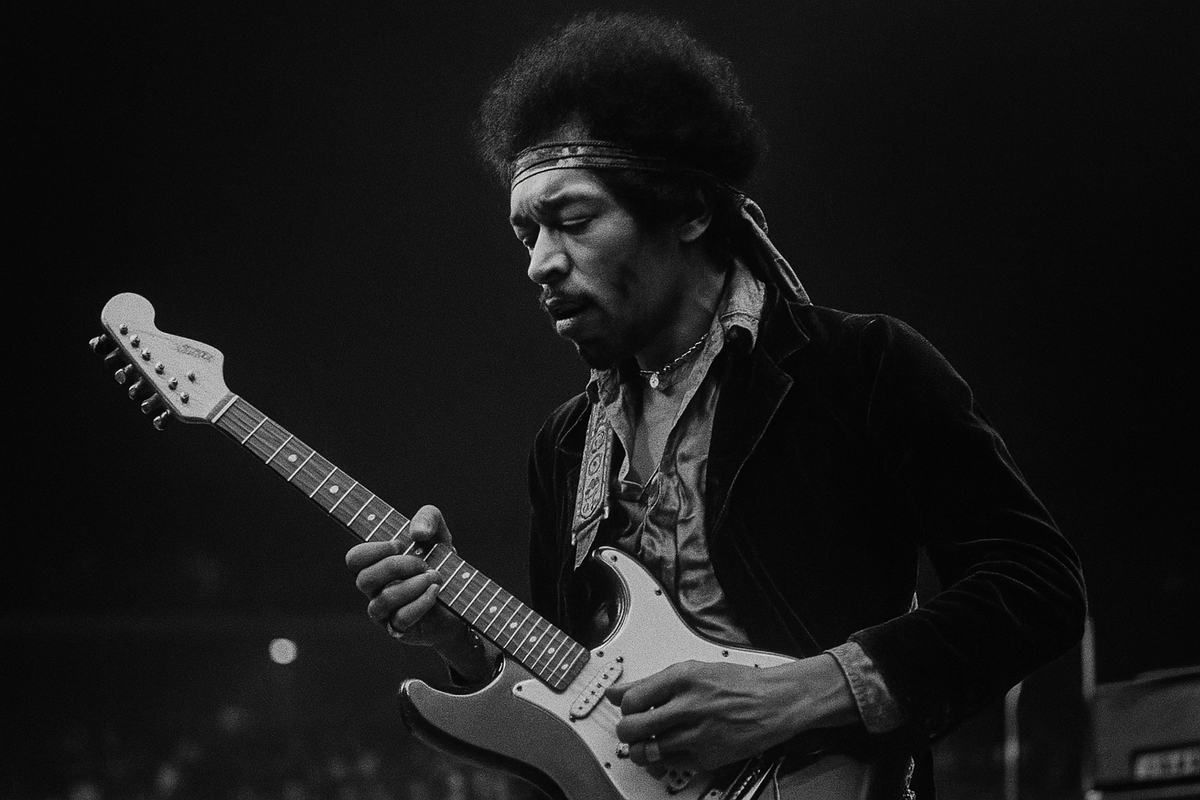
Cream, with Clapton on guitar, Jack Bruce on bass, and Ginger Baker on drums, played like jazz musicians who'd wandered into a blues club—three masters engaged in respectful combat. Hendrix, fronting the Jimi Hendrix Experience, orchestrated chaos. He bent notes until they screamed. He used feedback as melody. He made the Stratocaster sound like it was tearing through dimensions.
Landau saw the schism clearly. Cream, he argued, sometimes sounded like "three soloists competing." Their studio overdubs, while technically brilliant, occasionally buried the raw ferocity of their live performances. Hendrix, by contrast, was "magnificently controlled"—not despite the distortion and theatrics, but through them. He wasn't just playing guitar. He was reimagining what the instrument could mean.
Historical Archive Details
Issue Date: November 9, 1967
Publication: Rolling Stone Magazine (Issue #1)
Featured Article: "Hendrix and Clapton" by Jon Landau
Cover Subject: John Lennon (from How I Won the War)
Historical Significance: The debut issue that launched modern rock journalism
Why 1967 Changed Everything
To understand why this single article mattered so profoundly, you have to grasp what 1967 represented.
The Vietnam War had metastasized from a distant conflict into a national trauma. The Summer of Love had flooded San Francisco's Haight-Ashbury with 100,000 pilgrims seeking transcendence through music, drugs, and communal living. The Beatles had just released Sgt. Pepper's Lonely Hearts Club Band, proving that rock albums could be conceptual art. At the Monterey Pop Festival in June, Hendrix had shocked even the most jaded hipsters by kneeling before his Stratocaster, dousing it in lighter fluid, and setting it ablaze as a finale.
Music wasn't entertainment anymore. It was identity. Protest. Prophecy.
And yet, no publication was treating it that way. Teen magazines gushed. Trade papers counted sales. Underground newspapers covered the scene, but lacked editorial rigor. Rolling Stone arrived with a radical proposition: rock deserved serious criticism. Musicians were artists, not just idols. And their work should be examined with the same intellectual honesty applied to novels or paintings.
The Magazine That Looked Like a Manifesto
Wenner's design choices spoke volumes. The first issue rejected the glossy excess of mainstream magazines. Black-and-white photography. Straightforward typography. No celebrity fluff. The cover image of Lennon in military costume—a still from Richard Lester's How I Won the War—announced that music and politics were inseparable.
Inside, Wenner had photographed Hendrix himself: a blurred, shadowy figure mid-performance, body contorted, guitar angled skyward. The image captured not technical precision but ecstatic energy—exactly what Hendrix represented. This wasn't documentation. It was translation.
Landau's prose matched the visual language. He didn't worship. He analyzed. He praised Hendrix's ability to transform a power trio into "an orchestra," but he also examined how that transformation worked—through dynamics, phrasing, and an almost architectural sense of song structure. When he critiqued Cream for occasionally drowning in their own virtuosity, it wasn't dismissal. It was accountability.
This approach—reverent but rigorous—set the template for every serious music publication that followed.
What Landau Actually Said (And Why It Still Stings)
The brilliance of "Hendrix and Clapton" lies in its refusal to crown a winner. Landau acknowledged Cream's genius: Clapton's fluid phrasing, Bruce's melodic bass lines, Baker's polyrhythmic fury. But he also identified their liability—three egos pulling in different directions, brilliant individually but sometimes incoherent collectively.
Hendrix, Landau argued, had solved a problem Cream couldn't. He built a band that served the vision rather than competing with it. Noel Redding's bass and Mitch Mitchell's drums weren't just accompaniment; they were extensions of Hendrix's imagination. Where Cream could fragment into dueling solos, the Experience cohered.
More provocatively, Landau suggested Hendrix represented the future. Not because he played faster—though he could—but because he understood spectacle as artistic strategy. The theatrics weren't gimmicks. They were the point. Hendrix knew that rock's power came not just from technical mastery but from transformation, risk, and the willingness to burn it all down for a moment of transcendence.
Clapton, rooted in blues tradition and wary of excess, suddenly seemed—however unfairly—like the past.
Cream's Virtuosity
Landau noted Cream's brilliance but also their tendency to sound like "three soloists competing." Their studio overdubs sometimes dulled the raw power of their live shows.
Hendrix's Control
Hendrix was described as "magnificently controlled," transforming chaos into beauty. His playing was about architecture and storytelling, not just volume.
Band Chemistry
Cream's lineup was a clash of egos, while the Jimi Hendrix Experience functioned as a canvas for Hendrix's singular genius.
Cultural Symbolism
Hendrix embodied rock's future—wild, theatrical, unbound. Clapton embodied tradition—rooted, precise, respectful of form.
The Artifact as Time Machine
Modern retrospectives can tell you what happened in 1967. But they can't replicate the texture of experiencing it as it unfolded. Reading Landau's essay now, you're not just learning about Hendrix and Clapton. You're accessing the uncertainty of the moment—when no one knew whether psychedelic rock would last a year or reshape the culture, when Hendrix was still shocking audiences rather than decorating dorm room posters, when Rolling Stone was a gamble by a 21-year-old entrepreneur with more vision than capital.
This is why original magazines matter. They preserve not just facts, but feeling. The immediacy. The stakes.
Why Collectors Hunt This Issue Like Lost Treasure
Ground Zero Status
This isn't just a magazine—it's a founding document. The debut issue where rock criticism was born, where music journalism became an art form unto itself.
Iconic Content
Lennon on the cover. Hendrix and Clapton dissected inside. The counterculture's voice finding its first words in print.
Exceptional Scarcity
Fewer than expected copies survive in collectible condition. Pristine examples are extraordinarily rare and command premium prices.
Primary Evidence
For historians studying 1960s culture, this is primary evidence—a snapshot of how the generation understood itself in real time, before nostalgia softened the edges.
The Verdict That Echoes
Jon Landau closed his essay without declaring a victor. Both Hendrix and Clapton were reshaping rock, each in his own image. But Landau's subtext was clear: Hendrix wasn't just playing guitar differently. He was showing a generation that rock's future belonged to those willing to destroy the template and build something stranger, louder, and more dangerous in its place.
Fifty-seven years later, we know how the story turned out. Hendrix died three years after that first Rolling Stone hit newsstands, his potential only partially realized. Clapton became an elder statesman, his legacy secure but his revolutionary edge softened by time.
But in November 1967, none of that was settled. The debate was alive. The future was unwritten. And somewhere in San Francisco, a brand-new magazine was asking the questions that would define rock criticism for the next half-century.
That's the issue you're holding when you own the first Rolling Stone. Not just history—but the moment history learned to speak.
For Collectors and Historians: Where to Find the Real Thing
If you're building a collection of 20th century cultural artifacts, the November 1967 Rolling Stone belongs at the center. It's not just a magazine—it's a hinge point in music history, the moment journalism caught up with the revolution.
Browse Rolling Stone Magazine CollectionWhether you're a veteran collector, a music historian, or someone who simply wants to hold a piece of the moment when rock found its voice, these original issues offer something no reprint ever can: authenticity.