
When Democracy Needed Soldiers in the Subway
How Life Magazine documented France's general strike and Mussolini's territorial ambitions in the final months before World War II
On November 30, 1938, the French government did something democracies are not supposed to do: it ordered its army into the streets to break a general strike.
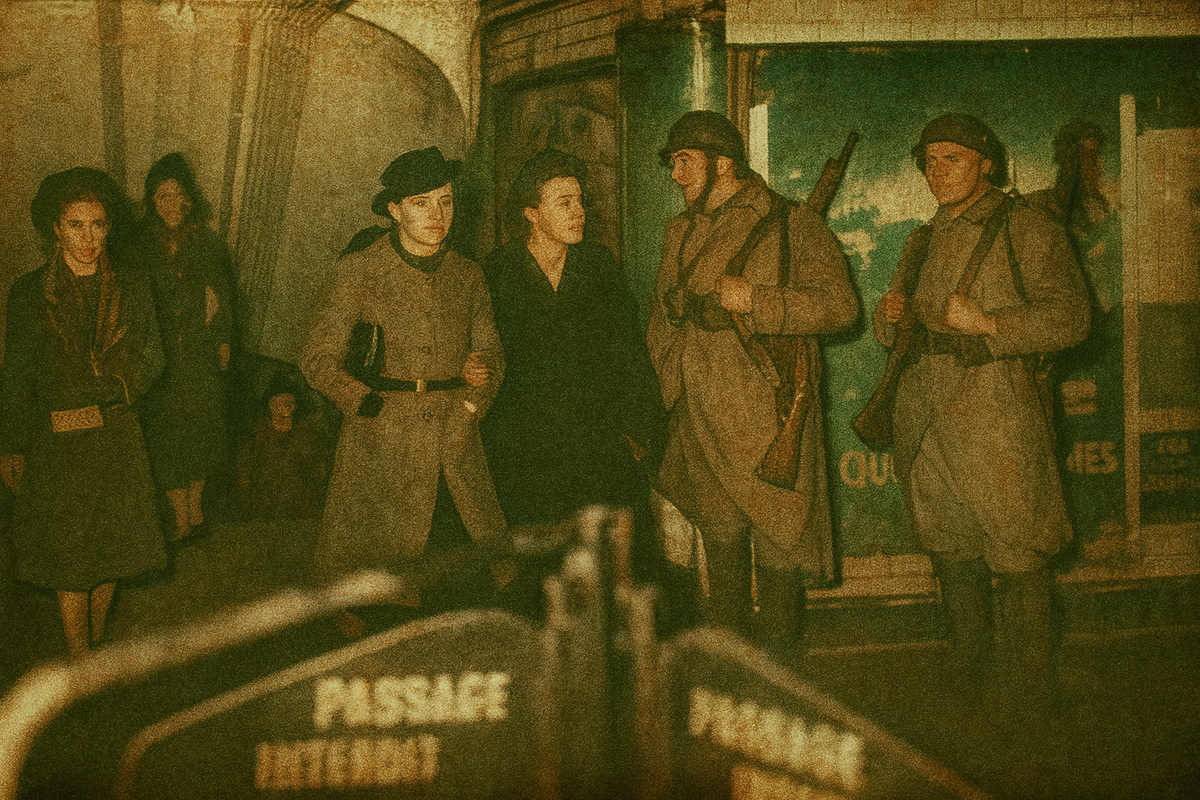
Within hours, soldiers stood in Paris Metro stations during rush hour, rifles slung across their shoulders. They posted decrees on city walls. They waited in train stations, feeding horses while commuters hurried past. The message was unmistakable—order would be maintained, by force if necessary.
Americans who opened the December 19, 1938 issue of Life Magazine saw all of it. The photo-essay "French Army Breaks a One-Day General Strike … and Stands Guard Against Land-Hungry Italy" wasn't distant reporting. It was evidence that Europe's democracies were cracking from within while dictators circled from without.
Less than a year before Hitler invaded Poland, Life's photographers captured what textbooks often miss: the specific moment when a society realizes it's running out of time.
A Strike Crushed, A Government Tested
The crisis began with labor. Premier Édouard Daladier had rolled back the social protections workers had won earlier in the decade. On November 30, they struck back—a coordinated shutdown across France.
Daladier's response was swift and uncompromising. Backed by President Albert Lebrun, he issued decrees requisitioning workers in "essential industries" and mobilized the military. Soldiers appeared in subway stations, at rail yards, in provincial towns like Avignon. The state made itself visible.
The strike collapsed within a day.
For observers in 1938, the speed of the government's victory raised uncomfortable questions. Could French democracy function without soldiers in the streets? And if not, what did that say about its future?
Mussolini's Moment
While France dealt with internal fractures, Benito Mussolini seized the opportunity to apply external pressure.
In the Italian parliament, Alberto Farinacci stood and demanded French territory: Tunisia, Corsica, Savoy, Nice. Demonstrations erupted in Rome, Milan, Naples, Florence, and Tripoli. Italian troops massed in Libya. France responded by reinforcing Tunisia with 25,000 soldiers.
In Paris, French students rioted outside Italian consulates. Rumors spread of Italian divisions moving through "Rebel Spain," where Francisco Franco's civil war still raged. At the Suez Canal, French directors resisted Mussolini's push for an Italian seat on the governing board—a bid for influence over one of the world's most strategic waterways.
Life laid it out with brutal clarity: a shaded Mediterranean map showing Italy's territorial ambitions, photographs of troop deployments, images of student protests. The magazine didn't editorialize. It didn't need to. The photographs told the story.
Issue Archive Details
Publication: Life Magazine
Issue Date: December 19, 1938
Cover Subject: Mary Martin (photographed by Alfred Eisenstaedt)
Featured Story: "French Army Breaks a One-Day General Strike … and Stands Guard Against Land-Hungry Italy"
Historical Context: Published nine months before World War II began
Key Figures: Premier Édouard Daladier, President Albert Lebrun, Benito Mussolini, Alberto Farinacci
Photojournalism as Historical Record
By 1938, Life Magazine had become the most powerful visual chronicle in America. Its strength wasn't analysis—it was evidence. Editors understood that a single photograph of a soldier in a subway station communicated more than a thousand words about state power and civilian life.
The December 19 issue demonstrated that power across multiple spreads:
These weren't illustrations accompanying a story. They were the story. And for Americans watching Europe from across the Atlantic, they made abstract geopolitical tension immediate and undeniable.
The Cover They Chose
The December 19, 1938 cover featured Mary Martin, photographed by Alfred Eisenstaedt. She was Broadway's rising star—young, confident, American. Inside, soldiers patrolled French streets while Mussolini threatened invasion.
The juxtaposition wasn't accidental. Life understood its dual mandate: document American culture, chronicle global crisis. The magazine never chose between entertainment and emergency. It presented both, forcing readers to hold the contradiction—optimism at home, catastrophe abroad.
That editorial approach is part of what makes this issue historically significant. It captures not just what was happening in Europe, but how Americans were learning about it: sandwiched between celebrity profiles and advertisements, delivered weekly to kitchen tables across the country.
Why These Pages Endure
There's permanence in print that digital archives can't replicate. When Americans read this issue in December 1938, they studied it. They passed it around. They kept it.
That physical endurance matters. These magazines weren't designed to disappear into feeds or vanish after a refresh. They were meant to be held, revisited, preserved. Today, they function as time capsules—tangible connections to moments when the world was still trying to understand what was coming.
For collectors, that tangibility is the point. Holding the December 19, 1938 issue means holding the exact pages your grandparents might have studied while trying to make sense of a world lurching toward war.
What Collectors Recognize
This isn't nostalgia. It's primary source material. The photographs inside weren't staged for history—they were news. That immediacy, preserved in ink and paper, is what serious collectors value.
Explore the Archive
Our collection includes thousands of original Life magazines spanning the 1930s through the 1970s. Each issue documents its moment—wars, elections, cultural shifts, technological breakthroughs—as they were first reported and photographed.
Browse Life Magazine CollectionWhether you're building a historical archive, researching a specific era, or preserving family memory, these magazines offer something increasingly rare: unmediated access to how the past saw itself.
Final Frame
The December 19, 1938 issue of Life Magazine isn't just collectible because it's old. It's collectible because it captured a specific inflection point—when France's democracy required military enforcement and Italy's dictator saw weakness worth exploiting.
The photographs inside aren't beautiful. They're urgent. Soldiers in subways. Decrees on walls. Maps marking territorial ambitions. These images documented a world that knew something terrible was coming but couldn't yet name it.
More than eight decades later, those photographs still do their work. They show us what the edge of catastrophe looked like before anyone called it that.
That's the power of photojournalism. That's the value of preservation. And that's why this issue, among all the Life magazines published in 1938, remains worth holding onto.