
When Jet Magazine Put Black Desire on the Cover—And Changed the Conversation Forever
How the July 11, 1974 issue featuring Jayne Kennedy, Freda Payne, and Eartha Kitt became a cultural milestone
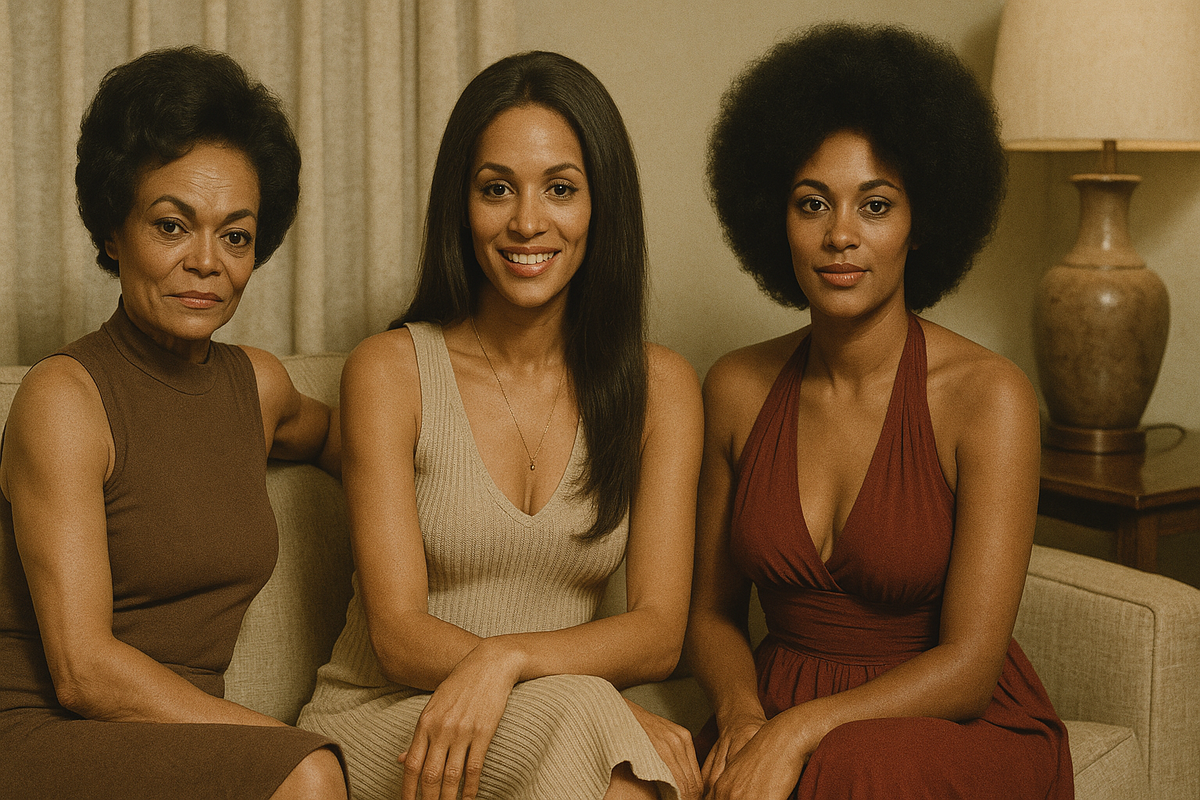
July 11, 1974. A Thursday. Newsstands across America displayed a magazine cover that made people stop, stare, and—whether they admitted it or not—buy. Three Black women in vibrant swimwear lounged by a pool, their gazes direct and unapologetic. The headline didn't whisper: "Hollywood Beauties Rap About Sensual Side of Black Dudes."
For readers of Jet Magazine, this wasn't scandal. It was recognition.
In an America still reckoning with what liberation actually meant after the Civil Rights Movement, this single issue became a lightning rod. Not because it was exploitative, but because it was honest. Jayne Kennedy, Freda Payne, and Eartha Kitt weren't objects on display—they were narrators of their own experience, claiming space in a conversation mainstream media had spent decades avoiding.
This wasn't celebrity gossip. It was cultural documentation. And fifty years later, this issue remains one of the most sought-after editions in Jet's storied archive.
Issue Details
Publication: Jet Magazine
Issue Date: July 11, 1974
Featured: Jayne Kennedy, Freda Payne, Eartha Kitt
Cover Story: "Hollywood Beauties Rap About Sensual Side of Black Dudes"
Historical Context: Published during the height of the sexual revolution and Black cultural renaissance
The Revolutionary Context: Why 1974 Mattered
The early 1970s weren't just changing—they were rupturing. Legal segregation had ended, but the question of what Black freedom actually looked like in practice remained open. For African Americans, the work of self-definition had only begun. Freedom wasn't merely legislative; it was intimate, personal, and deeply tied to how Black men and women saw themselves and each other.
Simultaneously, the sexual revolution was dismantling America's Victorian facade. Birth control became widely accessible. Feminism challenged the nuclear family model. Social norms that had governed courtship, marriage, and desire for generations were suddenly negotiable.
But for Black communities, this moment carried different weight. Centuries of racist mythology had weaponized Black sexuality—hypermasculinizing Black men, hypersexualizing Black women, always through the distorting lens of white supremacy. Reclaiming that narrative wasn't just personal; it was political.
By 1974, Black artists and intellectuals were doing exactly that. Blaxploitation films—controversial as they were—put Black sexuality on screen with an agency Hollywood had never permitted. Marvin Gaye's Let's Get It On transformed sensuality into a chart-topping anthem of Black desire. Black women were stepping into media not as supporting characters, but as architects of the story itself.
Jet's feature landed at this precise intersection. The magazine understood what mainstream outlets didn't: that conversations about Black love, intimacy, and pleasure were not frivolous. They were essential.
Jet's Editorial Courage: Making the Private Public
By 1974, Jet Magazine had spent more than two decades as the heartbeat of Black America. Where mainstream publications ignored or caricatured Black life, Jet documented it with precision and pride—from Emmett Till's funeral to Muhammad Ali's championship victories, from political upheaval to red-carpet glamour.
But this issue pushed further. Treating Black sexuality as a legitimate subject of cultural journalism was rare. Treating it with sophistication and joy was revolutionary.
The interviews delivered substance beneath the glamour. Freda Payne challenged the sexual double standard directly, arguing that women deserved to express desire without shame. Eartha Kitt centered honesty and humor as the foundation of intimacy, rejecting the passivity society expected from women. Jayne Kennedy reflected on how economic independence was reshaping partnership itself—women no longer chose relationships out of necessity, but out of genuine desire.
These weren't sound bites. They were manifestos.
Jet had always understood that the personal was political. This issue made it explicit. In giving Kennedy, Payne, and Kitt space to define Black intimacy in their own voices, the magazine performed an act of cultural preservation. These were not Hollywood confessions packaged for white consumption. They were Black women speaking to Black readers about Black love—unfiltered, unashamed, unmistakably their own.
The Visual Power: Glamour as Statement
The cover itself was a calculated gamble. In Jet's compact, pocket-sized format, covers had to arrest attention instantly. Kennedy, Payne, and Kitt delivered—not through provocation, but through presence. The image radiated confidence, beauty, and control.
This was visibility as power. Black women presented not as subjects of the gaze, but as architects of it. The composition didn't ask permission. It demanded recognition.
Inside, Jet's editorial approach balanced sharp photography with conversational intimacy. The magazine had mastered a tonal alchemy few publications achieved: serious without being stuffy, glamorous without being shallow, entertaining without being disposable. Readers received both the spectacle of celebrity and the substance of cultural critique.
This duality defined Jet's influence. It reflected Black life in full spectrum—the struggle and the celebration, the political and the personal, the urgent and the joyful. The July 11, 1974 issue embodied that philosophy completely.
The Voices That Redefined the Conversation
Freda Payne: Liberation Through Pleasure
Payne brought the feminist edge. Her insistence that women should enjoy intimacy openly—without apology, without shame—aligned with broader movements for gender equality. In the context of Black womanhood, her words carried additional resonance, shattering the archetypes that had long denied Black women vulnerability and agency.
Jayne Kennedy: Independence Transforms Partnership
Kennedy addressed the economic dimension. As women gained financial independence, relationships transformed from survival mechanisms into genuine partnerships. When women could choose, the entire architecture of romance had to rebuild itself around mutual desire rather than economic necessity.
Eartha Kitt: Authenticity as Foundation
Kitt emphasized authenticity. Her focus on humor, honesty, and equality rejected the rigid scripts that had governed courtship for generations. Kitt's voice—always distinctive, always uncompromising—reminded readers that intimacy without genuine connection was performance, not partnership.
Collective Impact: Freedom Redefined
Together, these perspectives painted a portrait of a community in transformation. Black Americans were claiming not just civil rights, but the right to define love, desire, and intimacy on their own terms. This was freedom in its most intimate form.
Why Collectors Covet This Issue
Cultural Timing
Published at the apex of both the sexual revolution and Black cultural renaissance, it captures a singular moment of transformation. Few magazines document the intersection of race, gender, and intimacy with such clarity.
Iconic Figures
Kennedy, Payne, and Kitt weren't merely celebrities—they were cultural architects whose influence extended into fashion, activism, and social change. Their presence elevates the issue beyond ephemera into historical testimony.
Editorial Rarity
Mainstream publications weren't having these conversations. Jet's willingness to engage Black sexuality with sophistication and respect makes this issue a unique primary source for historians studying 1970s African American culture.
Preservation of Voice
Unlike articles filtered through white editorial perspectives, this piece presents Black women's voices directly. It's ethnography and autobiography simultaneously.
Physical Scarcity
Jet's pocket format and newsprint construction mean many copies were discarded or deteriorated. Clean, intact editions are increasingly rare.
Historical Significance
Owning this issue means possessing a tangible fragment of a moment when Black America was rewriting its own story—one conversation, one magazine cover, one honest interview at a time.
The Enduring Significance
Jet's July 11, 1974 issue endures because it treated Black life as worthy of serious documentation. These weren't disposable celebrity profiles. They were acts of historical record—capturing how a community navigated love, desire, and identity during one of America's most transformative decades.
In 2025, when debates about representation, autonomy, and the politics of desire remain urgent, Jet's fearless journalism feels strikingly contemporary. The magazine understood something fundamental: that to document Black joy, Black intimacy, and Black self-definition was not frivolous. It was essential. It was survival. It was resistance.
This issue remains what it was fifty years ago—a mirror, a manifesto, and a monument.
Explore the Archive
Jet Magazine documented decades of African American history with depth, dignity, and unflinching honesty. From civil rights milestones to cultural watersheds like this one, each issue preserves voices and moments that shaped a nation.
These aren't reproductions. They're artifacts—tangible connections to the people, ideas, and movements that defined the 20th century.
Browse Jet Magazine CollectionConclusion
The July 11, 1974 issue of Jet Magazine—featuring Jayne Kennedy, Freda Payne, and Eartha Kitt discussing "the sensual side of Black dudes"—remains one of the most culturally significant and collectible editions of its era. It captured Black women redefining conversations about love, desire, and independence at a moment when such redefinition was urgently needed.
Jet gave its readers more than entertainment. It gave them history as it happened, documented by the community living it. This issue endures as both cultural milestone and collector's treasure—a testament to the power of honest storytelling and the enduring importance of seeing oneself reflected with dignity, complexity, and joy.